Goa – The mere mention invokes images of sunny beaches, coconut trees and lush greenery.
For many decades now, it has been India’s most popular tourist destination, both for domestic and international tourists. In fact, Goa hosts 80 lakhs tourist annually, a state which has a total population of 18 lakhs!
I decided to visit Goa again in Oct 2019 for my fifth visit to the state. Given that I was looking for a relaxing vacation, North Goa was a natural choice. With its familiar beaches, hotels ,restaurants and people, North Goa had become a second home to me, as familiar as Pune.
In absence of direct train from Mysore to Vasco, we have to first go to Bangalore and board another train from there. However, there is now direct air connectivity between Goa and Mysore and hence we planned to return directly to Mysore.
On 4-Oct-2019, we boarded Shatabdi to Bangalore and the same evening Chennai-Vasco express from Yesvantpur railway station. I was pleasantly surprised to see swanky Yesvantpur station, with escalators and high level of cleanliness. Swacha Bharat Abhiyan indeed !
Next morning, by the time I woke up , the train had passed Dharwar and had entered dense forest. It was a pleasant view of the lush greenery after the rains. Few hours later we passed the Dudhsagar railway station and braced ourselves to view the spectacular Dudhsagar falls. Enthusiastic trekkers alight at this railway station and walk on the tracks towards the falls. In our case, the view from the train was majestic and we could see the revelers having a great time at the bottom of the falls.
At 12:30 PM on 5-Oct-2019, we arrived at Madgaon and I hastily walked towards the Govt Taxi stand outside the station. The entire taxi industry in Goa is highly “unionized” and one can take only the local taxi at the pre-decided rates. There are no app-based taxis in Goa and hence we boarded a local taxi to Candolim, a good 45 KMS away.
After a journey of 1.5 hours through potholed roads, we arrived at Laliguras Villa at Candolim. Its a relatively new hotel on Candolim Beach road, just few meters from the beach. After resting for few hours, we took a refreshing dip in the sea, a welcome activity in hot weather!
After a quiet dinner at our favorite restaurant “Mango Groove” we ended our first day in Goa.
Next day we left to visit Fort Auguda, one of the most popular attractions of North Goa on a rented Activa. But looking the traffic on the Fort Auguda road, we changed our plans and headed towards Reis Margos Fort, a smaller and lesser known fort in North Goa. It is built on the narrowest stretch of the Mandovi river, facing the capital city Panjim. Though originally built as a military outpost in 1400s, it was subsequently used as jail, hospital and now a tourist destination. There are few halls in the fort which depict the history of Goa which I found interesting .
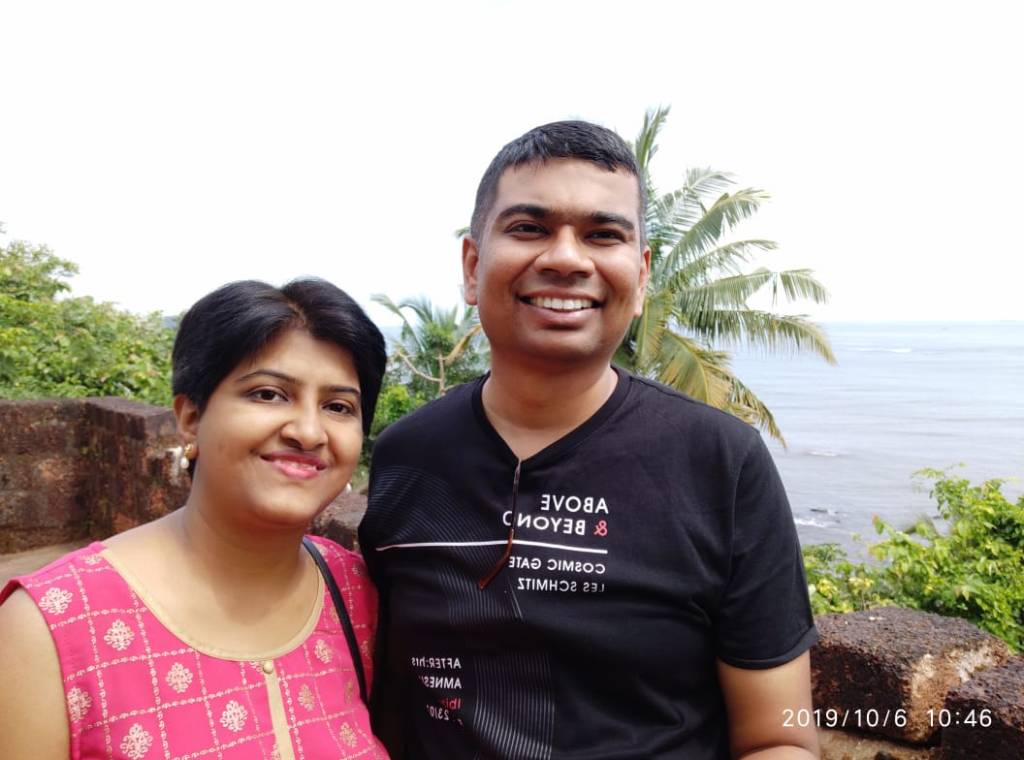
Next stop was Sinquerim beach where we admired the view from the ramparts of Fort Auguda. These overlook Sinquerim Beach and the Arabian Sea providing a spectacular vista.
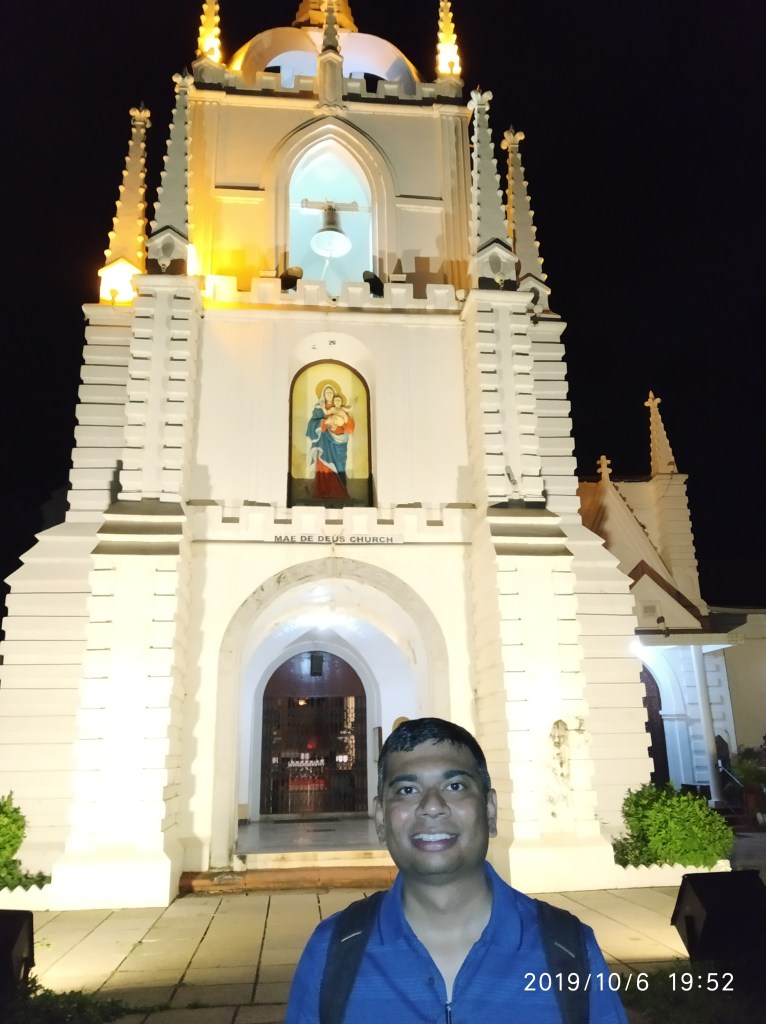
We had a healthy and interesting lunch at Himalaya Tibetan restaurant , with lots of fresh veggies cooked with little oil and unique flavours. After rest for few hours, we headed to Saligao to view the famous church Mae De Deus (Mother of God) which is lit up in the evenings. In this visit, we had decided to visit off-beat attractions of Goa and this church was one such destination. With its Gothic spires and pristine white walls, it reminds one of a fairytale castle I used to read about. We saw quite a few devotees from local villages here.
Later we visited the Shanta Durga temple at Calangute where the Navaratri Sangeet Mahotsav was in progress, similar to the ones in Pune. I know little about classical music, but Meenal was impressed with the rendition and overall quality of the program, which was on par with those in Pune. Most people will be surprised to know that Maharashtra and Marathi language are an integral part of Goan culture. In fact, in 1963, there was a referendum to decide whether Goa would integrate with the state of Maharashtra or would be an independent Union Territory. The decision was in favour of UT, but with a slender margin. In 1987,Marathi (with Konkani) was accorded an official language status in Goa and most of government communication happens in Marathi. Marathi language, festivals, culture are visible in the interior Goan villages while the coastal area( which most tourists visit) is more cosmopolitan. However, in last few years, there has been tremendous migration into Goa from other parts of the country and slowly the local culture is being replaced with pan-Indian one.
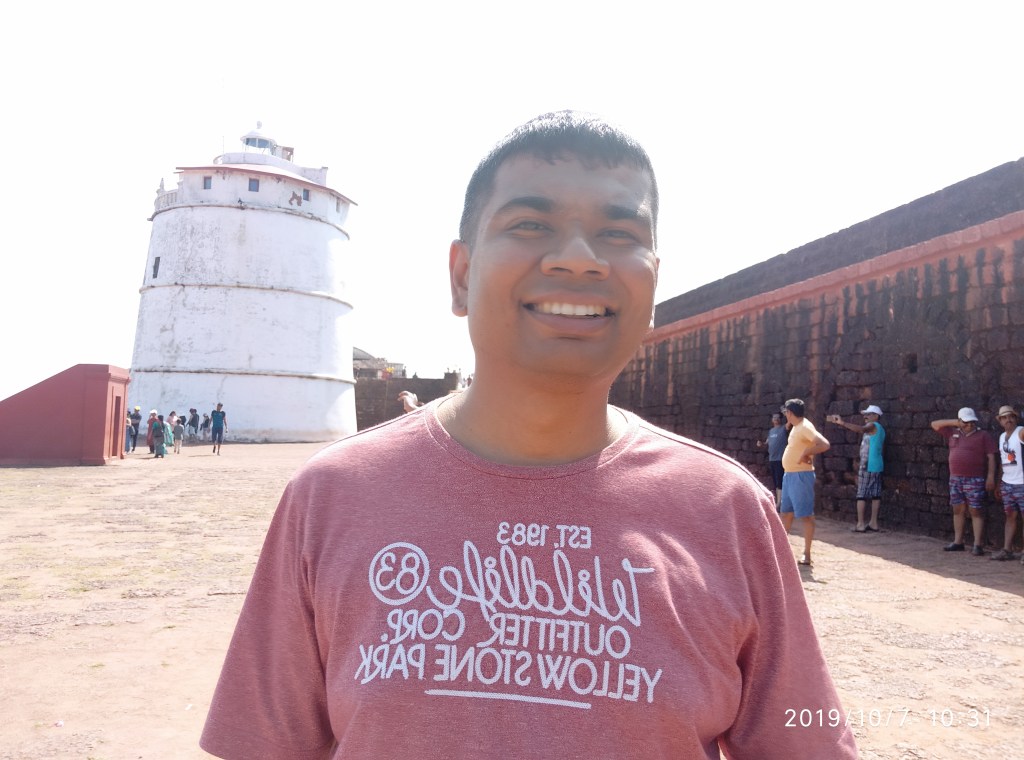
Next day on 07-Oct-2019, we left for Fort Auguda early in the day to beat the crowd. Since the time of our visit had coincided with Dassehra vacation, there were hordes of tourists from all part of India .Indian domestic travelers have vastly outnumbered the foreign tourist in Goa in last few years, and hence Indian holidays result in significant rush.
Aguada, means “Water” and that is how this fort has got its name. A freshwater spring within the fort provided water supply to the ships that used to stop by and the water tanks here can store thousands of gallons of water. There is also a lighthouse and jail within in the fort premises ,which were in use just till a few decades ago.
The views of the Mandovi river from the fort provide an excellent background for some pictures.
On the way back, we saw boat tours which seemed interesting. These are one hour cruise costing INR 300 per person. However, giving the crowd and waiting time, we decided to skip this activity.
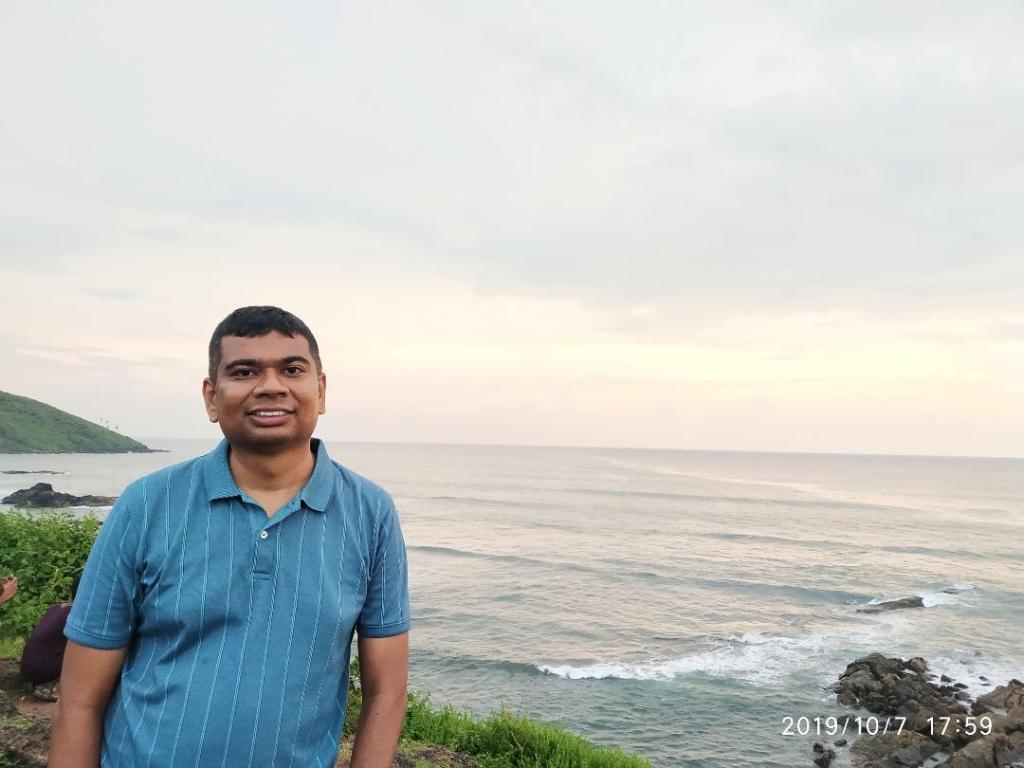
That evening, we embarked on what would be the most memorable evening of our trip, a visit to Vagator beach in the northern part of Goa. It is around 12 KMS from Candolim and it took us around 40 mins to reach there on our hired Activa. The road quite scenic as one leaves the urbanized chaos of Calangute behind and heads towards the countryside. Once at Vagator Beach View point, we looked with awe at the dramatic red cliffs sloping towards the shore. There are two beaches to either side of the view point and coconut trees which form a perfect backdrop. The pictures speak for themselves.
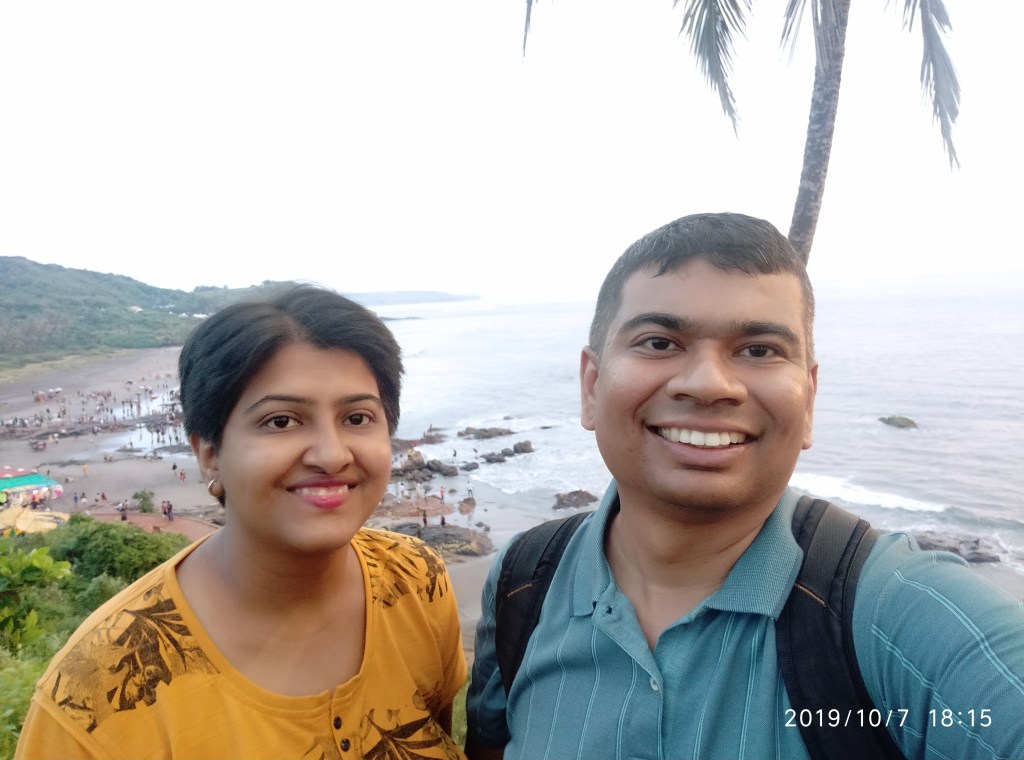
The ride back was quite an exciting experience as the it was dark by the time we left Vagator. Trusting the GPS system on my mobile phone, we navigated through narrow and dark village roads and finally made it to familiar areas after couple of detours.
The roads in Goa are uniformly bad and were ridden with potholes everywhere we went. This is quite a sad state of affairs in the state that plays host to lakhs of domestic and international tourists. We saw couple of road accidents during our visit, which are inevitable consequences of pathetic roads.
That night I confirmed my local taxi for next day through Bharat Taxi Service before calling it day.
Next day on 08-Oct-2019, we left early at 09:00 AM in local taxi to visit “Old Goa” area , famous for its churches and Portuguese influences. We stopped at breakfast at Café Bhosle at Panjim for a delicious snacks of Bhaji -Pav (different from Pav-Bhaji of Mumbai/Pune) ,Chilli bhajji and sweet bun. We then moved on Old Goa area, about 8 Kms from Panjim through a very scenic roads. River Mandovi gave us company almost throughout the drive and we were tempted to stop to admire the view.
We arrived at Basilica of Bom Jesus which is also known as St Xavier Church. This is one of the oldest churches in India and contains the body of St. Francis Xavier, one of the earliest saints in Portuguese India. The interiors of this church are very baroque with numerous paintings and engravings .As this church continues to be a place of worship , we paid our respects and moved on.
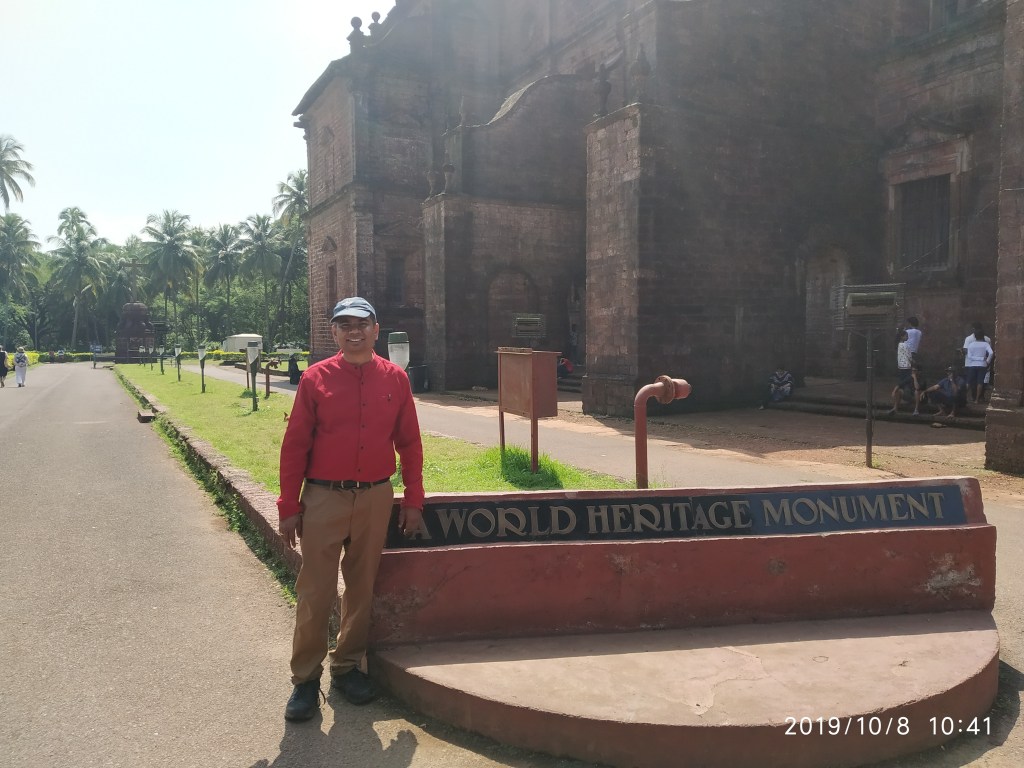
There are two other churches in vicinity, Se Cathedral and Church of St. Francis of Assisi. Both of these are large churches and of architectural and historical significance. I was more interested in the Archeological Survey of India (ASI) museum in the same complex which has numerous exhibits on the Portuguese conquest of Goa. Even after reading so much, I still cannot fathom how a handful of sea farers could travel all the way from Europe and conqueror this land. And rule it for 500 years uninterrupted !
Our next stop was the ruins of St Augustine church which was once a gigantic structure. The ruins too have its own charm and reflect the bygone era
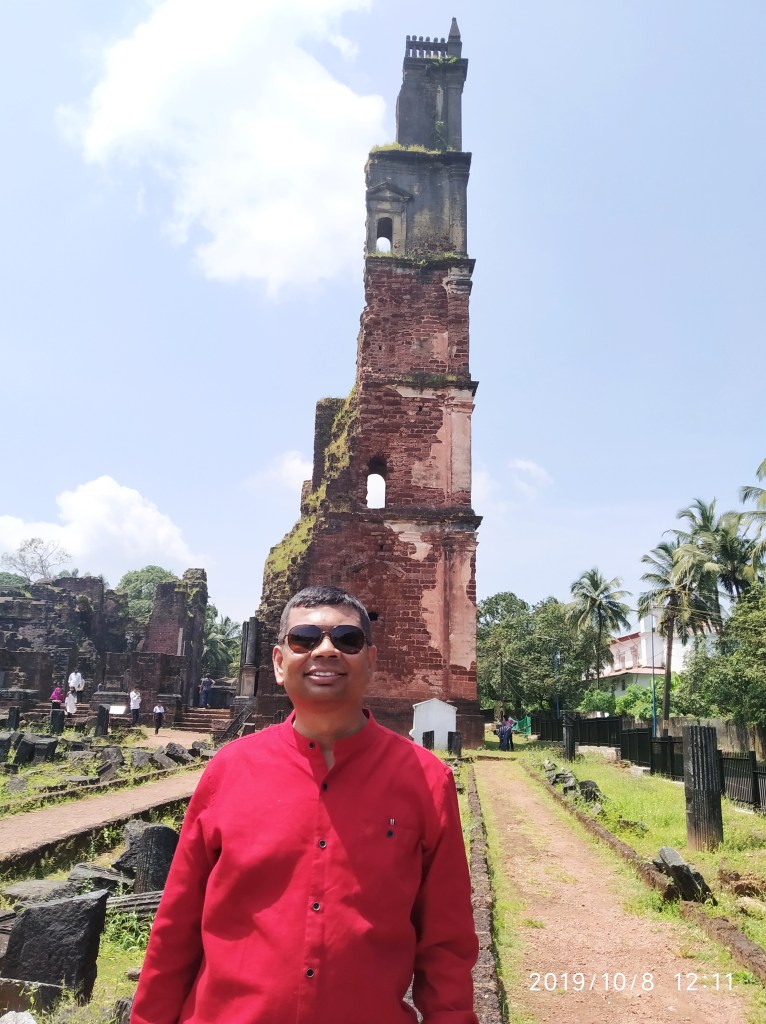
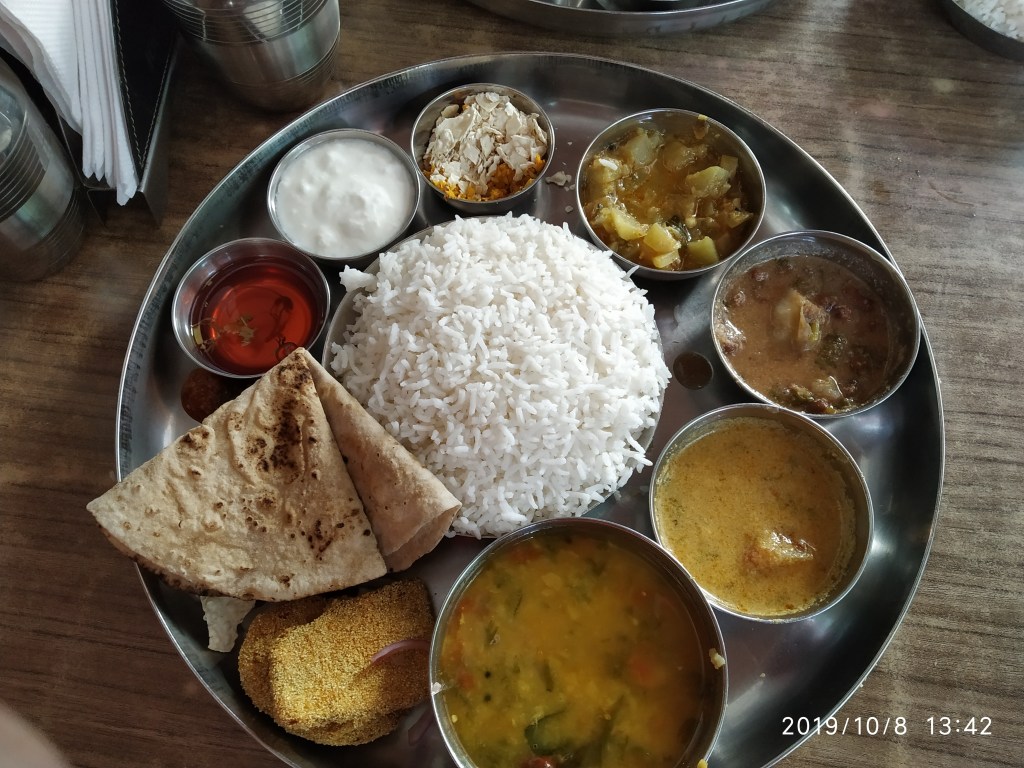
Post that we headed for lunch at a Panjim restaurant “Konkani Kanteen” , famous for its Konkani cuisine which has been around since 1972 . The vegetarian thali we ordered was delicious, with less spice and taste of coconut in almost all dishes. This restaurant is famous for its sea-food, but its vegetarian food is also quite commendable.
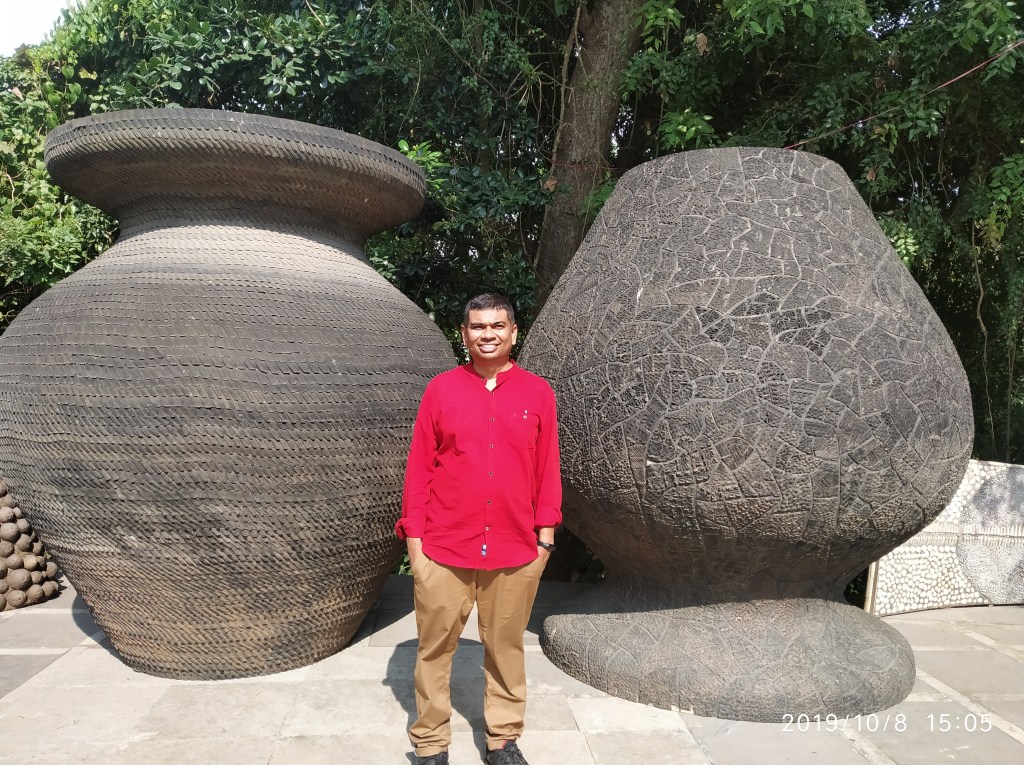
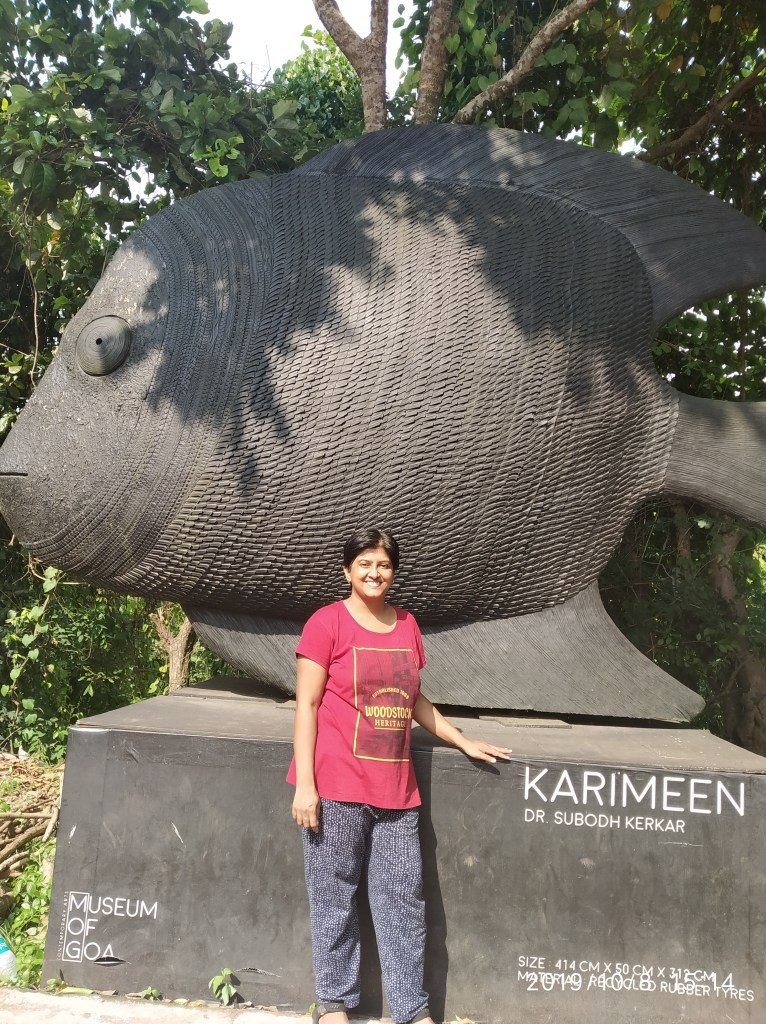
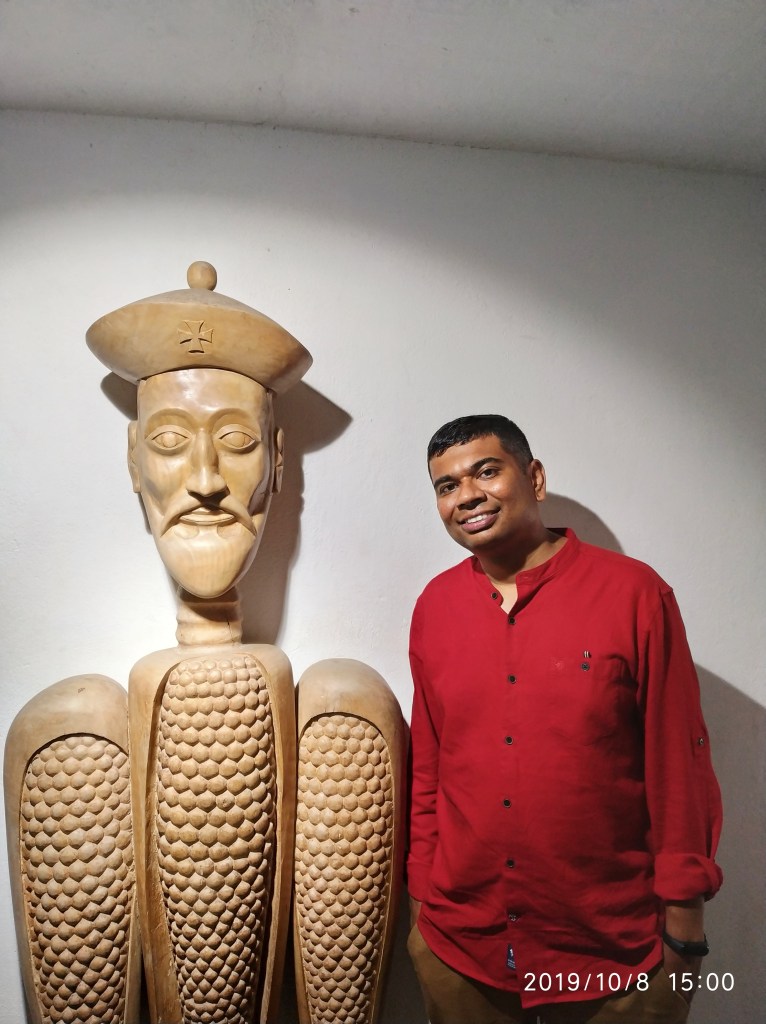
After lunch, we headed towards what would be our most interesting destination of our Goa trip – the Museum of Goa. This is a unique museum that depicts Goa’s history and people through contemporary art. The entire museum is inspiration of Dr Subodh Kerkar, who has created every artefact with a specific story to narrate. The initial 15 minute introduction documentary by Dr Kerkar sets the tone for the visit. I found the outdoor exhibits especially fascinating and many of them are made entirely from waste material and discarded items.
That evening we spent quietly visiting the sunset from Sinquerim beach
On 09-Oct-2019, we headed towards Chapora fort made famous by Dil Chahata Hai film. On the way we stopped for Idly-Dosa at a Vegetarian restaurant in Calangute. The proliferation of ‘Pure Veg” restaurants in entire North Goa was a pleasant surprise for me. With Indian families with kids forming bulk of tourists in Goa ,there are veg restaurants every few meters now. Surprisingly, many are run by local Goan families and not by migrants from coastal Karnataka.
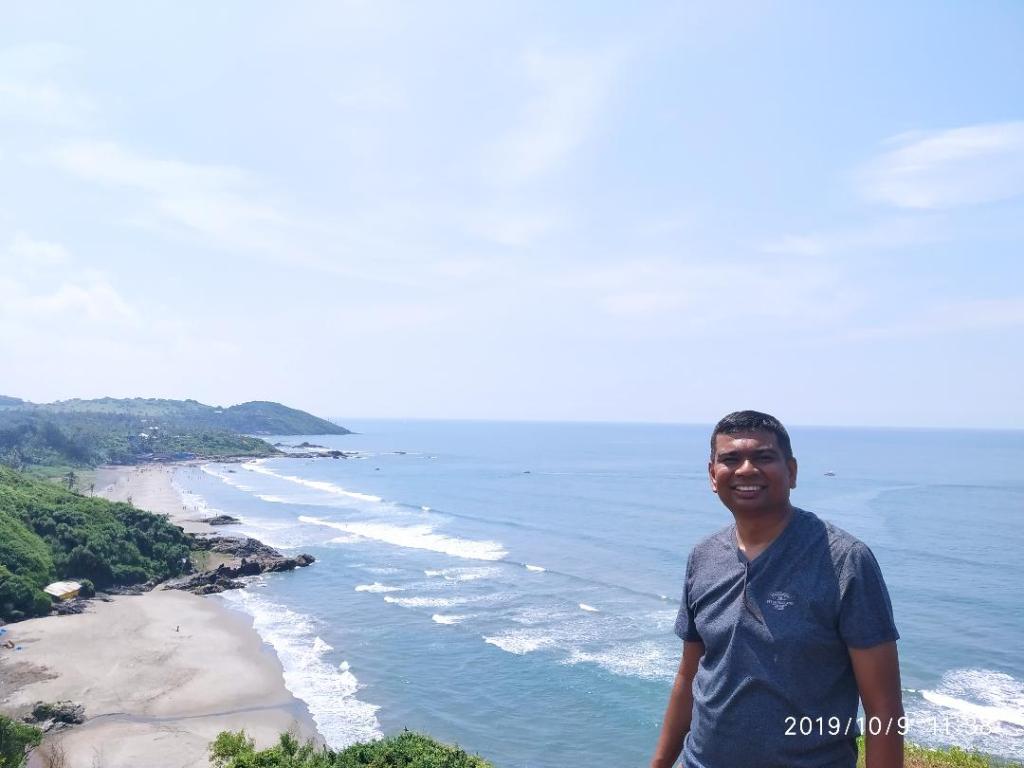
To reach Chapora fort, we had to walk uphill for about 15 minutes. There are newly build stairs which make it quite an easy ascent. Once we reached the top, we can view the Chapora river, Chapora beach and the Vagator beach. The views are spectacular and one can easily spend couple of hours admiring the scenic beauty from the vantage points.
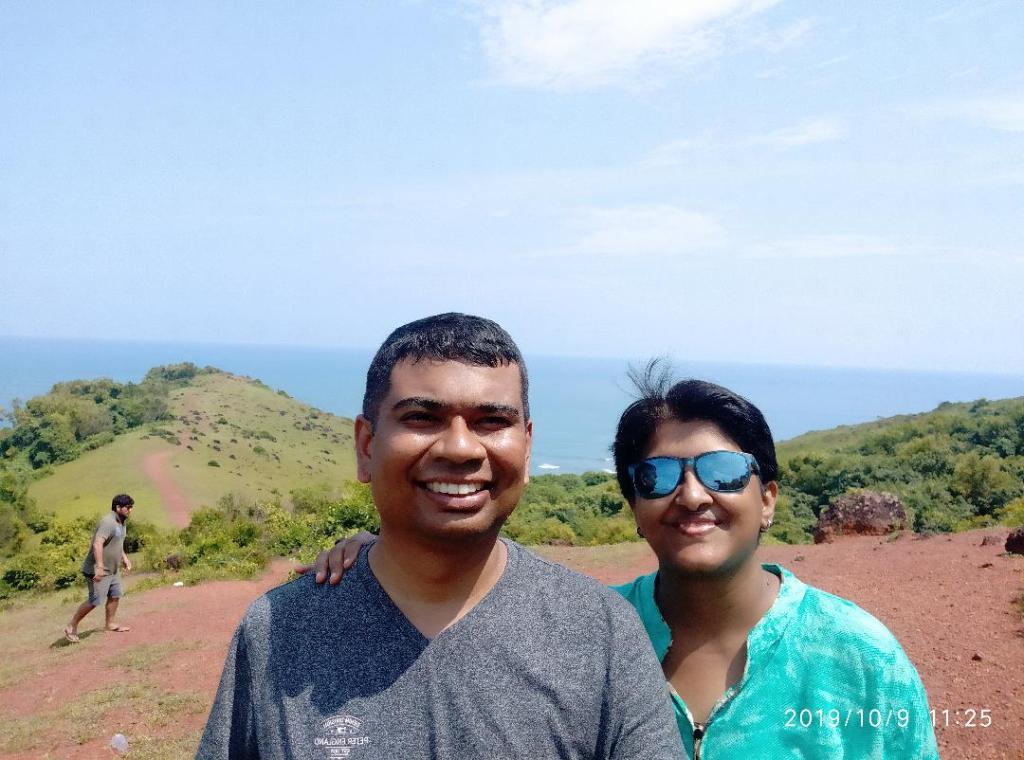
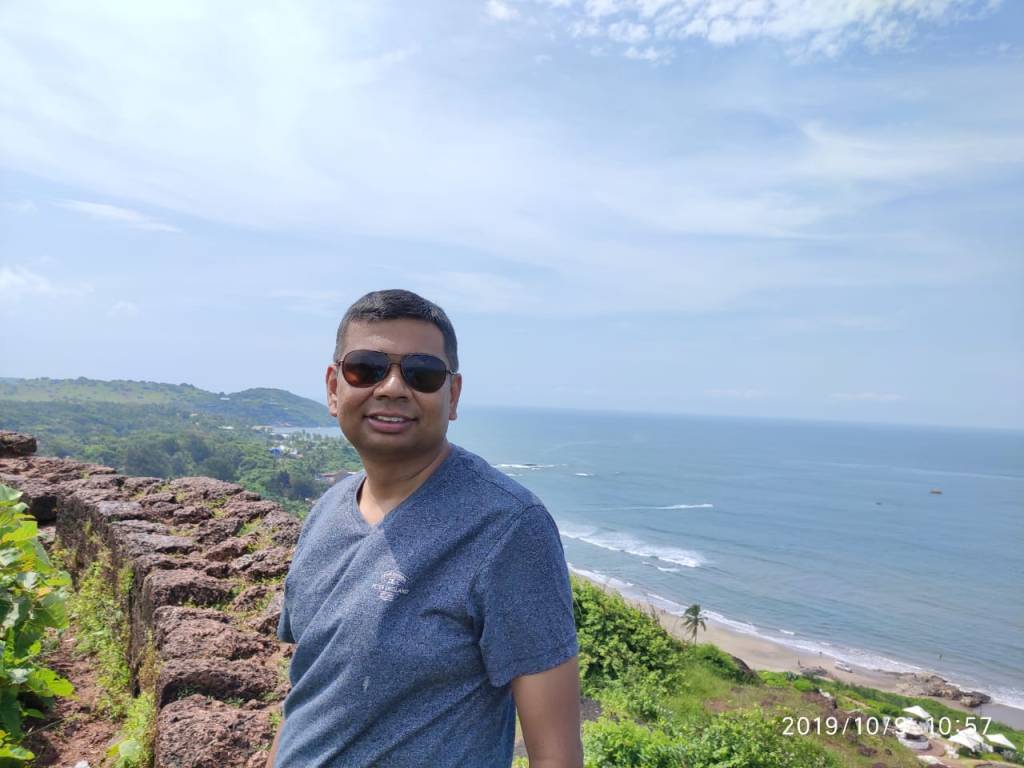
After a memorable time atop Chapora fort, we headed back to Candolim, stopping at Anjuna Flea market on the way. I found it uninteresting with rows of shops selling trinkets and casual clothes. Same wares which one sees all over Goa
The final evening in Goa was spent taking dip in the sea at Candolim beach. The sea was fairly rough which made playing in water very enjoyable.
10-Oct-2019 was our final day in Goa and we spent the morning just walking on the beach. On way to airport we visited the Panjim Church and lunched at Kamat Hotel. This place has been around forever and during all my visits, I have lunched at this restaurant.
As my plane took-off from Dabolim airport I had final look at the Arabian sea below me. In this world of uncertainties, I knew one thing for certain – “ I will be visiting Goa again !”
 Temples of Karnataka