Madurai – one of the most famous sites for religious tourism in Southern India. The Meenakshi-Sundareshwarar Temple (also called Meenakshi Amman Temple) is popular throughout India and devotees aspire to visit this place once in their lifetime.
Another famous temple in Tamil Nadu is the Sri Ranganathaswamy temple at Srirangam. I came to know about Srirangam while reading about life Sri Ramanujacharya , the great saint who propounded the Vishisht-advaita (qualified non-dualism) philosophy. Ramanujacharya lived in Srirangam for considerable period of time and was in-charge of Sri Ranganathaswamy temple.
I decided to combine my visit to these two holy towns – Madurai and Srirangam . Thanjavur, the town famous for its arts – painting ,classical music and craftsmanship is close to Srirangam. Hence I planned my itinerary to cover these three places.
An advantage of living in Bangalore is that there are direct trains to almost every major city in India. An overnight train to Madurai and another from Thanjavur to Bangalore suited me perfectly.
We departed from Bangalore on 28-Jun-22 by Mysore- Tuticorin express. At Bangalore railway station ,I was impressed by overall cleanliness . The “Swaach Bharat Abhiyan” undertaken by government are showing excellent results indeed!
At 7:30 AM next morning, 29-Jun-22, we alighted at Madurai Railway station.
Madurai is an ancient city mentioned in Sangam texts from 4 century CE. It was the magnificent capital city and the seat of the Pandyan empire which extended to large parts of modern Tamil Nadu. Today it is a bustling place, third largest city of the state and hub of industries like textiles and engineering.
After checking into our hotel – Mani’s Residency, we had breakfast at the New Sabareesh Hotel – a vegetarian restaurant which is in operation since 1963. Interesting to note that Madurai has numerous heritage vegetarian restaurants, especially in area around the main temple.
Next, we visited the most important attraction of Madurai – the Meenakshi Amman temple. This temple is at the centre of Madurai and finds mention in the Tamil Sangam literature, from 6th-century-CE texts.
The temple was originally built by Pandayan emperor Sadayavarman Kulasekaran , and major additions were made by many other Pandayan kings over the centuries . In 1311 infamous eunuch Muslim general, Malik Kafur devasted and looted the temple, destroying it completely. It was re-built in all it’s glory by the rulers of Vijayanagar empire in 15th century.
Mobile phones and other electronic gadgets are not allowed inside Meenakshi temple. Devotees are expected to place them in a locker near the shoe stand. There are in fact other restrictions related to leather belts and wallets which were not strictly enforced.
The temple complex is so huge, that it has four entrances! We clicked couple of pictures before entering the premises.
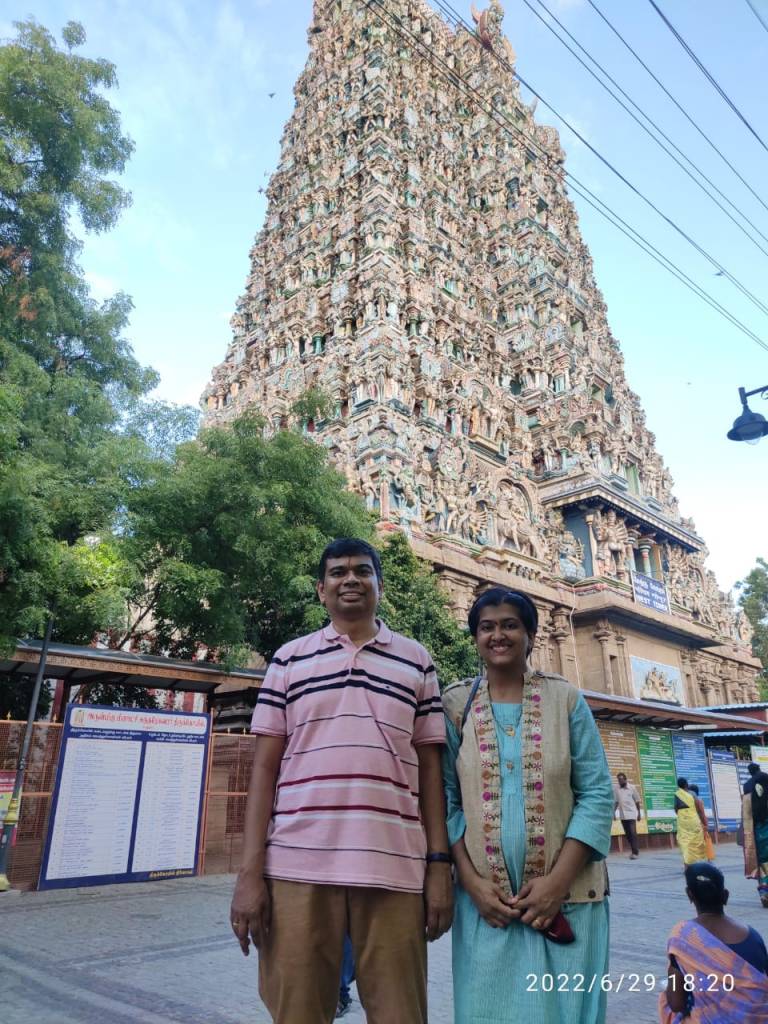
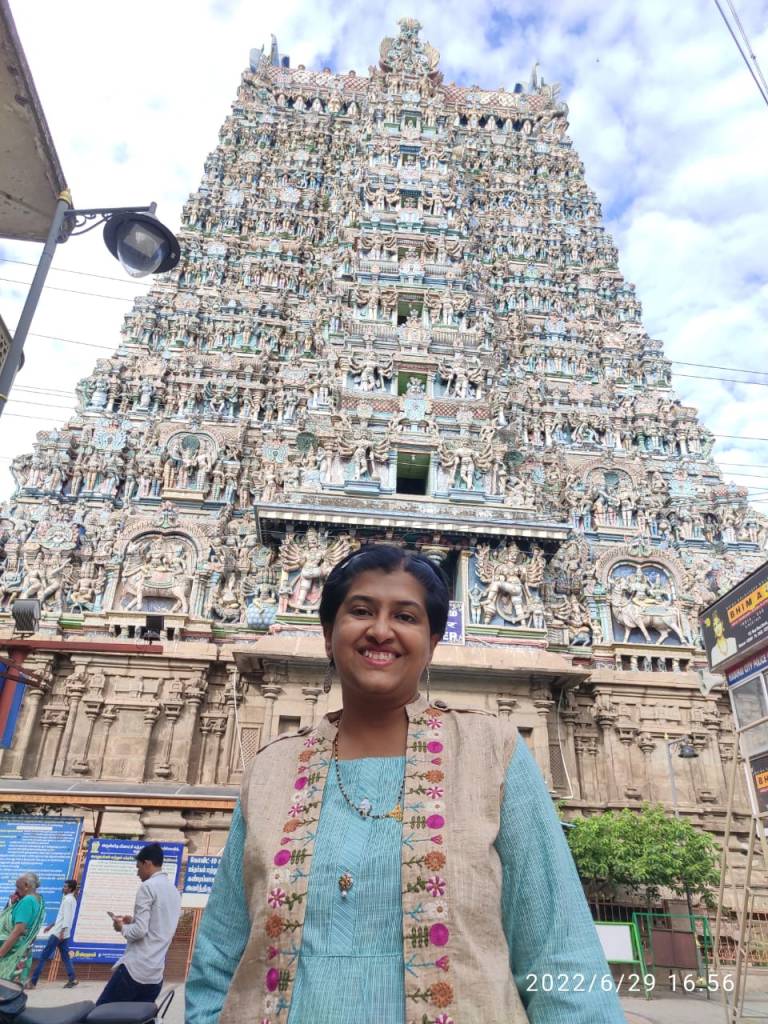
Since our focus was the take darshan of Meenakshi and Lord Shiva , we reached the South gate of the temple. Meenakshi temple has two separate shrines for the goddess Meenakshi and Sundaresvara (Lord Shiva) respectively . After taking special ticket of INR 100 each, we stood in the “Special darshan” queue. Many of my friends from northern India find it inappropriate that those buying tickets are given priority in darshan queue. I find it perfectly acceptable though. It gives an option to those who have limited time for the visit.
The darshan of both Meenakshi Devi and Lord Shiva took around 30 minutes and was memorable. Post the darshan, we admired the huge idols in the temple complex. The ones I found fascinating were those of Lord Ganesha, Nataraja and Bhadhara Kali. Each of these idols is more than eight feet in height and has exquisite expressions. There are shrines dedicated to Mahalakshmi, Saraswati, Dakashinamurthy and other deities in which regular worship is performed.
We had hired a guide to give us information on the temple and show landmarks which we would have missed otherwise. It is recommended to hire a guide as there are no clear sign boards in the temple premises.
The Thousand-Pillared Hall is a remarkable structure in the temple complex. Built during the reign of Vijayanagar empire, it was originally a dancing hall. Each pillar in the hall has a carved sculpture – of Karthikeya, Ganesha, Shiva or yali (mythological beast with body of lion and head of an elephant). The giant statue of Nataraja at the centre of the hall is simply mesmerising, it is lighted brilliantly which makes it appear very life-like.
There is a Temple Art Museum in the hall where icons, photographs, drawings, and other exhibits of the temple are displayed. However, the information about these artefacts is displayed only in Tamil, hence I could not get understand the context.
Since there are no mobile phones or cameras allowed, I could not capture the magnificence of the temple in pictures. In my view, the temple management should reconsider this mobile phone ban and freely allow its usage.
After the visit to the Meenakshi temple , I visited the nearby Koodal Azhagar Temple. This is a medieval temple dedicated to the Lord Vishnu. The temple is originally built by the Pandyas, with later additions by the Vijayanagara empire and Madurai Nayaks kings
A video about the Koodal Azhagar temple is given in the below link.
Madurai is known for its iconic restaurants. Over the years, these restaurants have upgraded themselves – installed AC , renovated their look-and-feel. However, have kept their authenticity of taste intact.
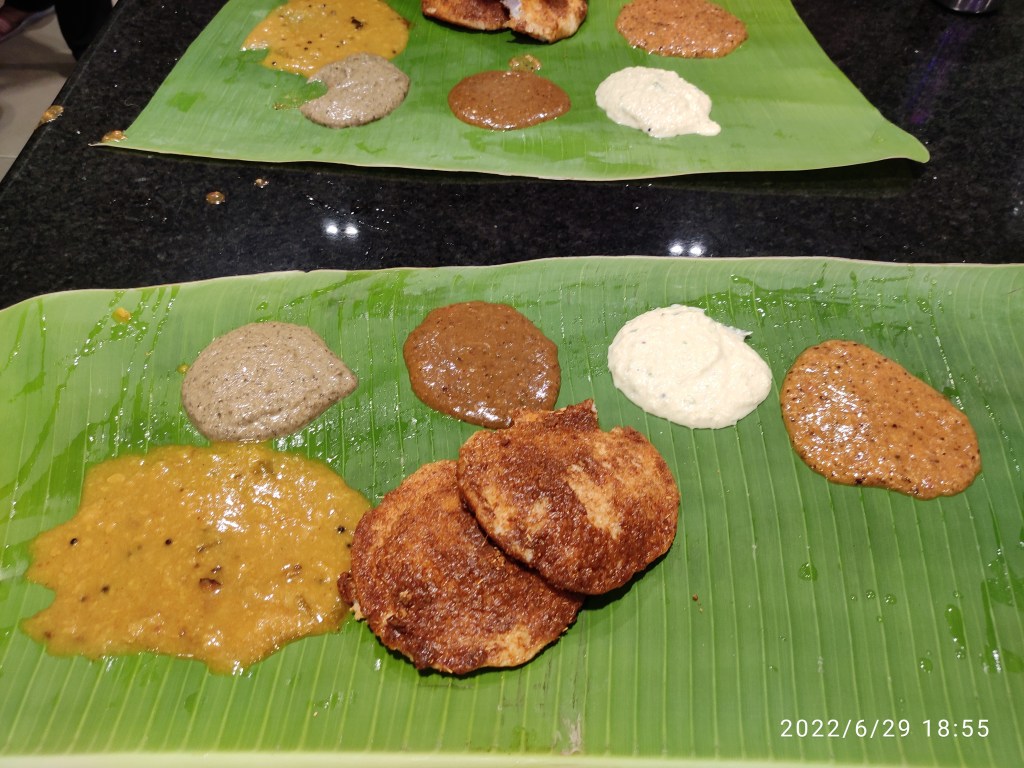
For lunch we visited Sri Ram Mess and Murugan Idly shop for evening snacks. The food was pretty good and met our primary expectations during travel- the service should be quick and the food should be heathy. The special ghee-podi idly from Murugan Idly Shop was really scrumptious
Next morning, I visited another landmark of Madurai – Thirumalai Nayakkar Palace, about 2 KMS from Meenakshi Temple.
It is a 17th-century palace erected in 1636 AD by King Tirumala Nayaka, a king of Madurai’s Nayakkar dynasty who ruled from 1623 to 1659. This palace is a fusion of Italian and Indian styles. It is known for its majestic pillars, with height of about 82 feet and width of almost 19 feet. Today only the Main Hall and the Dance Hall remain of the palace, but the remains are impressive.
There is also a small museum inside the hall which has artefacts like paintings, sculptures and stone inscriptions.
The link to the Dance Hall of the Nayakkar Palace is given below
The link to the stone inscriptions in the Nayakkar Palace is given below
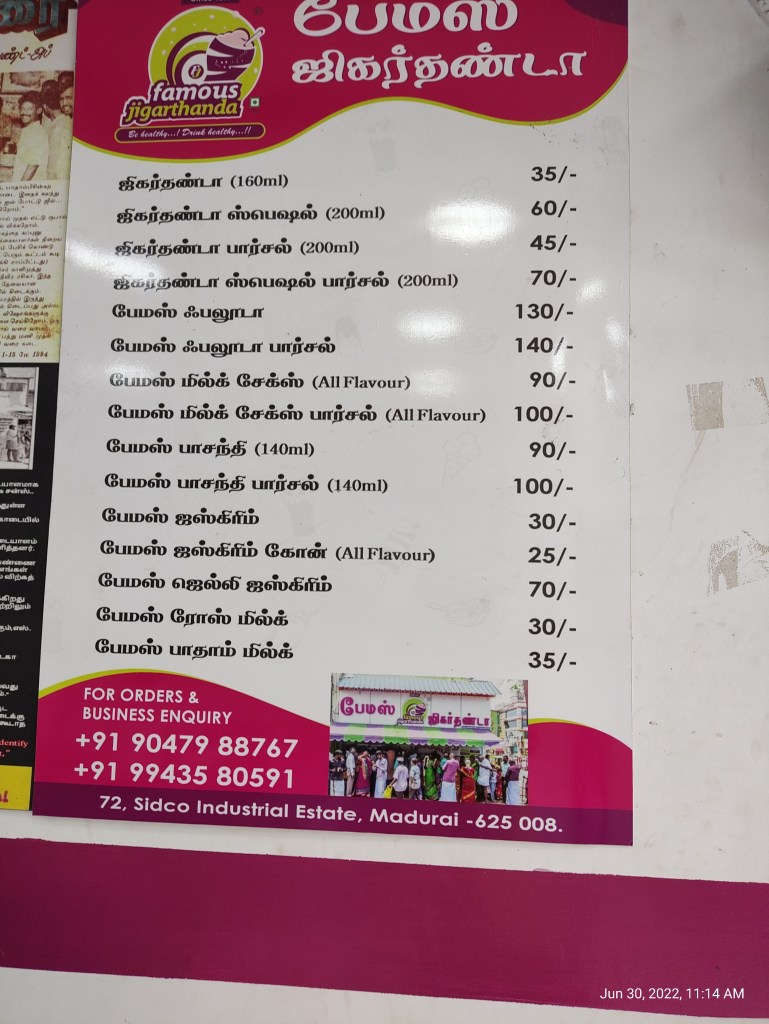
The heat in Madurai was oppressive as one would expect in months of June and July. The famous drink “Jigarthanda” to the rescue ! Made with milk, sugar and almonds it has been popular in Madurai since decades.
We departed from Madurai boarding a train that took us to Srirangam. The rail and road connectivity in Tamil Nadu is excellent and those who prefer taking trains/buses can do so easily.
Srirangam is an island town-part of Tiruchirappalli Metropolitan Area. It is bounded by the Kaveri river on one side and its distributary Kollidam on the other. It is home to Sri Ranganathaswamy Temple, a major pilgrimage destination and the largest temple complex in India. It is also famous because Sri Ramanuja, one of the great philosophers of Hinduism, lived here during 11th century AD.
Sri Ramanuja is known for his commentaries on the Brahma Sutras ,Bhagavad Gita and as a proponent of Vishisht Advaita (qualified non-dualism).
We checked in at Srirangam Yatrininas – a hotel run by the management of Sri Ranganathaswamy Temple. I was impressed by the room size, the cleanliness and the professional behaviour of the staff. The major downside is that the functioning restaurant in its premises was temporarily closed. Since there are no nearby restaurants, it was a hassle to travel 2 kms for every meal.
At around 5 PM we visited the Sri Ranganathaswamy Temple and hired a guide to understand the significance of the temple. In our visit that lasted around two hours, we covered the following
- The main shrine of Lord Ranganatha- This is the focal point of most devotees and hence it takes time for darshan. We bought special darshan tickets and had to stand in queue for about 45 minutes to see idol of Sri Ranganthar reclining on Adisesha
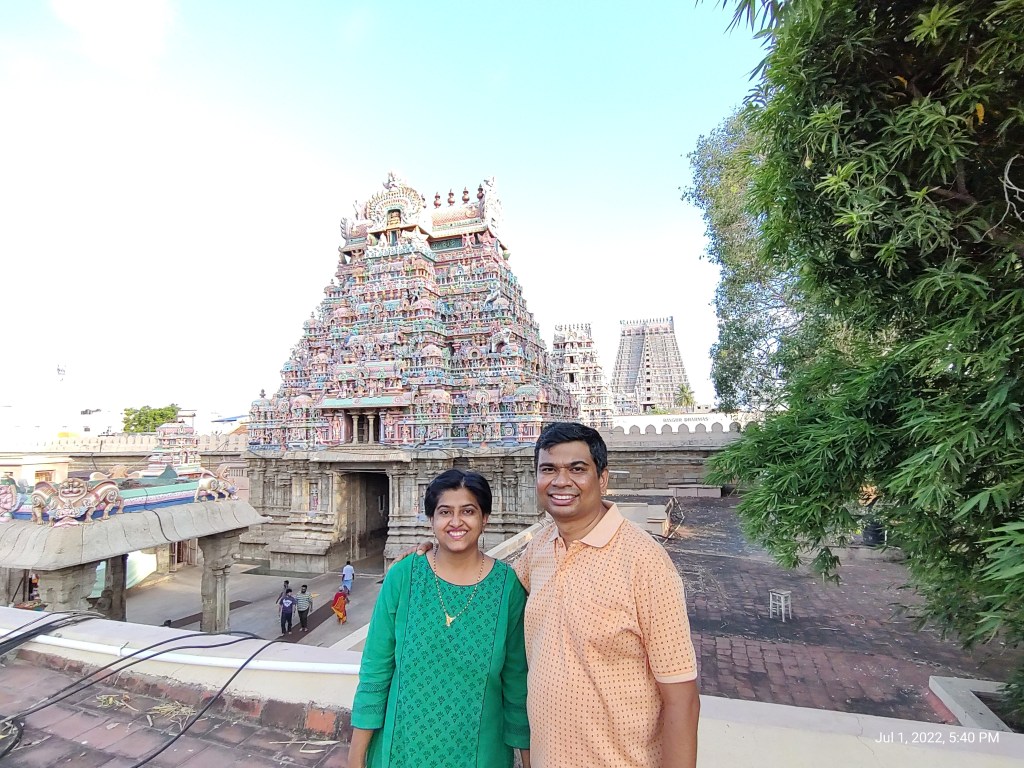
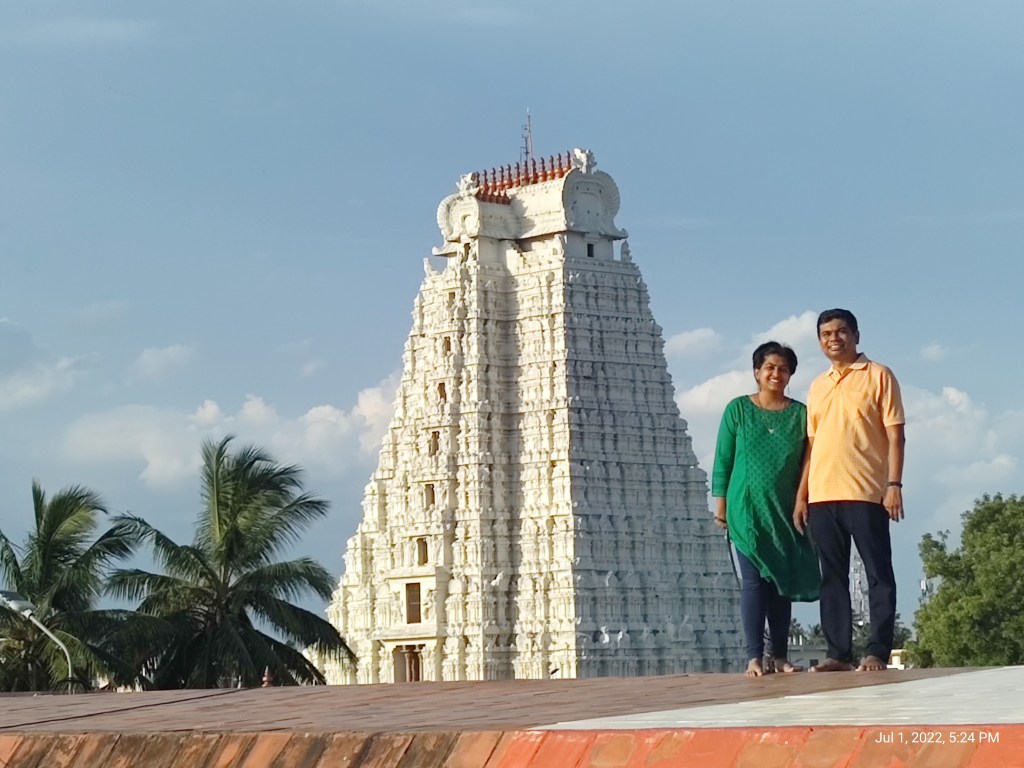
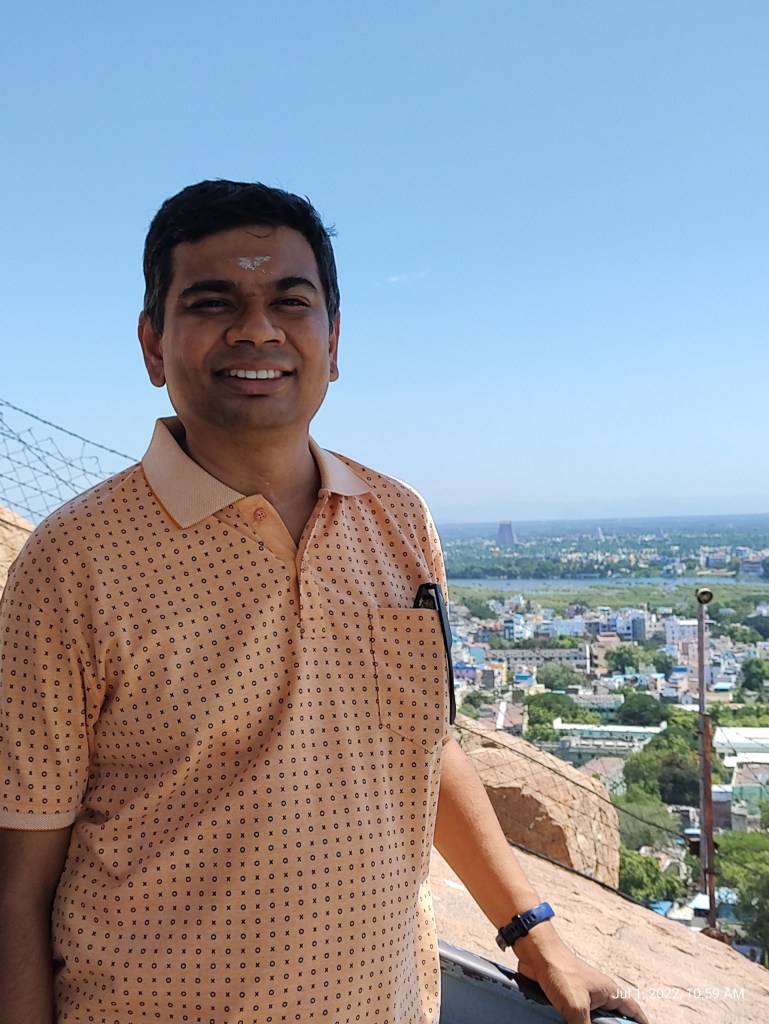
- Rooftop view point : This is vantage point from where we could view the 21 gopuras and the appreciate the vastness of the temple complex
The link to video from the Rooftop view point is given below
Some of the pictures from Srirangam Temple are below
- The Goddess Ranganayaki (Lakshmi)
- The Samadhi of Sri Ramanujacharya : It is believed that the mortal body of the Ramanuja is preserved here since last 1000 years. Anointed with sandalwood and herbs, the body has remained intact and can be viewed by devotees.
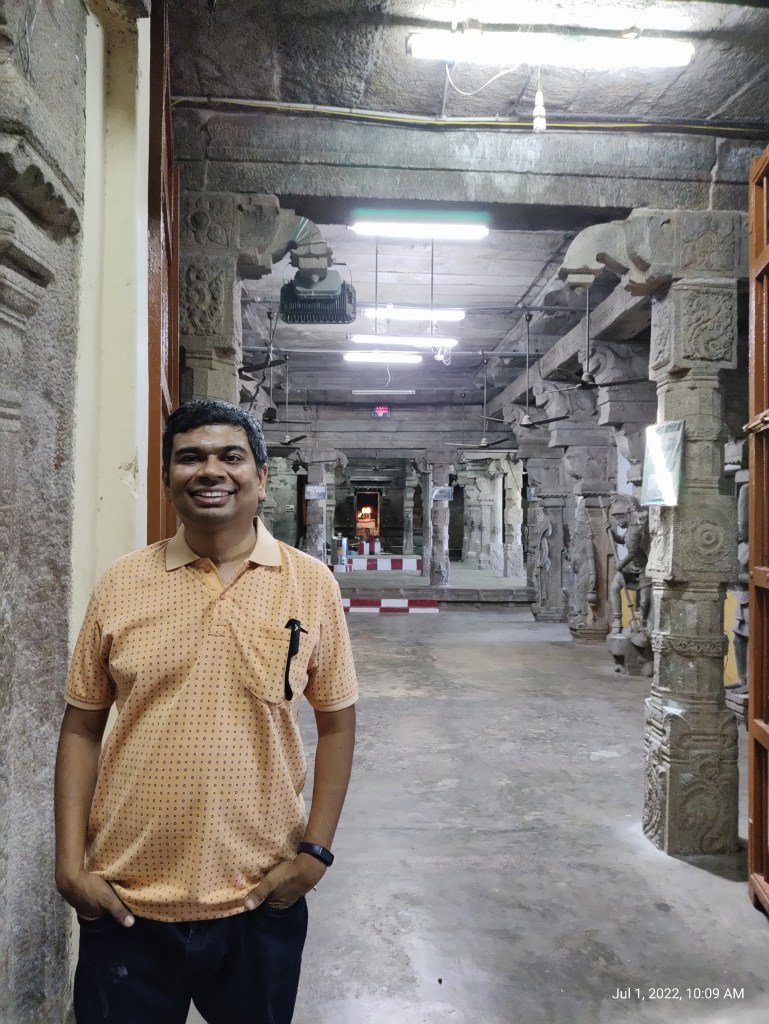
- The 1000 pillar pavilion – This is similar to the Meenakshi temples in Madurai, however the one in Srirangam is closed except on special occasions
- Ranga Vilasa mandapam : This is the hall built by kings from Vijayanagar empire. The carvings and design style are similar to ones we see in Hampi.
The link to video of Ranga Vilasa is given below
Pictures from Ranga Vilas are given below
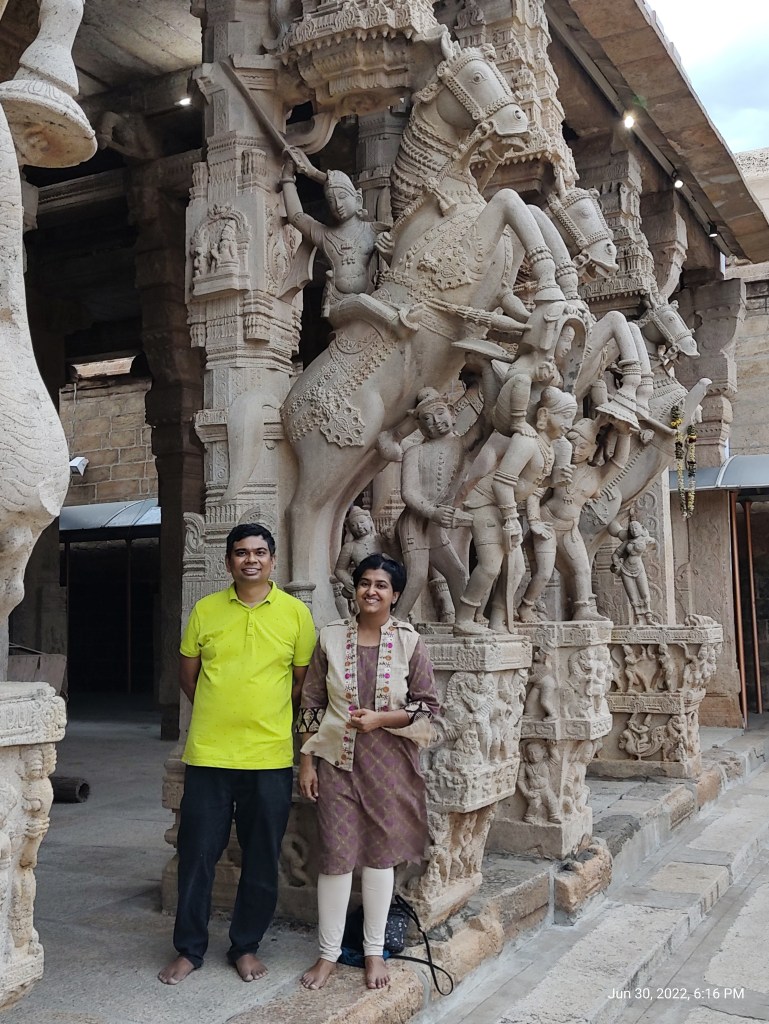
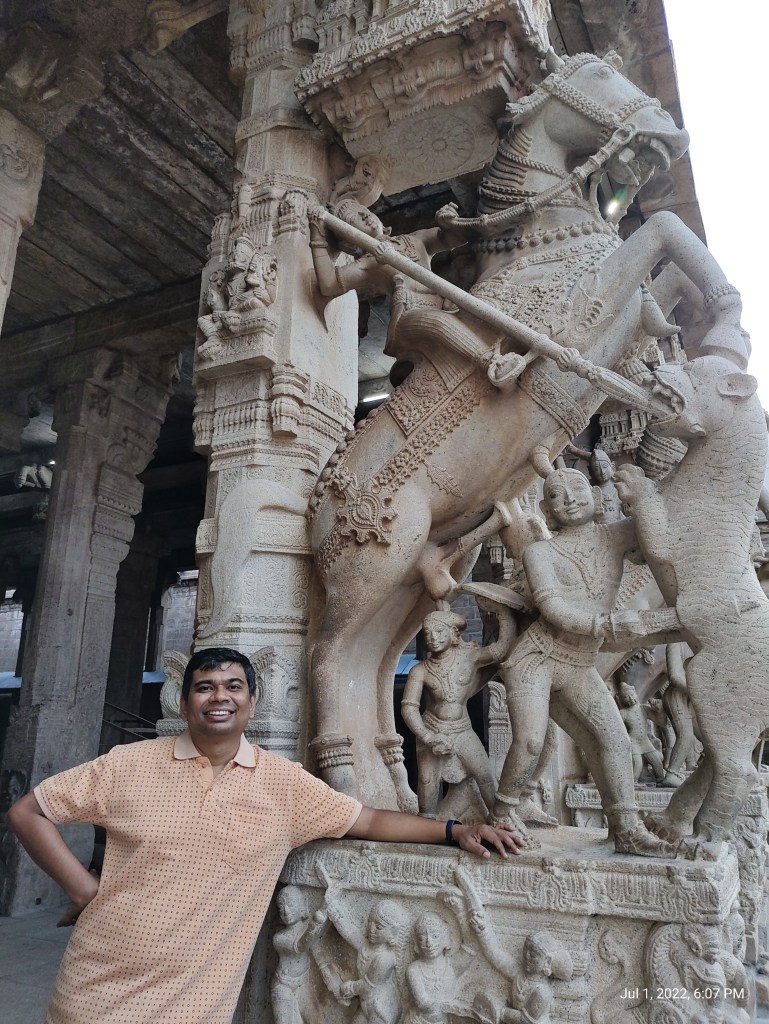
This is undoubtedly one of the most magnificent temples in world in terms of grandeur, architecture and religious significance.
However ,our darshan experience was not so pleasant and though we had purchased special darshan tickets, we had to wait for 45 minutes to take darshan of Lord Ranganathswamy, jostling with other devotees. In my view, the temple management can do better job of managing the crowd and ensuring devotees have hassle-free experience.
Next morning, we visited the famous Rock Fort temple in Trichy ,a distance of about 5 KMS from Srirangam. The Rockfort is a fortress which stands atop a 273-foot-high rock and provides a magnificent vista of the city.
The temple complex has three shrines, two of which are dedicated to Lord Ganesha, one at the foot and the other at the top. And the Lord Shiva Temple which is half way up the hill. The surprising part is that one ascends to the top from inside the hill and thus escaping from the sweltering sun ! The Lord Shiva temple which is inside the hill (halfway up) is magnificent with pillars and paintings. We took some rest and admired the architecture of the temple
The link to video of Rockfort temple is given below
As we approached the summit, we could see the Kaveri river and the gopuras of the Srirangam temple. Excellent vantage point and perfect place to enjoy the cool breeze.
The link to video of Rockfort temple view is given below
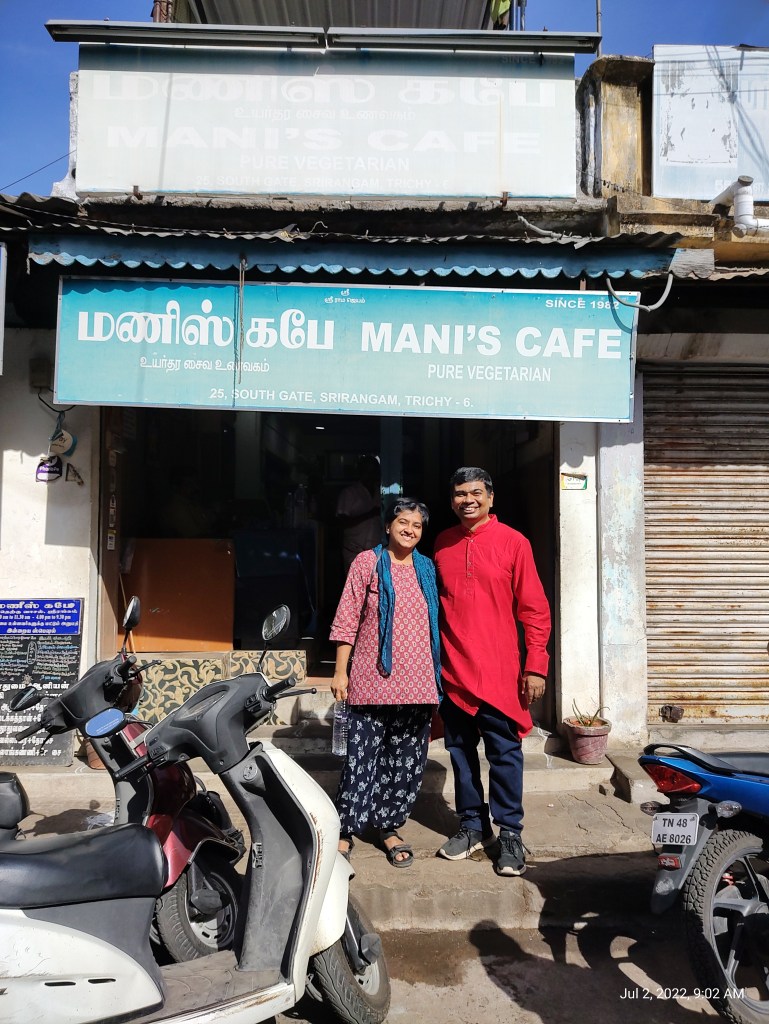
The Ranganathswamy temple is surrounded by numerous small family run restaurants which serve limited menu. Initially, I was hesitant due to external appearance of these places, but acquiesced due to lack of choices. However, two restaurants in particular – Gopal Iyengar Homely Mess and Mani’s café were quite impressive is terms of taste and service. The wholesomeness of the food was a welcome change from standard restaurant cuisine and we enjoyed all our meals there.
While the Sri Ranganathaswamy Temple is dedicated to Lord Vishnu , Jambukeswarar Temple is the famous Shiva temple of Srirangam. Another masterpiece of Dravidian architecture from the Cholan period.
The link to video of Jambukeswarar Temple is given below
Though we had positive experiences everywhere it is to be noted that Tamil Nadu is an unilingual state. Almost no one we interacted with could understand even a smattering of Hindi or English. Therefore our communication was restricted to few words which did lead to occasional confusion. Even restaurant menus are in Tamil !
For the next stage of our travel , we had hired a taxi. After checking out from the Srirangam Yatrinivas, we headed towards Thanjavur about 60 kms east of Srirangam.
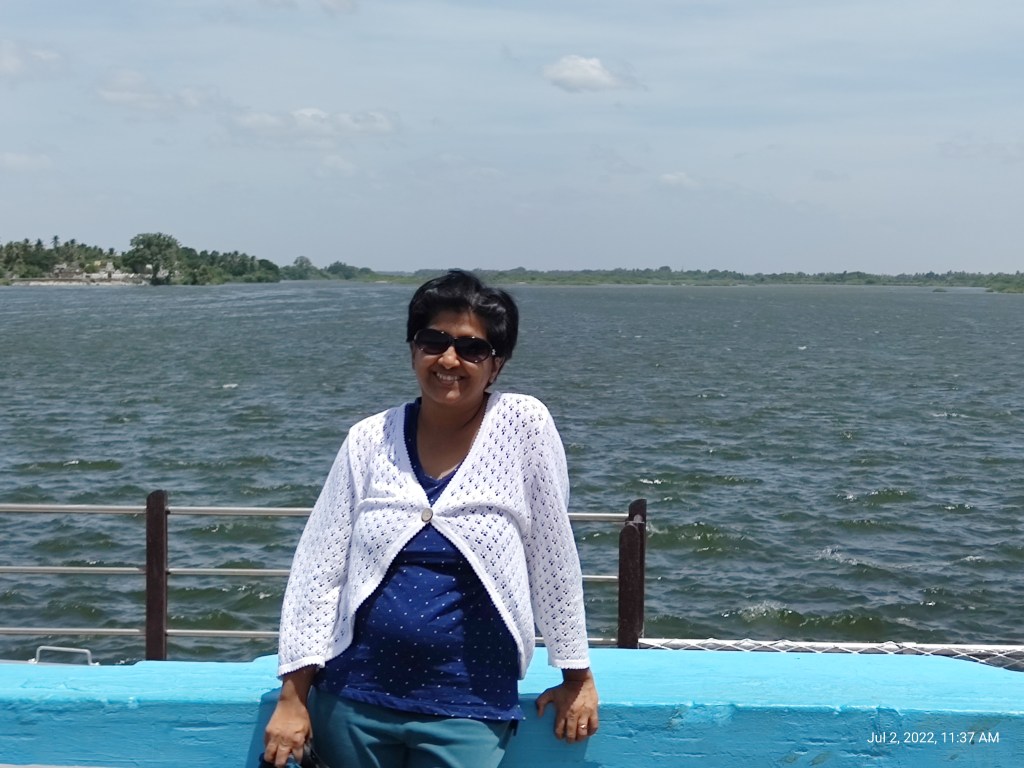
On the way stopped to view the Kallanai Dam, one of the wonders of the ancient world. Build around 150 AD, it is water diversion structure that diverts the waters of Kaveri across the delta region for irrigation via canals. Built entirely with stones, it is astonishing that this dam is still in use after 2000 years !
Cruising along the excellent highway Number 83, we reached Thanjavur is less than an hour . We checked into Hotel Victoriya which is about 2 KMS from the famous Brihadeshwara temple.
For lunch we visited Chellammals Manpaanai Samayal – a famous vegetarian restaurant serving clay pot cooked food. They serve authentic healthy dishes which are slow cooked in clay pots. The taste was quite unique and definitely worth a visit.
Later in the day we visited Brihadeshwara temple – built in the 11th century by the Chola king Raja Raja Chola I and dedicated to Lord Shiva. The temple complex was brightly lit with classical musical program performance. Devotees and tourists thronged the temple giving it a festive atmosphere
The unique aspect of this temple is the numerous inscriptions on the temple walls. These inscriptions are primarily in Tamil and Sanskrit scripts and provide details of the kings who funded the temple. It is amazing that these written records have remained legible for more than 1000 years !
The link to video of Brihadeshwara Temple is given below
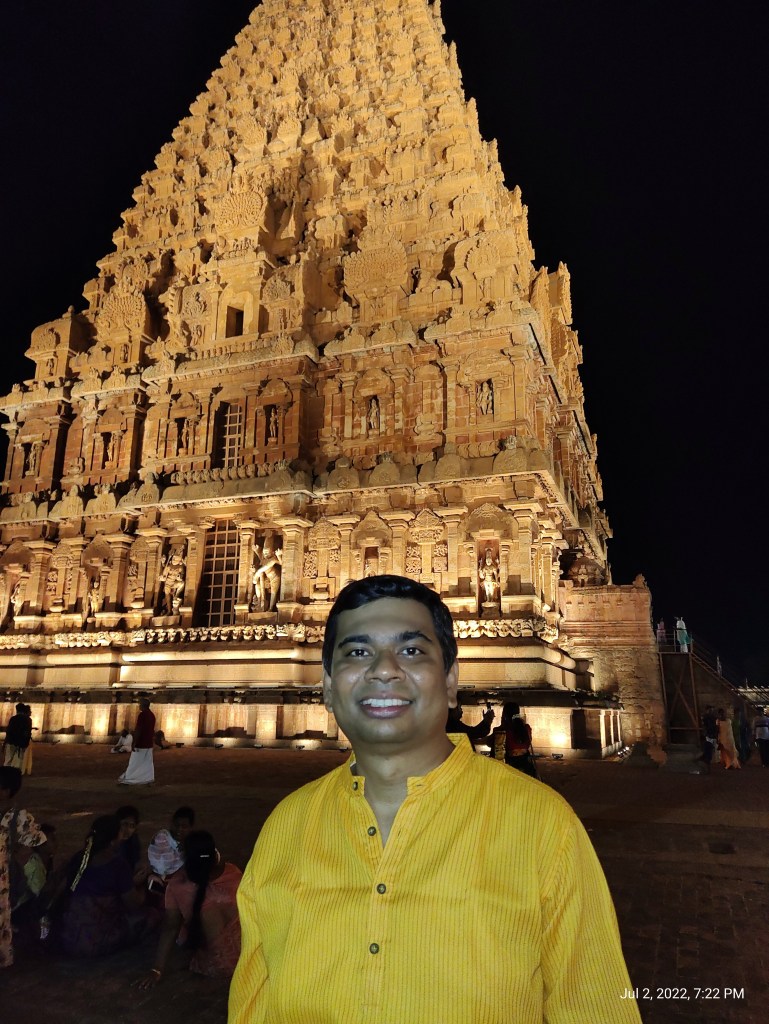
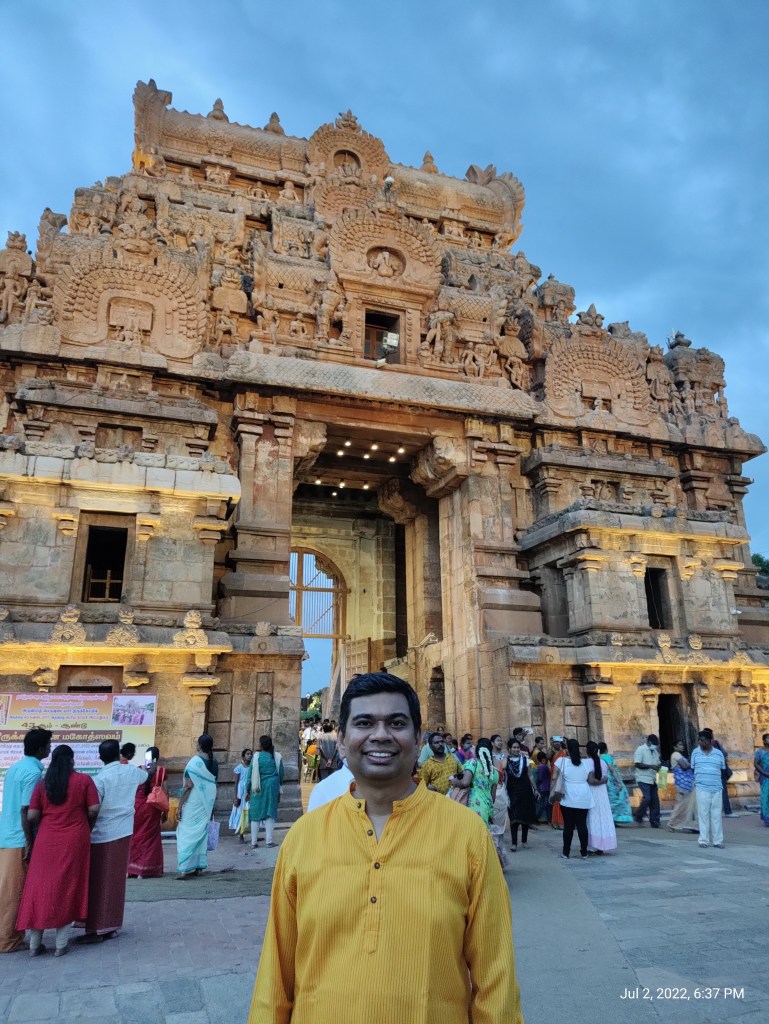
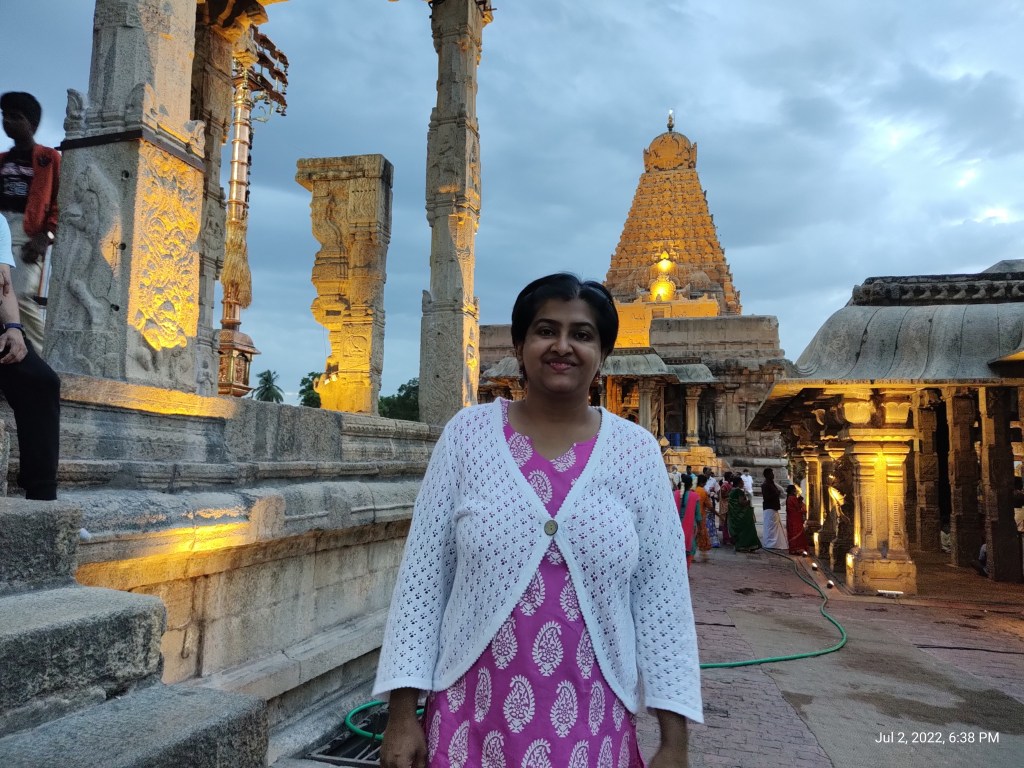
The main deity of this temple in Lord Shiva and there are numerous other shrines dedicated to Murugan, Parvati and Ganesha. Though the main shrine was built during the reign of Chola dynasty, additions and renovations were carried out by Nayyakars and Marathas over next millennium
Next morning, I paid another visit to the Brihadeshwara temple. This was a different experience than the previous evening : morning visit was more of piety and devotion.
The connections between the Marathas and the Thanjavur goes back to the time of Chhatrapati Shivaji Maharaj. Vyankoji, half-brother of Shivaji Maharaj, was the first king of Thanjavur. For next 150 years the Marathas ruled the region till it was annexed by British in 1855
After paying my respects to Ganesha and other deities I made way to Thanjavur Maratha Palace Complex.
The link to video of Brihadeshwara Temple is given below
There are multiple museums and halls in the Palace complex. The one I found interesting was the one with bronze and stone sculptures.
As my journey came to an end, I was filled with admiration for the great dynasties that ruled Tamil Nadu for centuries. The temples are testimony to the grandeur and the sophistication of the society.
The reason that medieval temples have survived in Tamil Nadu is due the valour of Vijayanagar empire who comprehensively defeated the tyrannical Madurai sultanate in 1300s. The Vijayanagar empire, the Nayyakars, the Pandyans and many others waged long and bloody battles against the invaders and were finally successful in protecting this glorious land. Today the descendants of these brave warriors form a significant percentage of Madras Regiment – one of the oldest and most decorated regiment of Indian Army.
As I travelled back to Bangalore, I reflected on the sheer number of temples in Tamil Nadu. By one account, there are more than 100,000 functioning temples in the region. Visiting even the main shrines is journey of a lifetime.
 Temples of Karnataka