Sringeri, the first Maṭha (Dakshinamnaya Sringeri Sharada Peetham), was established by Sri Adi Shankaracharya, the exponent of the Advaita Vedanta philosophy. Located on the banks of the Tunga river in the Chikkamagaluru district of Karnataka, it attracts a large number of pilgrims. It is an ancient town that derives its name from Rishyashringa-giri, a nearby hill mentioned in the Ramayana.
My original plan was to visit Jog Falls immediately after the monsoon and then drive to Sringeri. However, due to unforeseen circumstances, my plan had to be aborted twice. Finally, in November 2023, I decided to drive directly to Sringeri, skipping Jog Falls as the monsoon had receded
23-Nov-23
Since there is no direct rail connectivity to Sringeri, traveling by road is the most efficient option. Hence, I hired a taxi for our four-day trip and started at 8:00 AM on November 23rd. I believed we would reach Sringeri by 4:00 PM and have time for a temple visit on the same day.
We stopped at Sri Harsha Grand Veg at Bellur Cross for breakfast around 10:30 AM. The hotels in this part of Karnataka are uniformly good, with a high level of cleanliness, taste, and affordability. Such infrastructure makes a long car journey quite comfortable.
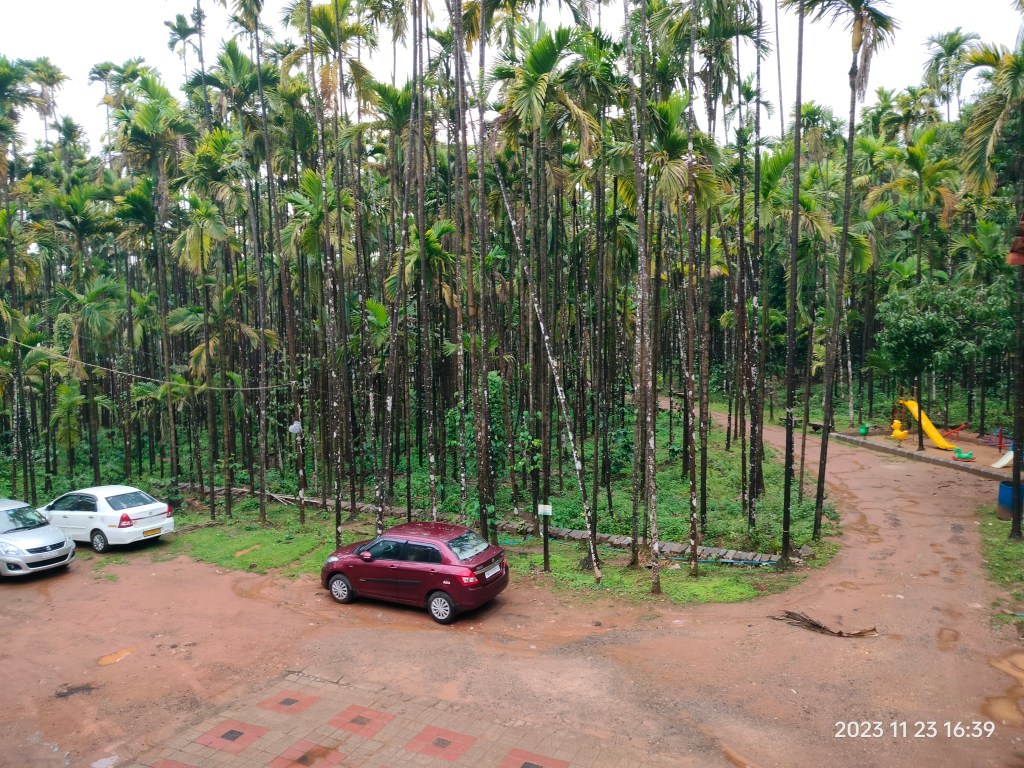
After a few hours, we entered Chikmagalur district – home to coffee plantations and lush green hills. The drive was very scenic, though full of twists and turns. Around 4:30 PM, we reached Hosamane Homestay in Sringeri. I loved this homestay, which is built in the middle of an arecanut plantation.
Around 5:30 PM, I walked into the Sringeri temple complex. I had visited this temple as a five-year-old and have a very faint memory of this place. The only thing I remember is running across the complex as my feet were getting burnt walking on hot tiles. Today, due to the rains, the tiles were not burning but quite wet!
The link to video of Sringeri temple complex is given below
The temple complex has two main temples – Sri Shardamba temple and Sri Vidyashankar temple – and numerous other shrines dedicated to Balamurgan, Hanuman, Ganesha, etc. I first visited the Sri Shardamba (goddess Saraswati) temple and was mesmerized by the beauty of the idol. The sandalwood idol was originally consecrated by Sri Adi Shankaracharya in the 8th century until Vijayanagara rulers installed a seated gold statue of Sri Shardamba.
Sri Shardamba temple
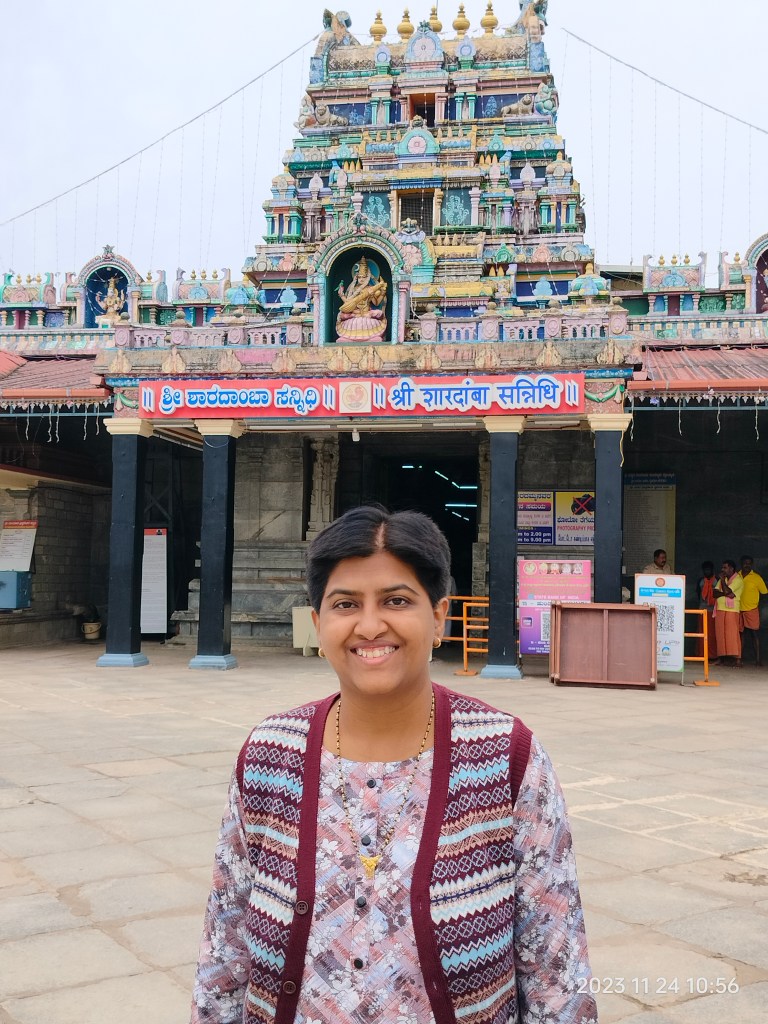
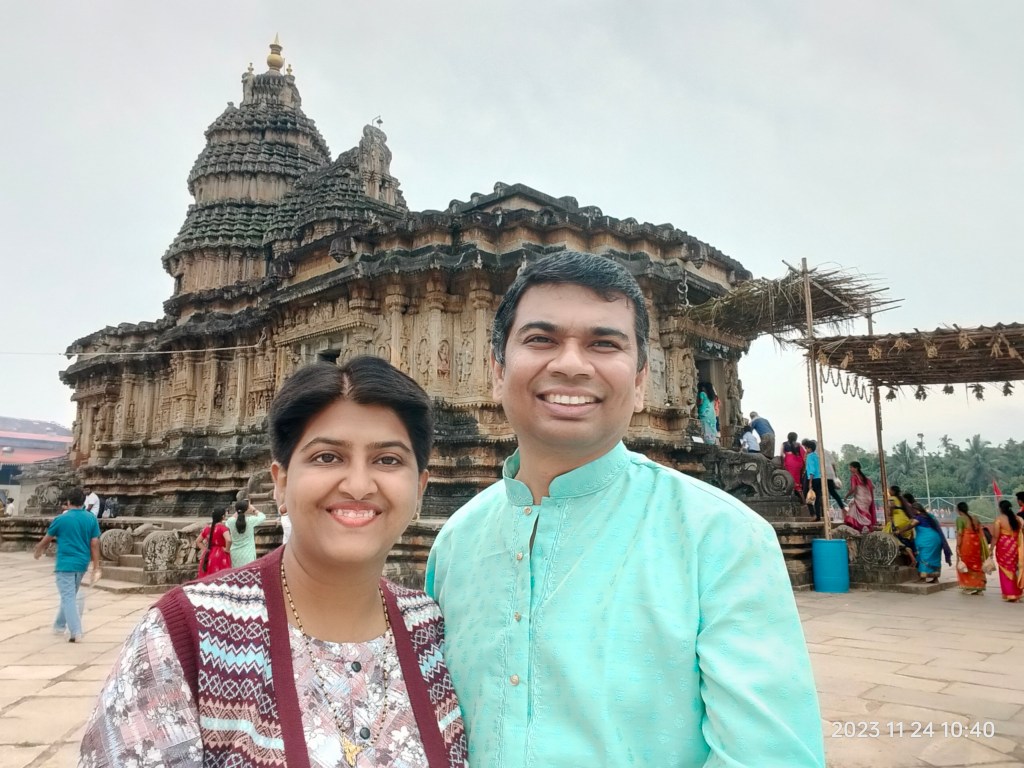
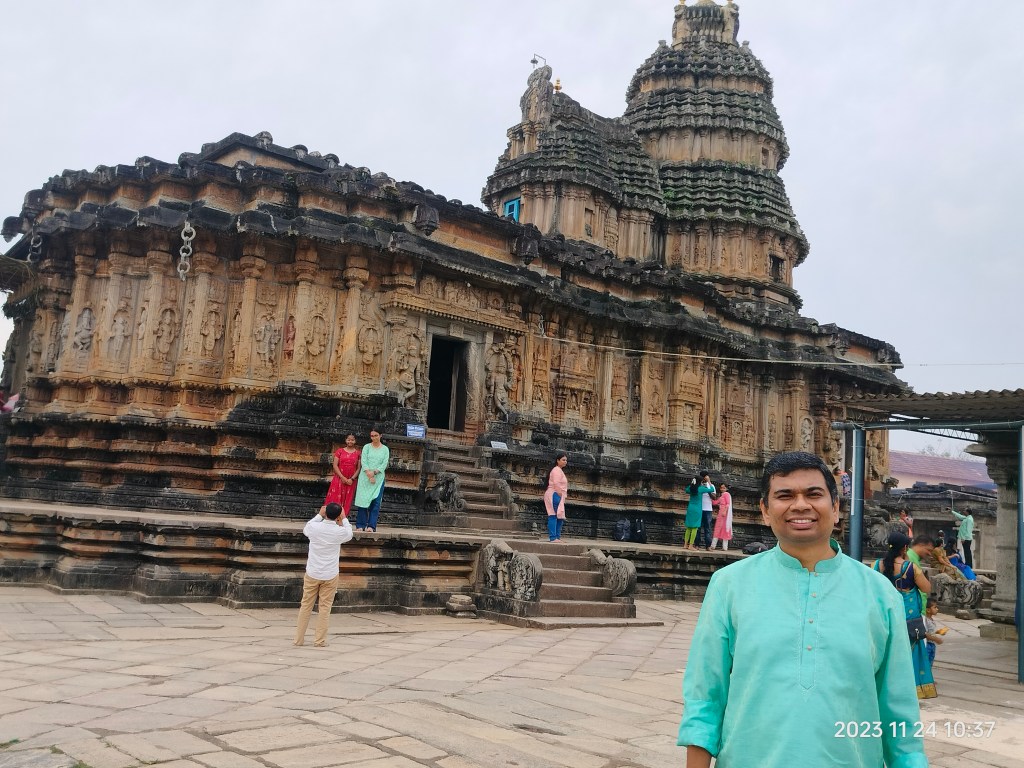
Unlike other ancient temples, it was very large, airy, and well-lit. After that, I visited the Vidyashankar temple, which was built in the 14th century, combining both Hoysala (Chalukya) and Dravidian architectural styles. The temple is dedicated to Lord Shiva and built on the samadhi of Acharya Vidyathirtha. This is an architecturally significant monument with wonderful carvings on the external walls, similar to what one sees in Halebidu and Belur. We ended the day with dinner at our homestay.
Vidyashankar temple
The link to video of Vidyashankar temple is given below
It had been a long day for us – it took around 8 hours to cover the distance of 320 km, primarily due to the winding roads in Chikmagalur district. The quality of roads is pretty good throughout the journey.
24-Nov-23
I had been looking forward to this day for a while – the day when I could get darshan of the current Shankaracharya of Sringeri. There is a dedicated building called ‘Guru Nivas,’ where Swamiji gives darshan to devotees. Around 11:30 AM, we were seated in the gigantic hall, and Swamiji walked in. Sri Vidhushekara Bharati – the 37th Shankaracharya (designate) of Dakshinamnaya Sri Sringeri, had a regal presence. The austerity and brilliance of Swamiji blazed forth, and we paid our obeisance to him.
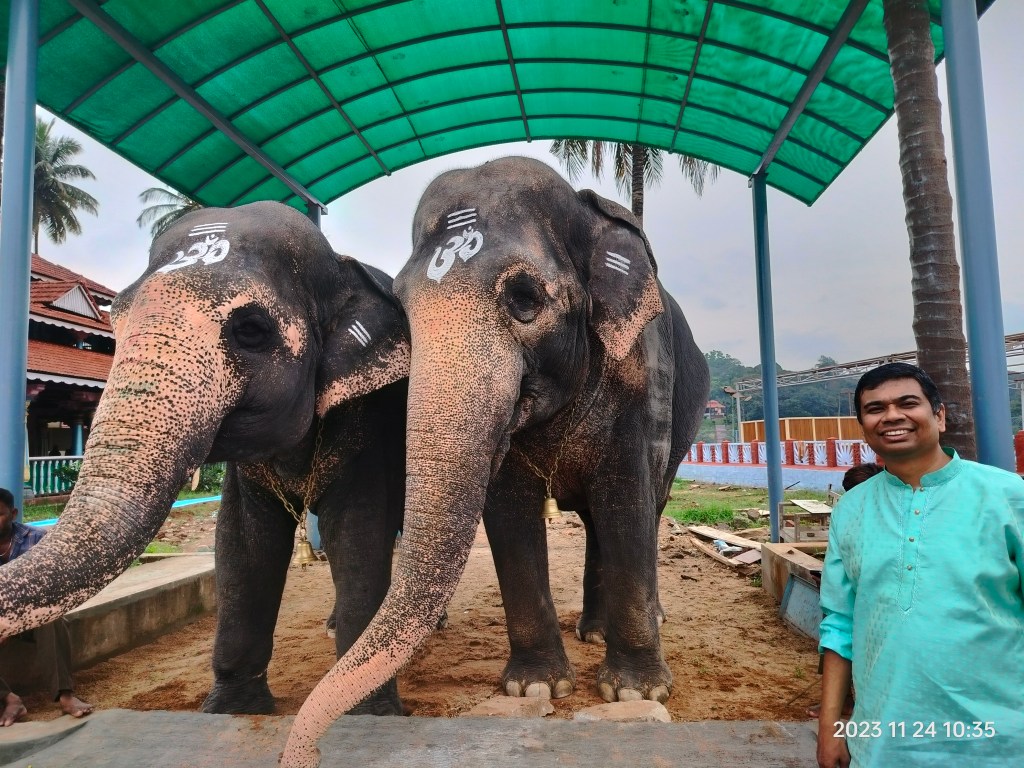
Prior to that, we spent time visiting the main temples again and praying at other shrines. The temple complex spans both banks of the Tunga river. Also of interest to the children are two temple elephants
The link to video of Tunga river is given below
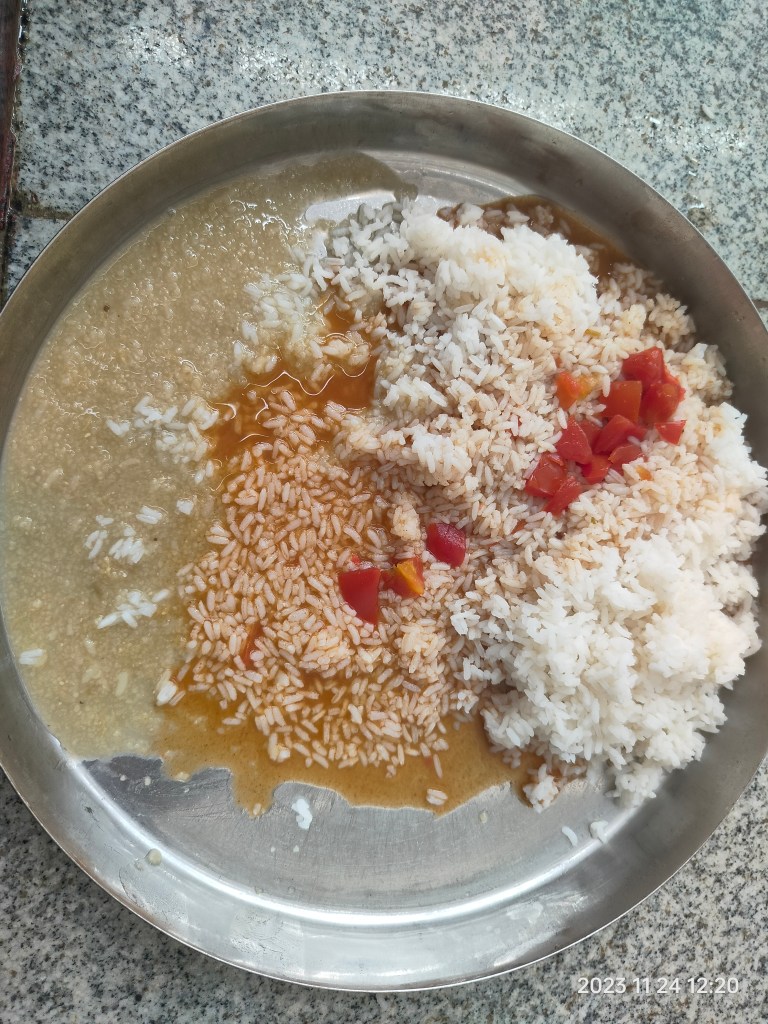
Around 12:15 PM, while crossing the Tunga river, the fragrance of sambar reached our nostrils. There was no need to look for signboards to the dining hall. We just followed the smell and took our seats for the Mahaprasad. The simple meal of rice, rasam, sambar, and paysa (kheer) was hot, fresh, and tasted heavenly. I have seen this institution of free Mahaprasad in many temples in Karnataka. Quite laudable.
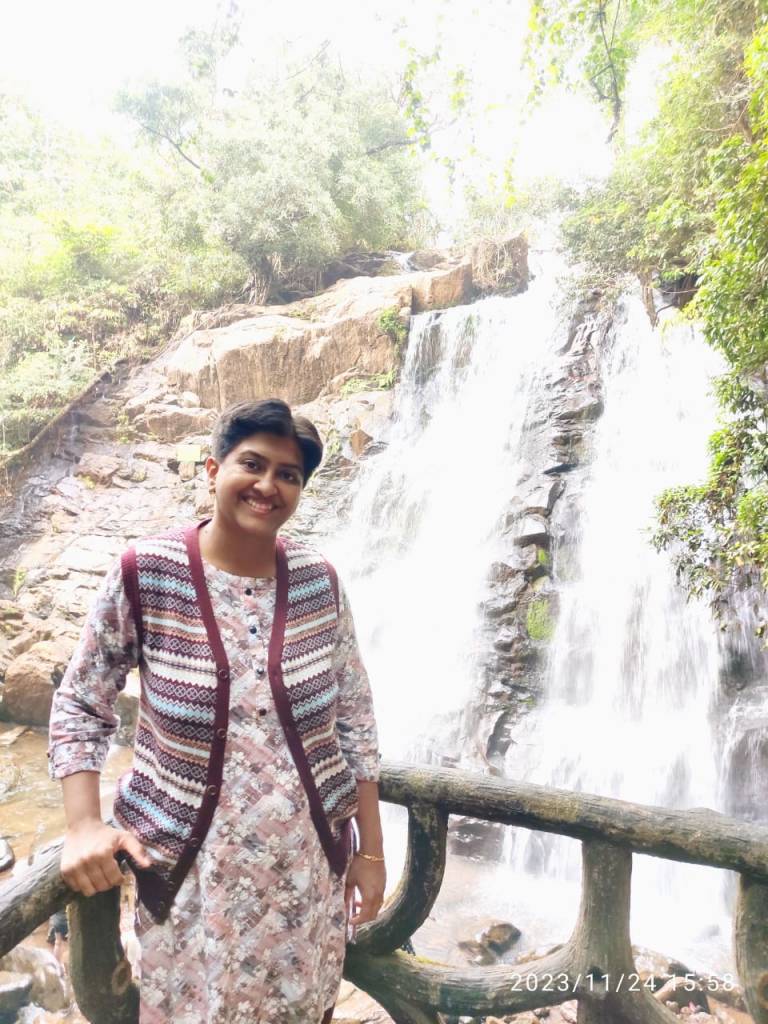
After lunch, we decided to visit the Srimane falls about 15 KMS from the temple. This area has numerous falls and viewing points. However, I preferred Srimane as there is no trek involved, and we can take the car till the very end.
We arrived at the falls parking lot and walked around 50 steps to the actual falls. There was plenty of water, and we could get drenched in it. The infrastructure was good, with changing rooms, washrooms, parking, and small shops for snacks.
The link to video Srimane falls is given below
In Sringeri, we visited the famous ‘Holla Maruti Tiffin Centre’ – a family-owned hotel serving food on a banana leaf. The seating is on the floor and gives the restaurant a very homely atmosphere. The menu is limited to poori, idly, and bonda – we tried bonda and liked the taste. A definite visit when one is in Sringeri.
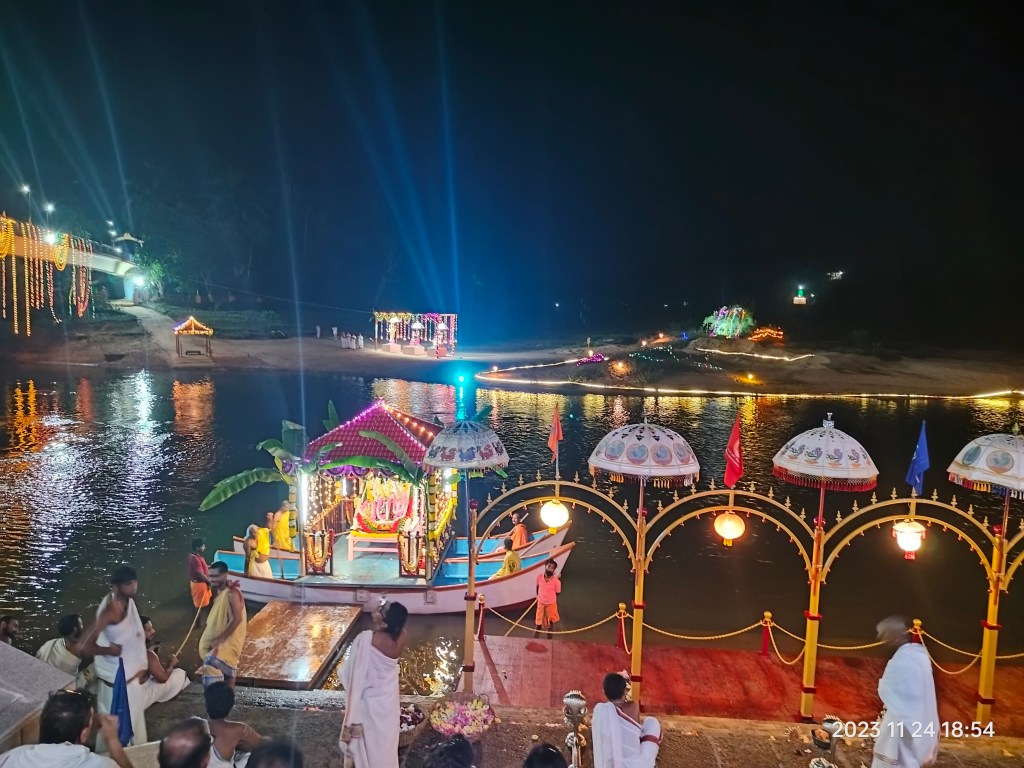
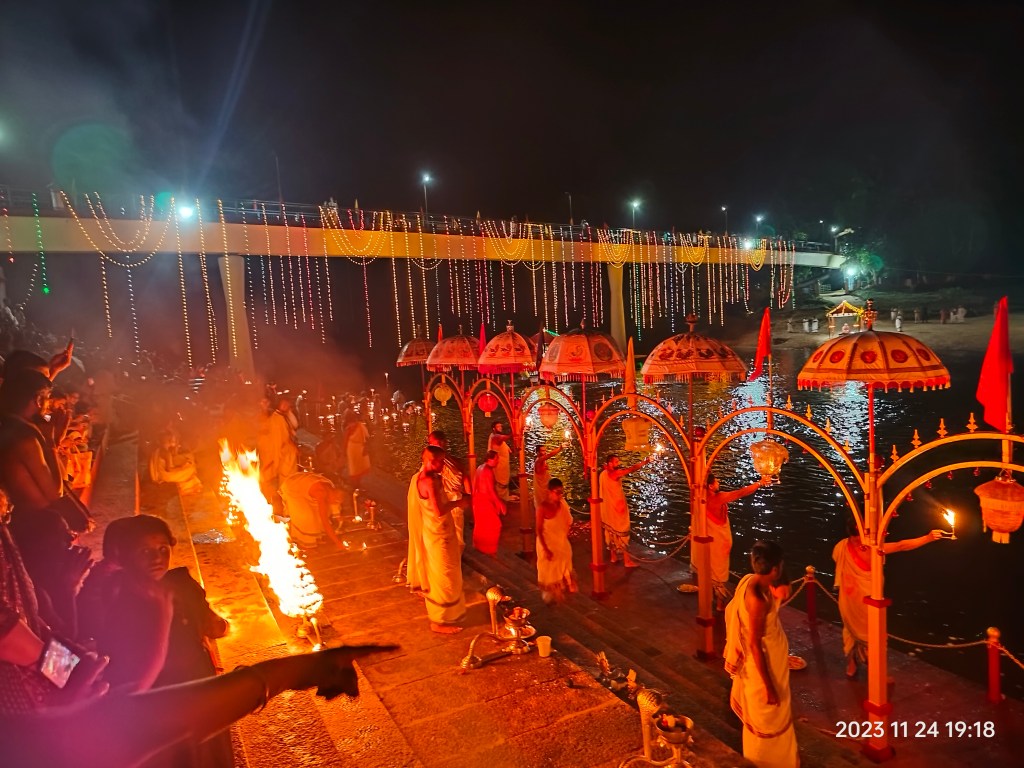
Around 7:00 PM, we went to visit the ‘Tunga aarti’ conducted on the banks of the Tunga river in the Sringeri temple complex. It is similar to the Ganga aarti of Haridwar, but I found Tunga aarti to be more elaborate.
A beautifully decorated boat was sailed from the northern bank of Tunga to the southern bank. Sri Vidhushekara Bharati – the Shankaracharya of Sringeri, started the aarti of the deities and took a yogic pose on the specially designed seat. The other brahmacharis then performed the aarti of the river. It was a spectacular sight, accompanied by melodious drums and other instruments. A sight to be seen!
The link to video of Tunga aarti is given below
The temple was well-lit, and we had the final darshan of the deities that evening. We ended our day having dinner at Hotel Sharada Comforts – and were pleasantly surprised to get good quality north Indian dishes!
25-Nov-23
I had planned to take an overnight stay on our way back from Sringeri to Bangalore. I booked our stay at KSTDC Valapuri Belur. Although I had seen Halebeedu and Belur earlier, it was a good opportunity to visit these temples again.
We bid adieu to Sringeri at 10:30 AM and drove through the picturesque Chickmaglur district. I was surprised to see the tea gardens in addition to coffee plantations.
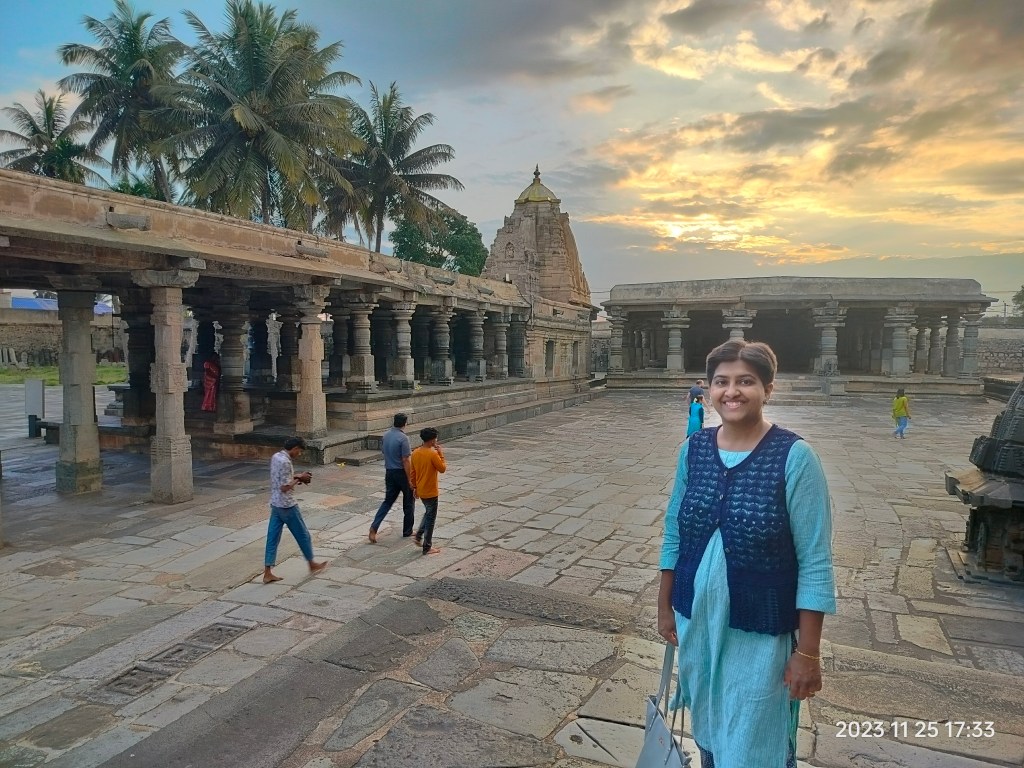
We reached Belur around 1:00 PM, and after lunch and some rest, we walked over to the famous Chennakeshava Temple. This temple was commissioned by King Vishnuvardhana of the Hoysala dynasty in the 12th century AD and was built over three generations.
We hired a guide who showed us the intricate details of the carvings on the external walls. Belur is famous for depicting the everyday life of medieval India – dancing, hunting, temple celebrations, etc. The Garbha-gruha of the temple is also fascinating.
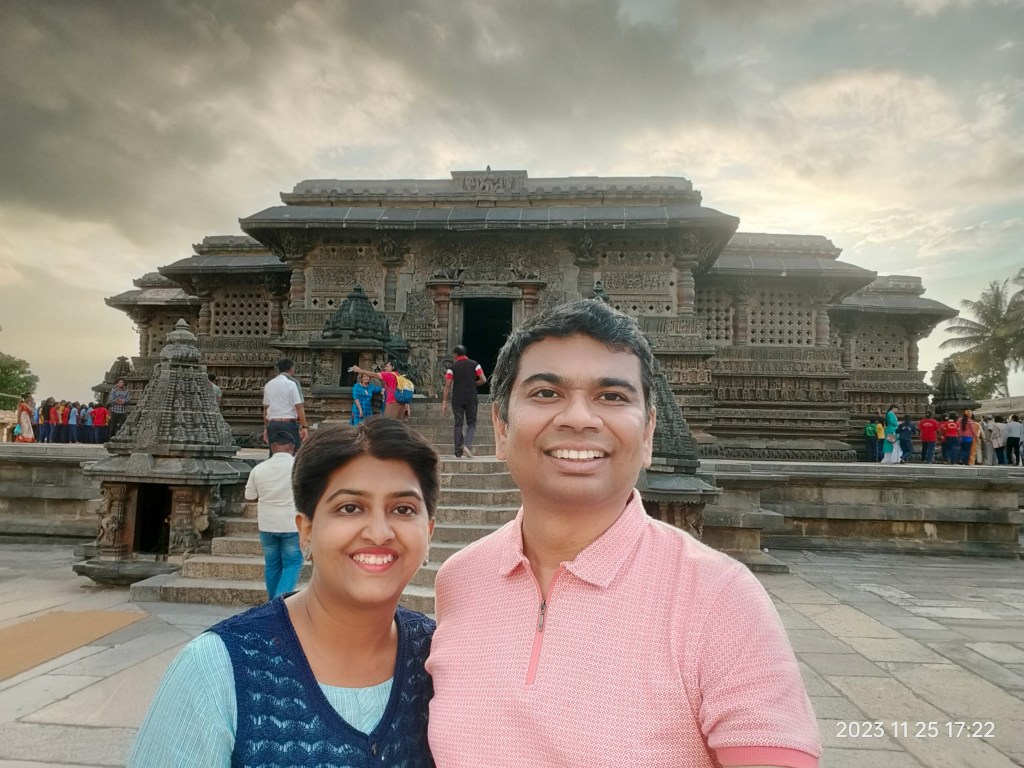
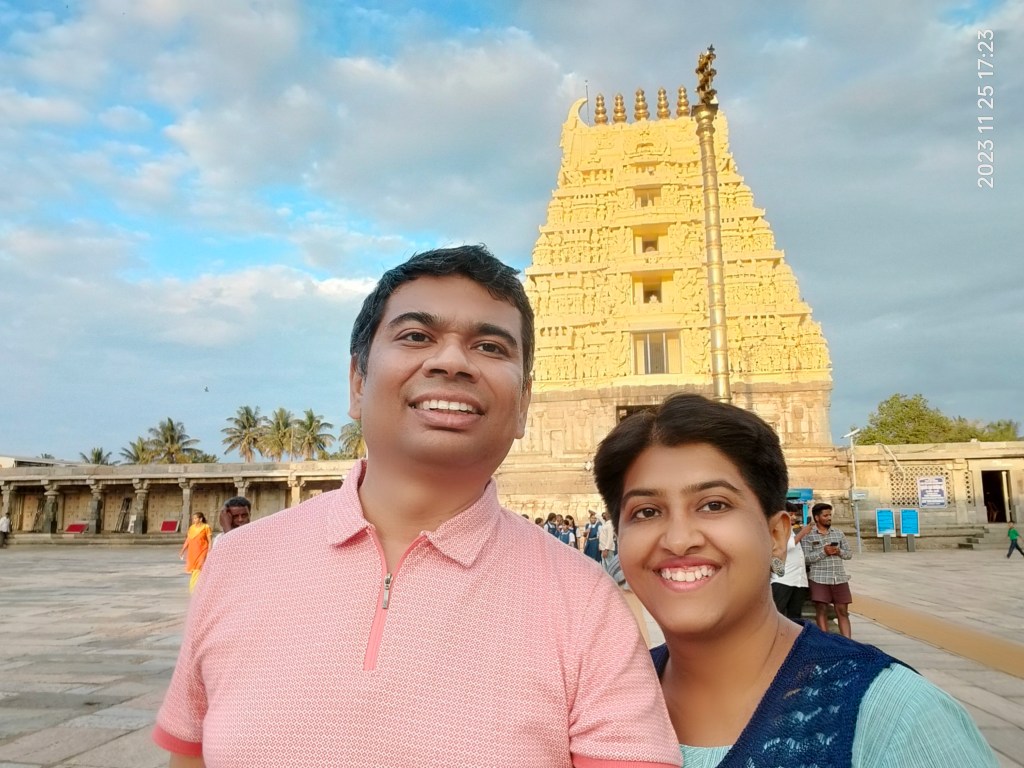
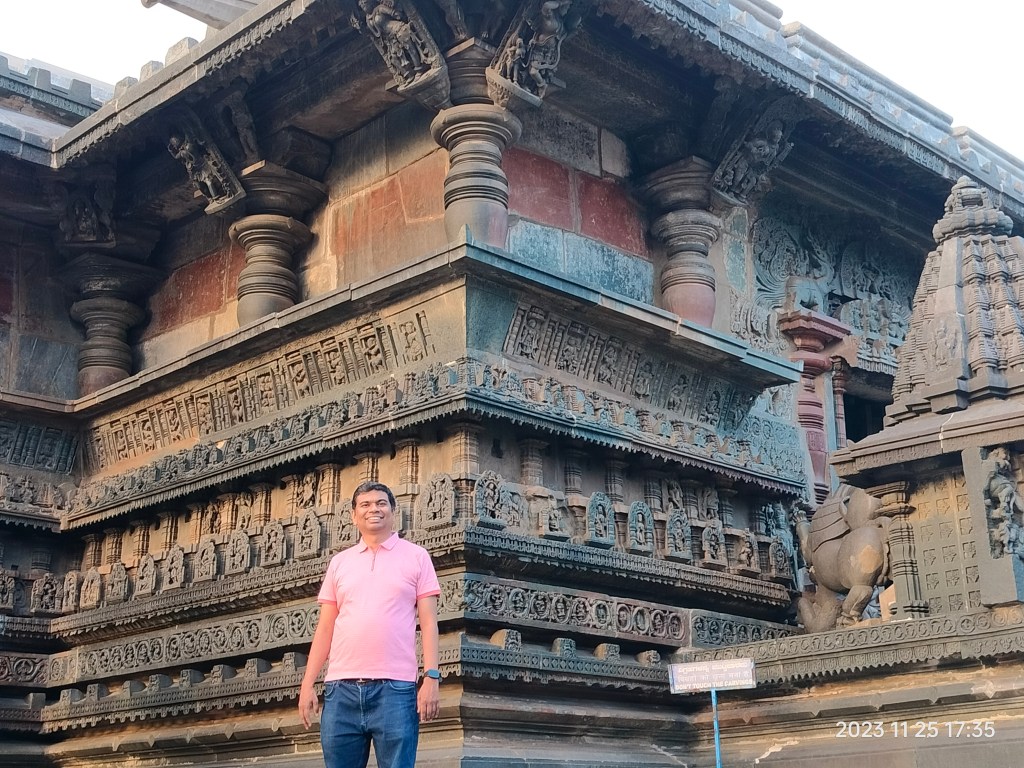
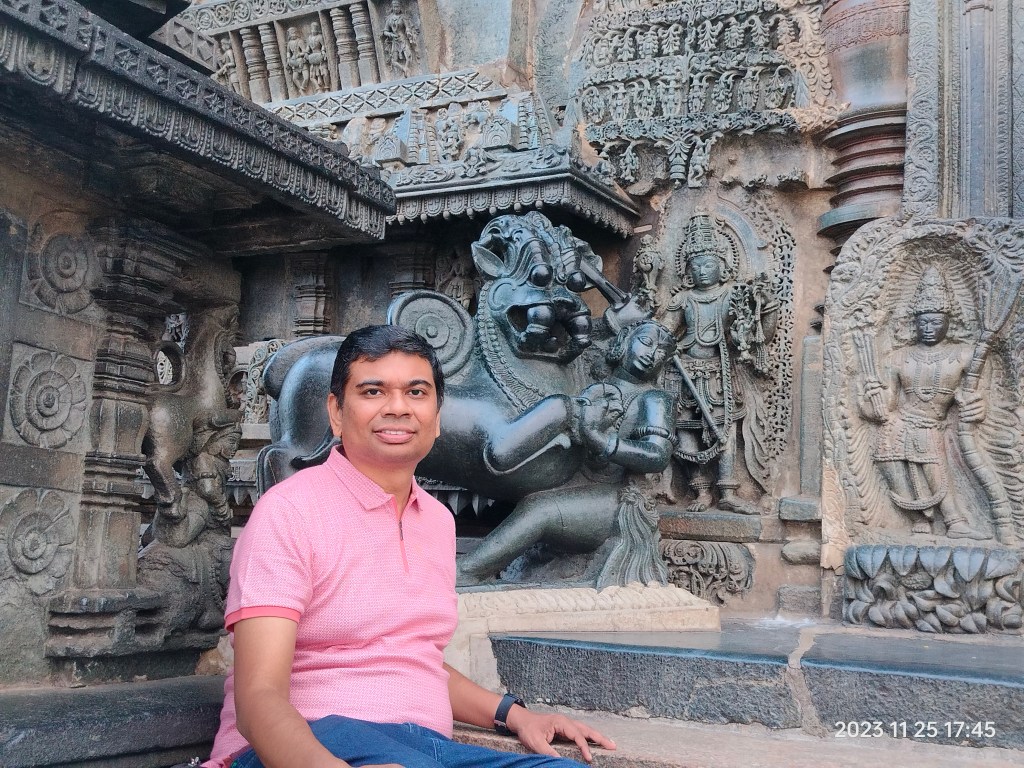
What intrigued me is the smaller temple right next to the main Kesava temple. This smaller temple was built as a “model” – a miniature version of the main temple. The gopura at the entrance of the temple complex is a magnificent example of Dravidian architecture, which was built by the Vijayanagar dynasty in the 14th century.
The link to video of Belur temple is given below
After admiring the temple, we walked back to the hotel after purchasing a few ceramic kitchenware items. In today’s “One India,” kitchenware for sale in rural Karnataka comes all the way from Rajasthan!
KSTDC Belur is a professionally run hotel, and we had a good stay there. Even the restaurant is pretty good
26-Nov-23
The next morning, I left for Halebidu to view the famous Hoysaleswara temple. This historic temple construction started around 1121 CE and was completed in 1160 CE. Unfortunately, it was sacked and plundered by Muslim invaders – Allauddin Khilji and Muhammad bin Tughlaq.
During the British era, the temple complex was restored and repaired. Some of the existing panels were used to decorate the outer walls, though the shikara was lost forever. I arrived at the temple complex around 08:30 am and was the only tourist at the site. The atmosphere was quite serene, befitting a Shiva temple. Though the main deity of this temple is Lord Shiva, there are numerous themes related to Vaishnavism and Jainism. The main attraction is the artwork on the outer walls depicting scenes from Ramayana, Mahabharata, and Puranas. While Belur’s artwork focuses on day-to-day life, Halebidu is dedicated to religious themes.
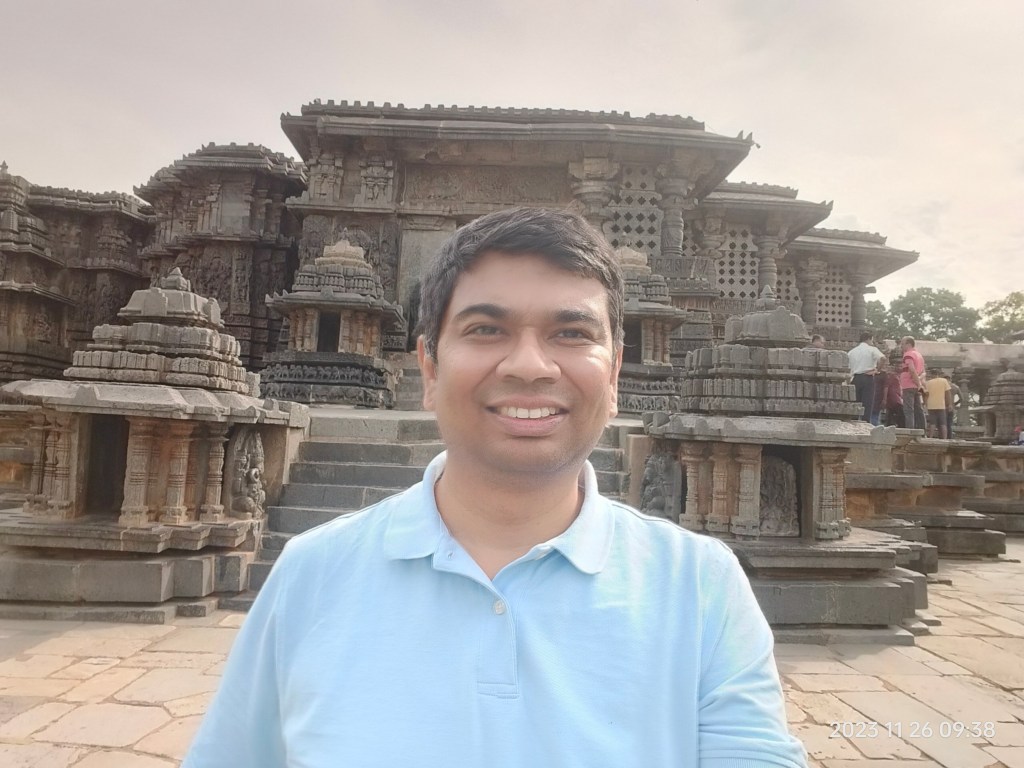
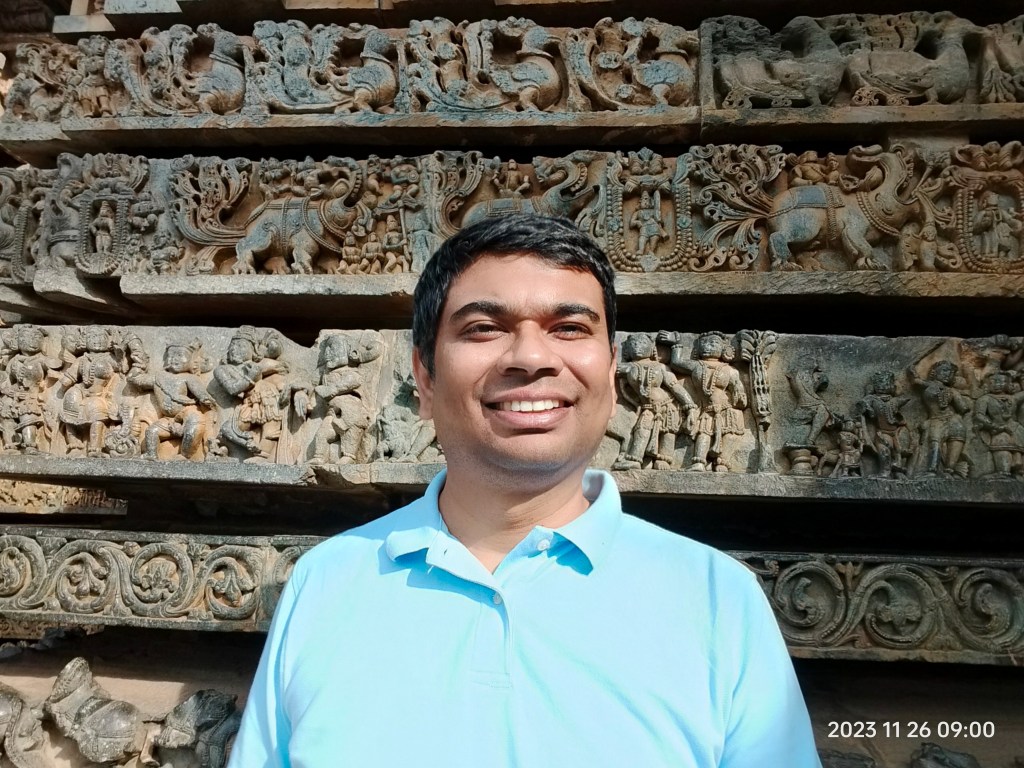
Being a Shiva temple, there are two magnificent sculptures of Nandi in the complex. It’s highly recommended to visit the ASI government museum inside the Halebidu temple complex. There are numerous sculptures that one can observe up close. Also of interest is the ‘inscription hall,’ which provides details on the various artworks of the temple. Both these museums are quite informative and well-maintained.
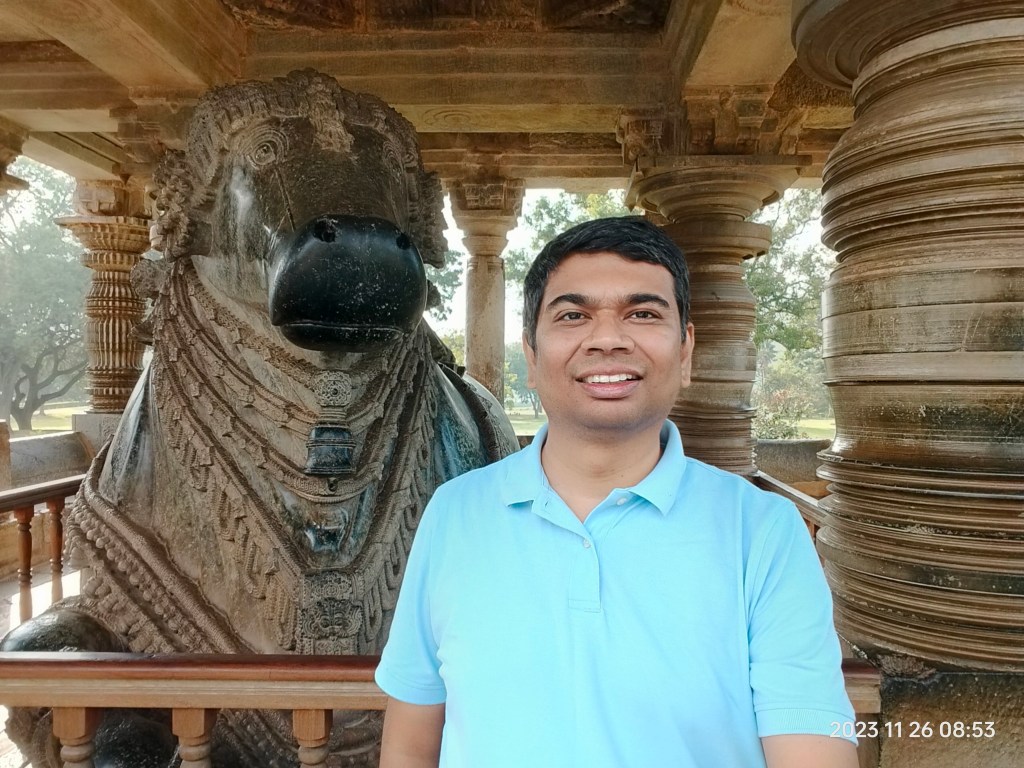
After spending about 1.5 hours, I headed back to Belur. Post check-out from Belur, we were on our way back home. Belur is only four hours away from Bangalore, and the new tolled roads are excellent. We stopped for lunch at Dhurvatare restaurant at Bellur Cross (not to be confused with Belur!) and had an excellent lunch. We had no challenges regarding food throughout the trip!
This short trip was a combination of piety, natural beauty, and architectural marvels. But the highlight was undoubtedly visiting Sringeri and taking blessings from the Shankaracharya. And the aarti of the Tunga river is something that will remain in my memory forever!
 Temples of Karnataka