“ Varanasi is older than history, older than tradition, older even than legend, and looks twice as old as all of them put together.”– Mark Twain
Varanasi – the oldest continuously inhabited city in the world, holds immense significance for Hindus as one of the holiest cities in India. It is believed to be the abode of Lord Shiva and a gateway to salvation (moksha), where devotees come to wash away their sins in the sacred waters of the Ganges. The city’s ghats, temples, and rituals reflect deep spiritual traditions that have remained unbroken through centuries of war, destruction, and natural calamities.
Varanasi is home to the Kashi Vishwanath Temple, a revered site dedicated to Lord Shiva, attracting pilgrims from all over the world.
I had always wanted to visit Varanasi ever since the Kashi Vishwanath Corridor was inaugurated in 2019, and this resolve was strengthened in January 2024 after the inauguration of the Ram Mandir in Ayodhya.
Since Varanasi and Ayodhya are only 220 kilometers apart, I planned to combine the two holiest destinations.
With millions of devotees visiting these places, it was essential to ensure we went when the crowds were lighter. After careful planning, I decided on September for travel, hoping the weather would be pleasant and the crowds moderate
We booked our air tickets and hotels in May 2024, but the flight fare was still quite high (around INR 7,000 per person each way). The duopoly of Indigo and the Tata Group in the airline industry has steadily pushed up airfares.
After some detailed planning with inputs from friends and ChatGPT, we were all set for our religious journey. The flight was at 6:45 AM from Bangalore to Varanasi on September 24, 2024.
24-Sep-24
Since I am not a morning person, it was quite a task for me to wake up and depart for the airport at 4:00 AM. But I managed to get into the taxi in a half-asleep state, and before I was fully awake, I had checked in, cleared security, had my coffee, and was ready to board the plane! I remembered a sleepy-headed friend from my college days who loved early morning classes, saying, “By the time I’m awake, half the classes are over!” He was, of course, reprimanded multiple times for sleeping on his desk.
The 2.5-hour flight was uneventful, and I continued reading the book Banaras: City of Light by Diana Eck. It’s a scholarly book, extremely well-written and detailed, though it’s not a travel guide.
The flight was on time, and around 10:00 AM, we reached Varanasi airport. The Varanasi International Airport was quite modern, with good infrastructure. As we were heading towards the Uber pickup, we were approached by a private taxi driver. I found his fare reasonable, so we boarded the taxi, and the next hour was pure entertainment! The driver, Choubeji, was full of anecdotes, historical information, and chaupais from the Ram Charit Manas—the time flew by, and soon we arrived at our hotel.
My initial impression of Varanasi was quite positive. The roads from the airport to the city were wide and in good condition. The malls, buildings, and luxury cars were indications of economic progress and an economy that extends beyond religious tourism.
Hotel Tridev Grand, about one kilometer from Assi Ghat, proved to be a wise choice. It is a modern hotel with good amenities and an attached restaurant. After a smooth check-in, we rested for a while and then walked to the nearby Bati-Choka restaurant. Bati-choka was new to us; it is essentially a roasted ball made from wheat flour, served with brinjal bharta. It is a popular dish in eastern UP and Bihar, and many fine dining restaurants are now serving it.
In fact, Varanasi is quite famous for its food, from chaats to sweets to fine dining restaurants. I have written a separate blog exploring the various delicacies of Varanasi.
After some much-needed sleep, I was ready to explore the ghats and temples. I inquired at the reception and got a disappointing update. There had been a flood-like situation in Varanasi recently, as the Ganga had overflowed. The water had receded, but it left a great deal of silt on the ghats. While the ghats were open to a limited extent, it was not possible to walk from one ghat to another, as the ghat road was covered in silt.
Taking this in stride, I boarded an auto-rickshaw towards Assi Ghat, a distance of about 1.5 kilometers. The crazy honking and reckless driving were immediately evident. The worst culprits appeared to be the e-rickshaw drivers, who were swerving randomly all over the place. After about 15 minutes (which seemed like an eternity), I arrived at Assi Ghat. Due to the silt, only a small section of the ghat had been cleaned and was open to the public. I wanted to see the famous evening Ganga Aarti, but given the jostling crowd, I decided to retreat. Close to Assi Ghat is the birthplace of Rani Lakshmi Bai of Jhansi.
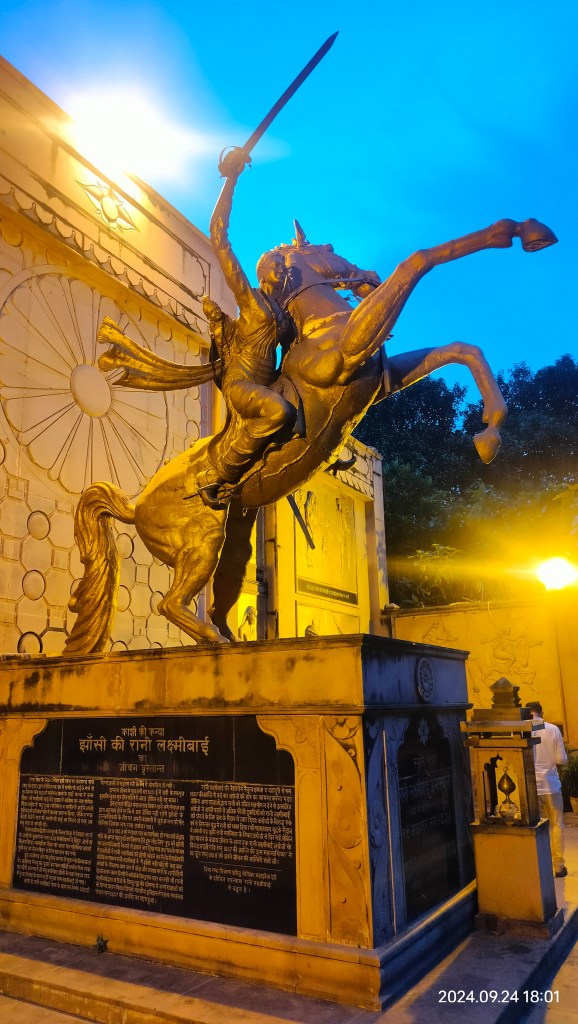
Attraction 1 : Rani Laxmibai Janmasthali of Jhansi
Rani Lakshmi Bai Janmabhoomi (birthplace) is a site dedicated to the memory Rani Lakshmi Bai, the Queen of Jhansi. Born as Manikarnika Tambe on November 19, 1828, in Varanasi, she grew up to become a symbol of resistance during India’s First War of Independence in 1857. I found the site to be well maintained and worth a visit
Picture of Rani Laxmibai Janmasthali of Jhansi
Video link of Rani Laxmibai Janmasthali of Jhansi
Attraction 2: Tulsi Ghat
A few meters from the Rani Lakshmi Bai Janma Sthali is Tulsi Ghat. This is a very sacred place where Goswami Tulsidas composed the Ramacharitmanas, which is by far the most popular rendition of the Ramayana in North India. Today, there is a small temple here that offers an excellent view of the Ganga.
I walked back to the main road and hired an auto to visit the Durga Temple.
Attraction 3: Durga Temple
This is one of the important temples in Varanasi. It is built in a striking red hue, symbolizing the power and energy of Goddess Durga, with tall spires and intricate carvings. The temple is believed to have been constructed in the 18th century by a Bengali Maharani (queen).
Attraction 4: Tulsi Manas Mandir
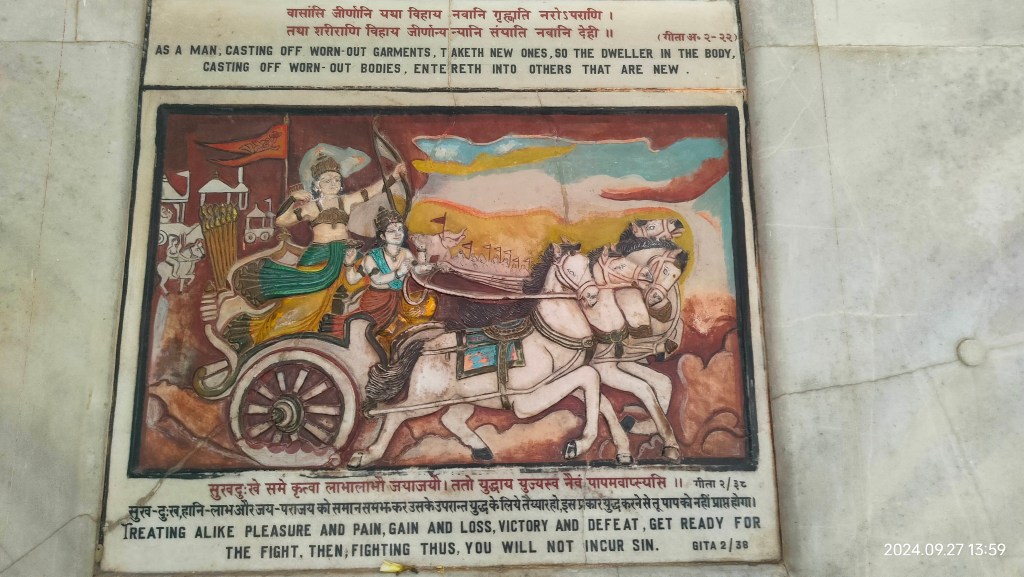
This temple holds historical and cultural significance and was built by Thakur Das Surekha from Kolkata in 1964. The temple is made of white marble, with verses and scenes from the Ramcharitmanas engraved on the walls throughout the temple.
[Pics from Tulsi Manas Mandir]
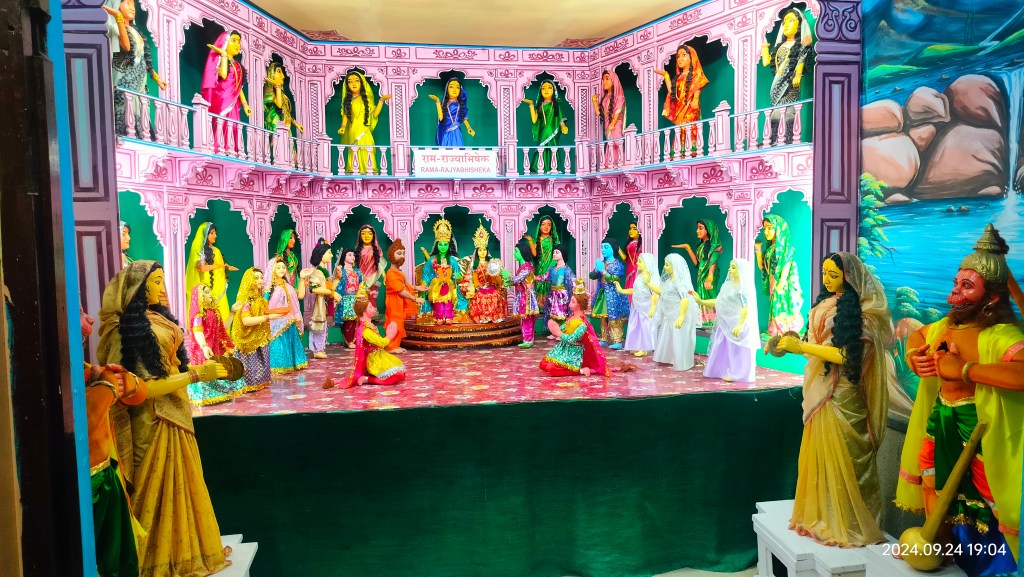
[Video link from Tulsi Manas Mandir]
We had dinner at Nathu Sweets and Restaurant, ending a long day.
25-Sep-24
I woke up at 5:00 AM and quickly travelled to Assi Ghat to witness the morning Ganga Aarti. I was hoping for a smaller crowd at such an early hour, but there were already quite a few devotees present. However, I was able to view the grand aarti, performed by five pandits in perfect unison. It was an electrifying experience to see the lamps swaying amidst the chanting of hymns and mantras.
[Video links of Ganga Aarti]
After the aarti I visited Tulsi Ghat ghat to view the sunrise on Ganga. witnessing the sunrise on the Ganga is a deeply spiritual experience. As the sun casts a golden glow across the Ganga , the rays reflect off the waters, creating a stunning visual effect. The temples bells were ringing behind me adding to devotional atmosphere
Sunrise from Tulsi Ghat
[Video link of sunrise from Tulsi Ghat]
Attraction 5: Galis of Varanasi
My next destination was the Nepali Temple on Lalita Ghat. I took an auto to Godowlia Chowk and walked the rest of the way. It should be noted that Godowlia Chowk is where all transport ends, and one needs to walk or take a cycle rickshaw for the remaining distance to the Kashi Vishwanath Temple and nearby areas.
I tried my best to follow the path using Google Maps but frequently lost my way. The lanes (called galis) are quite narrow, and it’s best to ask for directions. The locals are friendly and helpful. These galis are a fascinating labyrinth with ancient temples, small restaurants, and quaint homes around every corner. Though narrow, the galis are fairly clean without open garbage dumps. The video below gives an idea.
Unexpectedly, I arrived inside the Kashi Vishwanath Corridor! Though I had booked my Sugam Darshan ticket for 12:30 PM, I was in the corridor before 9:00 AM. I wandered around, admiring the new construction and overall infrastructure. I then bought a ticket priced at INR 150 for the Durlabh Darshan, which offers a virtual 3D experience of all the aartis conducted in the sanctum sanctorum of the main temple. The 3D experience is quite impressive, and I would recommend this 11-minute “darshan.”
The statues of Ahilyabai Holkar and Adi Shankaracharya give due respect to the temporal and spiritual founders of the Kashi Vishwanath Temple.
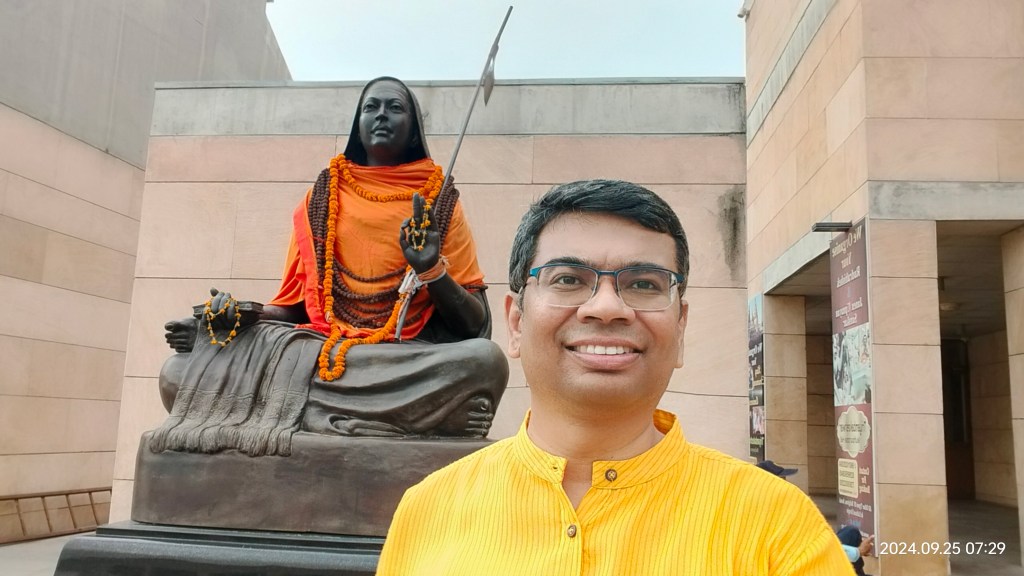
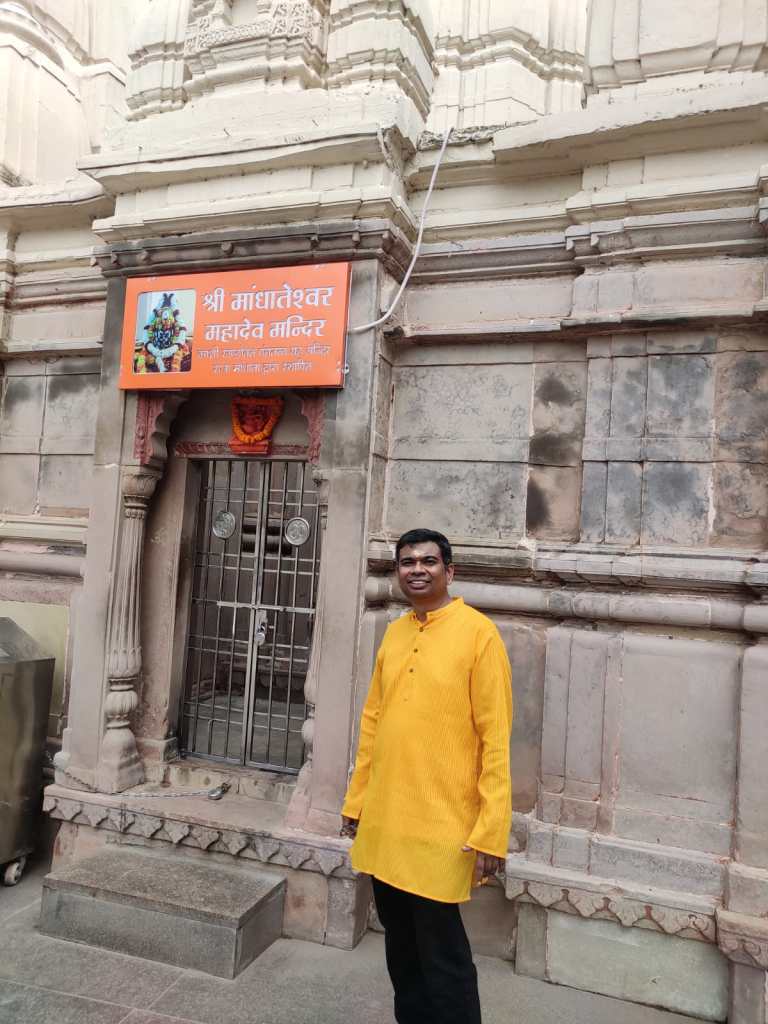
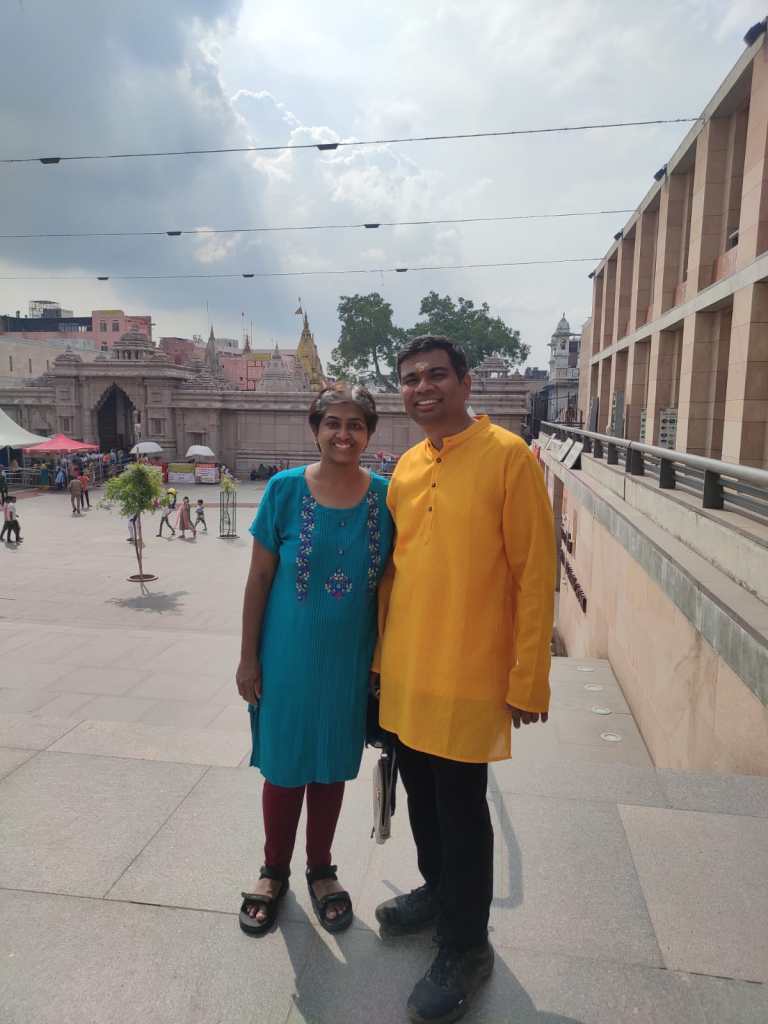
The link to the Kashi Vishwanath corridor is given below
I walked towards the Ganga, took darshan, and headed back into the galis of Varanasi. Unexpectedly, I came across Neelu Kachori Bhandar, famous for their breakfast kachoris, located in a lane called “Kachaudi Gali”! Undoubtedly, they were the best and crispiest kachoris I’ve ever had.
I visited the Man Singh Observatory, but it’s a very ordinary attraction and can be skipped.
That afternoon, around 12:00 PM, we left for the most important aspect of the entire vacation – the visit to Kashi Vishwanath Temple. I had booked Sugam Darshan tickets a few weeks earlier, hoping for an efficient darshan. Those with Sugam Darshan tickets need to enter through Gate 4 and can keep their mobiles after entering. The system and crowd management were excellent, and we had darshan of the Jyotirlinga in about 40 minutes. We also paid obeisance to other deities in the temple complex. The entire experience is documented in my blog – “Kashi Vishwanath Temple Visit.”
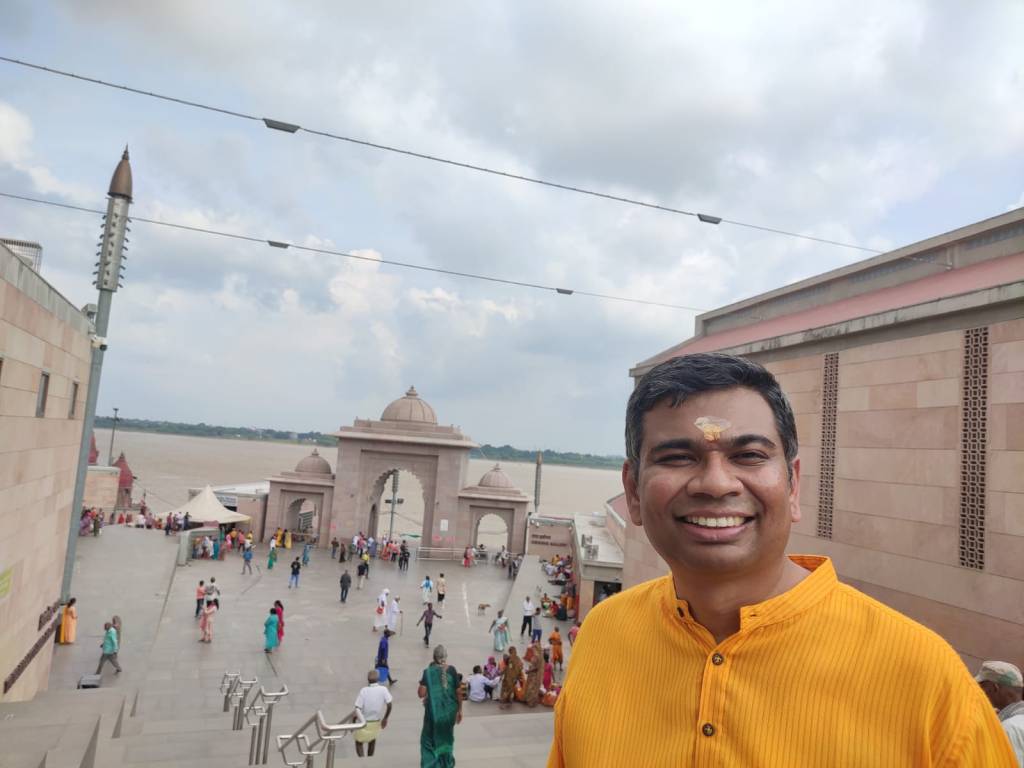
Post the darshan we had lunch in “Niyati café” in one of the galis and headed back to hotel for much needed rest
Attraction 6 : Sankat Mochan temple
This is one of most prominent temples of Varanasi and was restored and revived in 1900 AD by Madan Mohan Malviya , the founder of Banaras Hindu University. This site has a historical connection with Goswami Tulsidas who composed many of the devotional verses in this temple. This was one of targets of 2006 Varanasi bombing – in which ten devotees lost their lives. Today there is tight security and one needs to deposit mobile and bags before entering the temple.
This is quiet and tranquil temple and even the idol of Lord Hanuman has serene feature which reflects Hanuman’s compassionate and benevolent nature as a protector and reliever of sorrows (Sankat Mochan)
We ended one of the spiritually charged day – with memory of the darshan of the Jyotirlinga at the Kashi Vishwanath Temple
26-Sep-24
One of the most important activities in Varanasi is viewing the numerous ghats on the banks of the Ganga. There are a total of 84 ghats, each with its unique history and significance.
Ideally, I would have loved to walk from one end of the ghat to the other, but due to the recent floods of the Ganga, that was not possible. I had booked the Alaknanda cruise, which would take me on a large boat and provide information about various ghats.
The cruise departs at 08:00 AM and lasts for 90 minutes. As the cruise moves past each ghat, there is a recorded commentary that gives information about each of the ghats. This is an excellent way to view and learn about various historical sites along the banks of the Ganga.
The boarding point for this cruise is Ravidas Ghat, close to Assi Ghat.
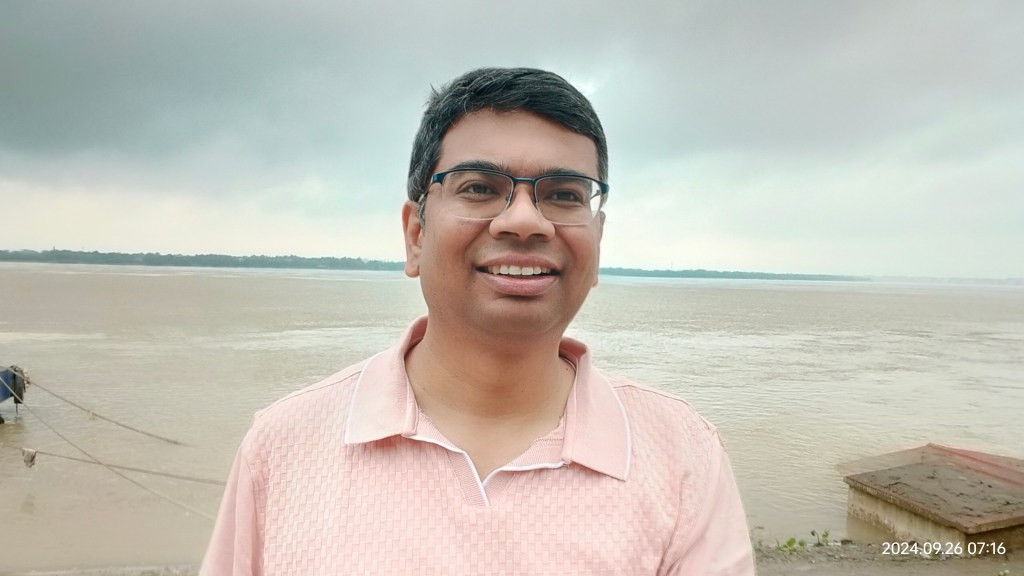
As the cruise started, I was on the top deck, taking in the enormity of the Ganga.
[Video of the Ganga river as seen from the cruise]
[Video of Dasashwamedha Ghat from the cruise]
[Video of Manikarnika Ghat from the cruise]
[Video of Chet Singh Ghat from the cruise]
I alighted from the cruise and went back to the hotel. That day, we had planned to visit the holy city of Sarnath, located about 12 KMS from Varanasi.
We hired an Uber taxi and were on our way. Varanasi is much more than a temple town; there is thriving economic activity across manufacturing, public sector undertakings, and handloom industries. The city appears to be quite prosperous, with numerous malls and showrooms and luxury cars visible everywhere. As in other cities, rising prosperity has resulted in traffic and noise pollution. We spent nearly an hour reaching Sarnath, a distance of mere 12 KMs!
There are quite a few places to see in Sarnath, which holds immense historical and spiritual significance in Buddhism. It is here that Buddha gave his first sermon after attaining enlightenment, marking the foundation of Buddhism.
I have listed a few of the places we visited in Sarnath:
- Sarnath Archaeological Museum
- Thai Temple and Monastery
- Tibetan Temple
- Japanese Temple (Nipponzan Myohoji)
- Chaukhandi Stupa
- Chinese Temple
[Picture of temples]
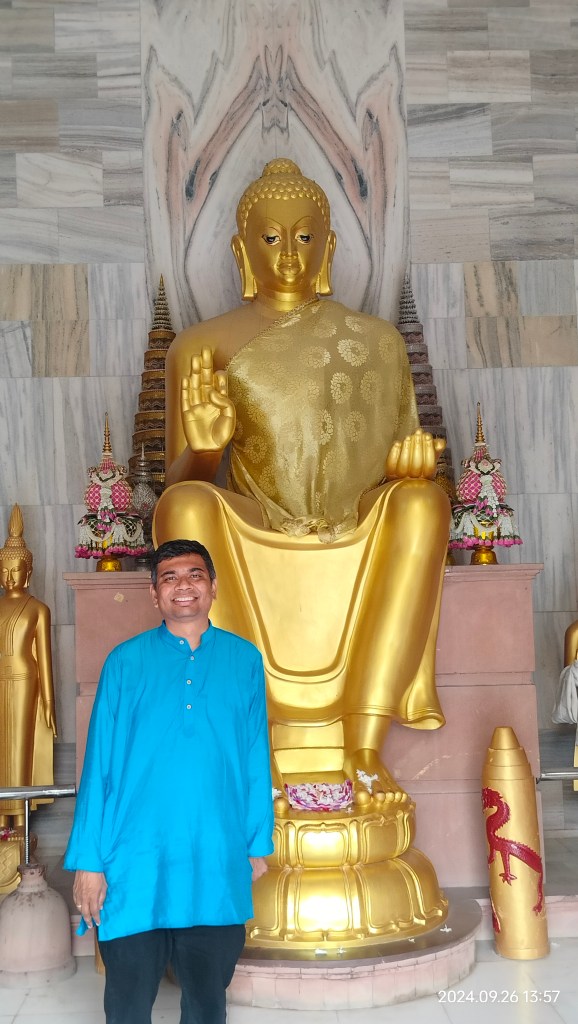
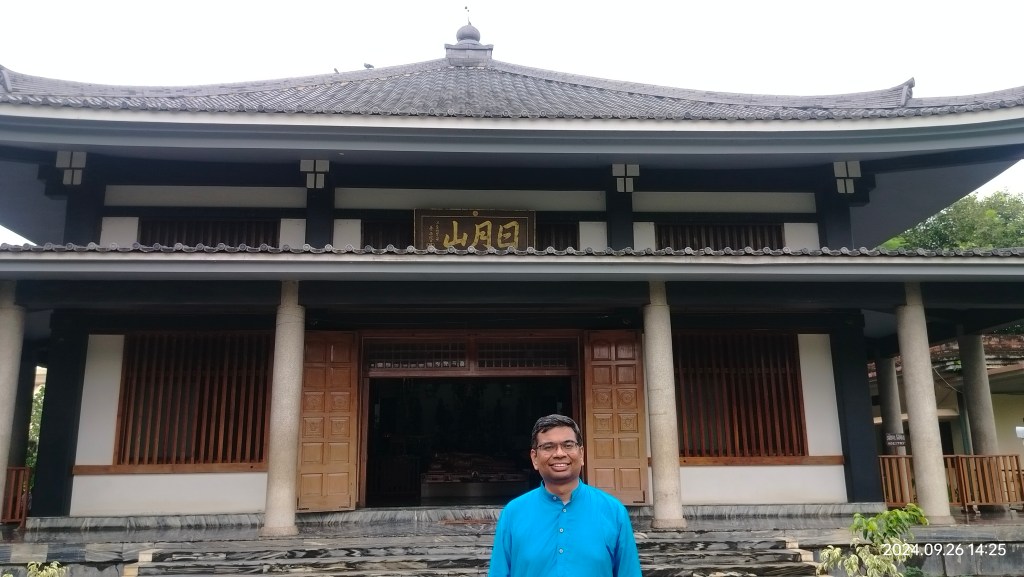
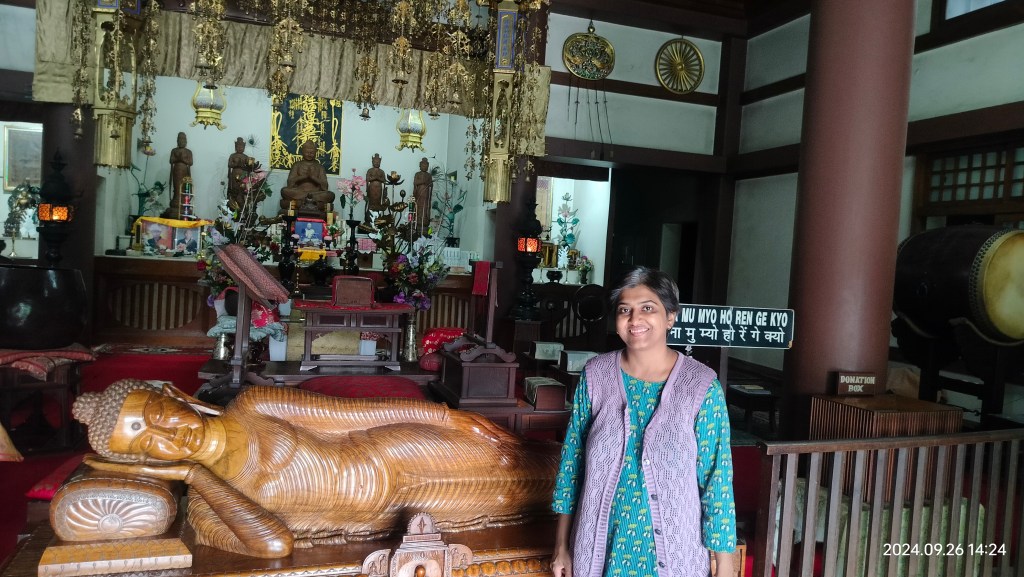
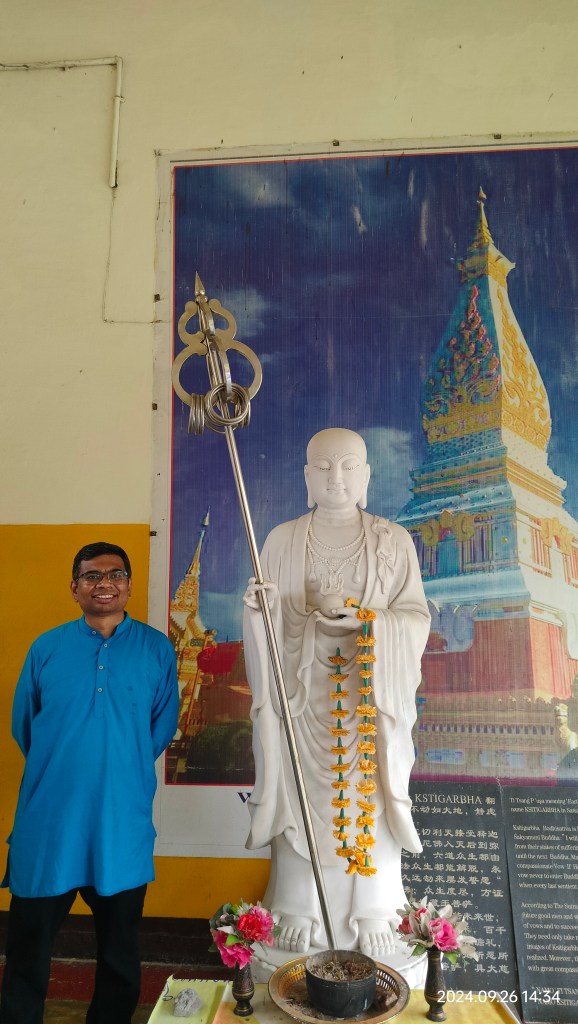
[Video link of the Thai Temple]
The Sarnath Archaeological Museum is a must-visit and contains India’s national emblem – Ashok Chakra. Also are some interesting sculptures of Lord Buddha and Shiva
We hired a taxi back to Varanasi and had lunch on the way. Overall, given the traffic condition and efforts require, one can skip Sarnath if there is time constraint.
That evening , Meenal insisted visit the famous chat shops near the main temple – Kashi chat Bhandar and Deena chat Bhandar. We had Tamatar ki -chaat and Palak papdi chat and found it quite unique
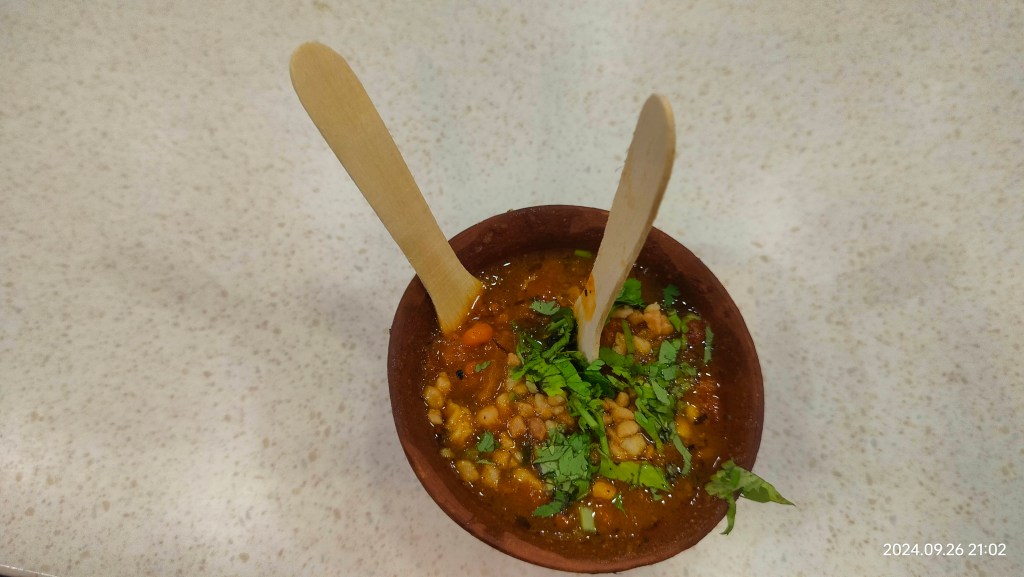
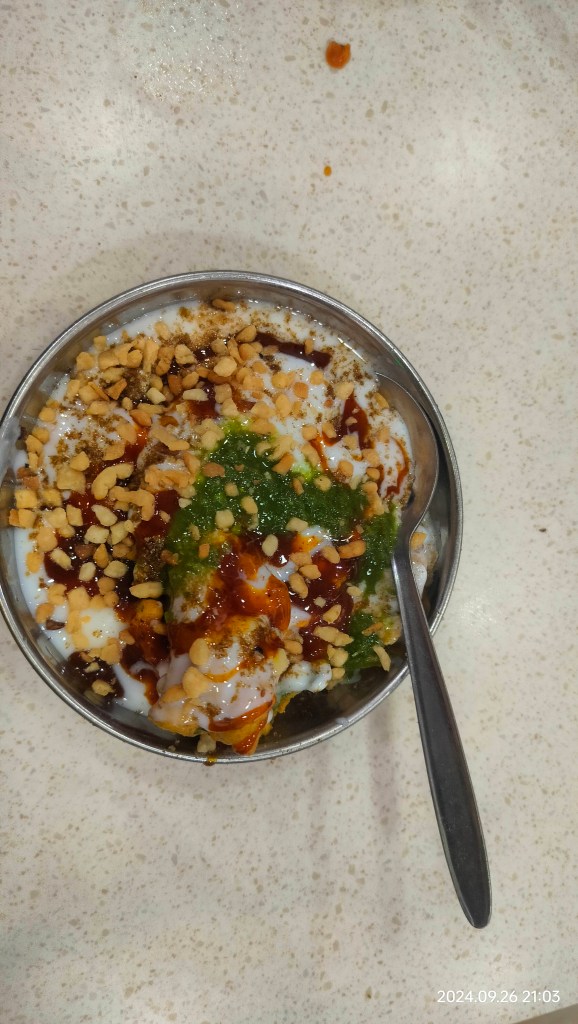
26-Sep-24
I woke early at 06:00 AM and headed towards Godowlia Chowk to view the other important temples of Varanasi.
I first visited the Kaal Bhairav Temple—a fierce form of Lord Shiva, known as the “Kotwal” or guardian deity of Varanasi. Kaal Bhairav is believed to protect the city and its people. However, there was a very long queue outside the temple even at this early hour. I paid my obeisances from outside the temple and walked to another temple in the vicinity: Mrityunjay Mahadev Temple.
Attraction 7: Mrityunjay Mahadev Mandir
This is an ancient temple dedicated to Lord Shiva in his form as “Mrityunjay,” the conqueror of death. It holds significant spiritual importance among devotees who believe that praying here can protect them from untimely death and ensure good health. The temple houses a natural water spring that continuously flows into a small pond within the temple premises.
[Link to video of Mrityunjay Mahadev Mandir]
I then walked back to the ghats and descended to Manikarnika Ghat. It is the most sacred ghat in Varanasi, known primarily as a major cremation site, and holds religious significance due to its association with life, death, and salvation.
The ghat is also a place where the religious rites for the departed are conducted. Viewing the ceremonies on mundan (ritual shaving of the head), pind daan, and shraddha can be a deeply moving experience. It makes one reflect on the ultimate reality of all living beings and the sorrow of those who are left behind.
[Link to video of Manikarnika Ghat]
I spent a few minutes in a meditative mood at Manikarnika Ghat and then made my way back to the hotel.
One should be ready to walk while seeing the temples and ghats in Varanasi. The galis are too narrow for any vehicles, and motorized vehicles are banned on many roads close to the main temple.
On way back I visited the Maa Sankata Devi Temple near Sindhia Ghat
The next destination was Banaras Hindu University (BHU), which had two attractions: the New Vishwanath Temple and the Bharat Kala Bhavan Museum.
Attraction 7: New Vishwanath Temple
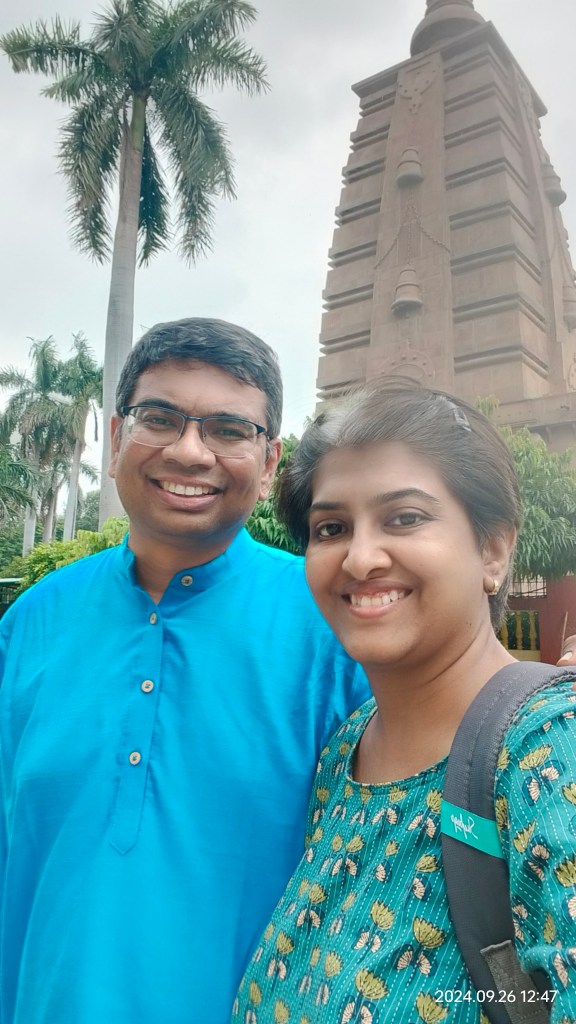
Though called “New,” the construction of this temple started almost a hundred years ago, under the patronage of the illustrious Birla family. It is made mostly of marble and stands at 77 meters, making it one of the tallest temples in India. It is inspired by the main Kashi Vishwanath Temple, with Lord Shiva as its main deity. However, there are multiple other shrines in the complex.
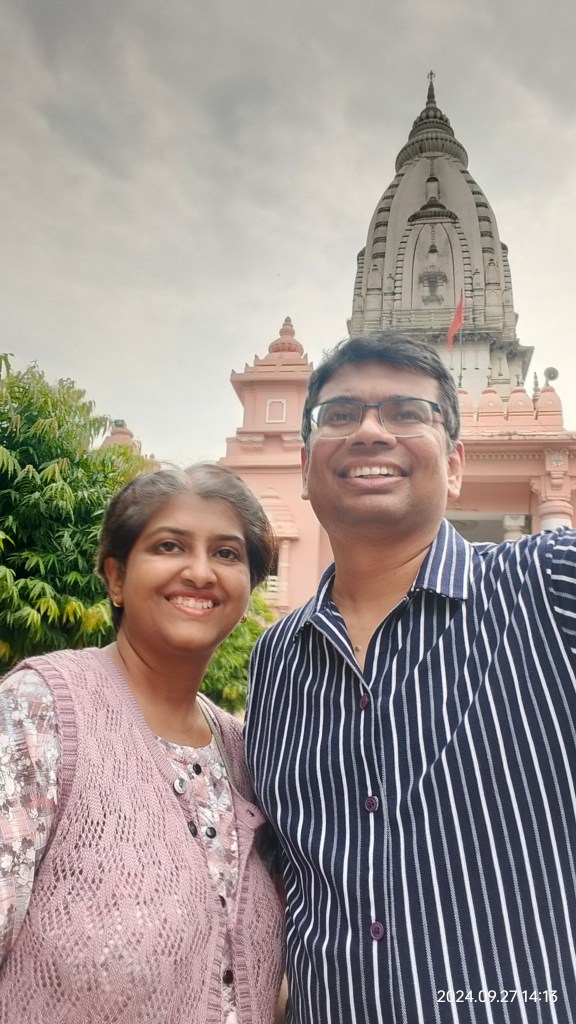
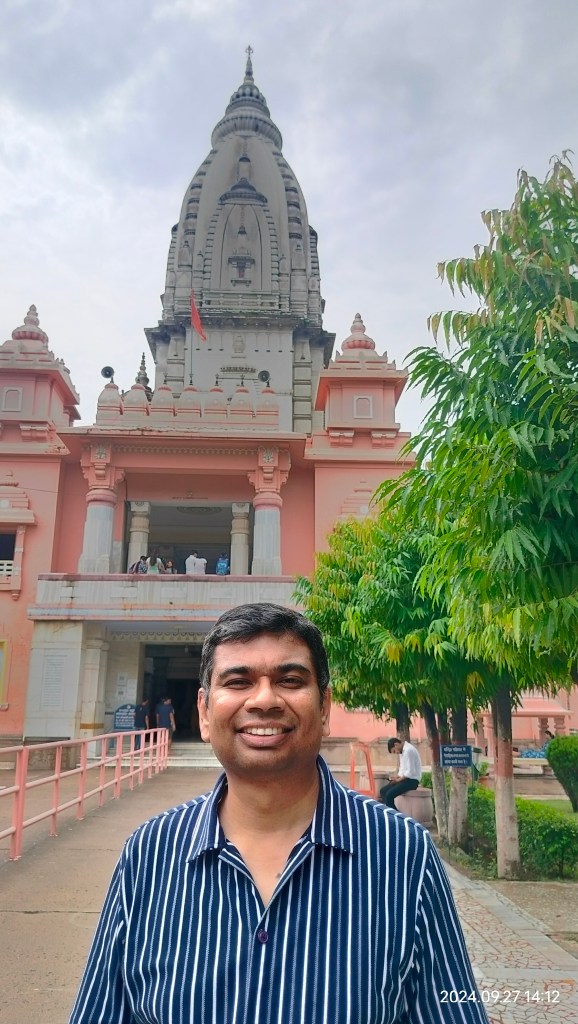
This modern, well-maintained, and sparsely crowded temple is excellent for meditation and prayers. The only “devotees” are the students of BHU, who appear to use the temple premises more as a “hang-out” than as a place of piety.
[Link to video of New Kashi Temple]
[Link to video of interiors of New Kashi Temple]
Attraction 8: Bharat Kala Bhavan Museum
This is one of the oldest museums in India, established in 1920, and has some remarkable artifacts. In the book ‘Benares: City of Lights,’ the author repeatedly references the artifacts of this museum. The sculptures and paintings are well preserved and provide good insight into medieval Varanasi.
Mobile phones are not allowed in this museum, nor in the Sarnath Archaeological Museum. Though one cannot fathom the logic, it is a welcome move. In recent times, the mobile phone has become “public nuisance number one”—with youngsters busy taking selfies and creating reels, while the older generation is on video calls or watching videos on speakers. In fact, a group of girls was creating reels within the New Vishwanath Temple!
Without their mobile phones, the students in the museum just linger for a few minutes and then depart. I was fascinated by “pata-chitra,” the scroll painting from Bengal and Odisha. These depict stories from mythology and are richly coloured. Surprisingly, the brightness of the colours lasts for decades!
The rest of the evening was spent packing and getting ready for our next destination—Ayodhya!
28-Sep-24
At 07:30 AM, we boarded a taxi to head towards Ayodhya—the birthplace of Lord Ram. While there was excitement to visit this holy site, it was a sad farewell to Varanasi.
As I left the ancient city, I was filled with reverence. It is more than just a destination; it is an experience that transcends the physical and touches the spiritual. The temple of Kashi Vishwanath, the devotees ceaselessly chanting “Har Har Mahadev,” and the shraddha ceremonies on Manikarnika Ghat—all represent an interplay of various aspects of life, death, and devotion. The memories of these moments are etched in my mind for a lifetime.
 Temples of Karnataka