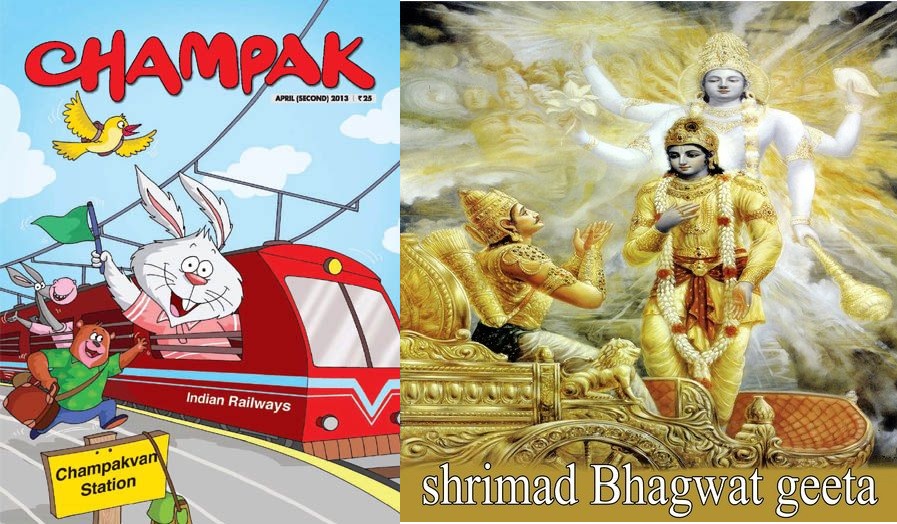
In the first part of my blog,I detailed how I started reading Champak magazine at the age of five and moved on to other children’s books gradually. By the time I entered college, Agatha Christie and P G Wodehouse had become a staple diet of mine.
In the final years of Engineering , I was focused on clearing the CAT entrance test and obtaining admission in one of the top Business Schools of India. Preparation for the test and subsequent Group Discussions piqued my interest in the world of business and finance. One of the earliest books I read on management was authored by the doyen of Indian Management :Sumantra Ghoshal. His book “Managing Radical Change – What Indian Companies Must do to Become World-Class”, is a distillation of lessons offered by people as diverse as N.R. Narayana Murthy ,Brijmohan Lall Munjal, Keki Dadiseth and Dhirubhai Ambani. The best part of the book is the focus on the Indian context and milieu.
The world of big business is intriguing, but it is even more fascinating to know the lives of the people who run these empires. Gita Piramal’s “Business Maharajas” was an excellent account about personal and professional lives of Indian industry captains like Dhirubhai Ambani, Ratan Tata, Aditya Vikram Birla , Rahul Bajaj etc. I was surprised to read that the influence of “family’ and that the destinies of companies are often decided on the promoter’s dining room rather than the board room.
In Oct 2006 ,I moved to USA and was exposed to the institution of “Public Library”. American industrialist Andrew Carnegie donated millions of dollars in late 1800s to establish and maintain public libraries throughout United States. Subsequently, these were maintained by local Municipalities and provide free and high-quality books to all residents.
In addition to the vast number of existing books, the libraries also purchase books on request by patrons. This robust infrastructure is certainly a role-model of other countries to encourage reading habit among its citizens.
My re-location to USA coincided with the Sub-Prime Mortgage crisis of 2008. The TV and the electronic media were flooded with stories, personal accounts and expert opinions on the reason and impact of this recession. However, I have always found books to be the best source of information if one needs to understand the complete context of any complex issue. “Two Trillion Dollar Meltdown” by veteran journalist Charles Morris briefly but brilliantly explains how the world got into the economic mess and the historical contexts to the credit crunch of late 2000s. On the other hand “The Big Short” by Michael Lewis takes us around Manhattan with his character-driven narrative and occasional humour. Through these books I began to understand the complex terminology like Credit Default Swaps (CDS) and Collateralized Debt Obligation(CDO)
There were numerous other books I read during this period on the theme of finance and economy like “Lords of Finance” by Liaquat Ahamed about events leading up to the Great Depression of 1920s and 30s. “Age of Turbulence” an autobiography of Alan Greenspan, longest serving chairman of the Federal Reserve Board ,takes us through the world of interconnectedness of the global economy.
However, the pinnacle of them all, the most comprehensive and detailed account of the sub-prime crisis is in “The Devils Derivative “ by Nicholas Dunbar, which tries to demystify the arcane financial tools. It is not a light reading, and many times I had to refer to internet to understand the terms and the context !
In 2010, I moved to Pune, a city I had loved since my first visit there in 2004. Right from the days of Chhatrapati Shivaji Maharaj, Pune has had enormous political, educational and historical significance. It is also called “Oxford of the East” due to the presence of several well-known educational institutions and overall culture of academia.
While moving around the “Book District” of Appa Balwant Chowk, I looked at amazement at rows of shops selling Marathi books on every subject. Looking at the historic monuments , I realized that I had very cursory knowledge on Maratha history.
The Maratha Empire was a great power that dominated a large portion of India in the 18th century. The empire was established in 1674 with the coronation of Chhatrapati Shivaji Maharaj and lasted till 1818. The Marathas were instrumental in ending the Mughal rule in India, the fact which is not taught in the school text-books.
While browsing through Crosswords bookstore I came across “The Marathas” by Stewart Gordon. This book gives a factual, unbiased and comprehensive history of Maratha empire with focus on the geopolitics of the region.
Any study of Maratha history MUST start with Chhatrapati Shivaji Maharaj and there are innumerable books written about life and times of this great warrior king. Two of the ones I liked the most were “ Challenging Destiny” by Medha Deshmukh and “Shivaji: The Grand Rebel” by Dennis Kincaid. Dennis Kincaid was a senior civil servant in British India and this book was published in early 20th century.
Reading the history books filled me with pride, but also made me realize that most Indians are unaware of the glorious historical figures of our land. In order to instill confidence and courage in our younger generation, it is imperative that they are exposed real heroes of Indian history. India is land of the brave, be it the valiant Sikhs under the Banda Singh Bahadur and Maharaja Ranjith Singh; the Rajputs who protected India for hundreds of years from Islamic invaders; and the Ahoms from Assam. Ahom warriors ruled Assam uninterrupted from 13th century till the British rule and comprehensively defeated the Mughals under Aurangzeb . In the famous battle of Saraighat ,the largest river naval battle fought in the world ,Ahoms under the capable leadership of Lachit Borphukan routed the Mughals.
The history books inspired me to deal with day-to-day challenges of life with greater confidence. Our ancestors took on impossible odds and won ! In the battle of Umberkind, Chhatrapati Shivaji accompanied by 1000 soldiers ,comprehensively defeated Kartalab Khan with his vast army of 20,000 men and heavy artillery. Such stories inspire us that through determination, intelligence and courage, we can overcome any challenges in our life.
Travelogues and traveler stories have always intrigued me. Right from the time I read about Marco Polo , I admired those who leave the familiarity and comfort of their homes to explore new places. Surprisingly, one of such fearless traveler is cousin of our family friend. Aniket Ketkar was raised in a quintessential Marathi Brahmin middle class family in Pune. From earliest years, the focus was on education and leading comfortable and stable life. Having completed his Chartered Accountancy (CA) Aniket joined a consulting firm and worked there for seven years. Then one day in 2013, he simply quit to travel the world !
His travel diary “Tales from the Road”, takes us to the countries I knew very little about. From Vietnam, to Cambodia, Indonesia, Laos and on to Myanmar. These are countries which have some cultural similarity with India but are unique in their own ways. And Aniket like a true traveler, mingles with the locals, stays in off-beat places and gives insight into life of common people of these countries. These countries are not frequented by Indian travelers and in many cases, Aniket was the first Indian the locals had seen.
If Aniket Ketkar was a first-time traveler, Michael Palin is professional, who has literally travelled the world. His books are mixture of interesting travel experiences, breathtaking pictures and characteristic British humor. I have bought most of Michael Palin travel books not in a bookshop , but at book exhibitions at Institute of Engineers ,where books are sold by weight !
One of the most memorable of Michael Palin books is “Himalayas”, where he starts his travel from Gilgit in Pakistan , onto Lahore, Amritsar, Shimla , Nepal, China , Bangladesh and Bhutan. Reading about the glory of Golden Temple and Amritsar and the magnificent beauty of the Himalayas inspired me to visit those places.
If Himalayas gave me an introduction to Amritsar, a book which I bought at Pune airport gave me an in-depth insight into political affairs in Punjab. “Amritsar: Mrs Gandhi’s Last Battle” is written by British author Sir Mark Tully in a very objective and unbiased manner. It gave me clear idea about the politics of 1970s -80s, the terrorism that gripped Punjab during those decades ,the infamous Operation Blue Star, assassination of Mrs Gandhi and the horrific riots that followed .
After reding this book, Amritsar became a must-visit destination for me. Thus inspired by my reading, in 2016 I visited Himachal Pradesh and Amritsar the details of which I penned in my blog : https://tejascogitates.wordpress.com/page/2/
India is land of tradition and this is true even in the world of Indian Business Houses. Even the Public Limited Companies are run by founder’s family as much they are by professional managers. Wanting to know more about the how Indian family business operates, I read Bhujia Barons – which details the rise of Haldiram ; Havells: The Untold Story of Qimat Rai Gupta –about India’s largest electrical goods company ; Ramanand Sagar: From Barsaat to Ramayan – life of legendary producer director Ramanand Sagar and Dare to Dream: The Life of M.S. Oberoi- who founded the Oberoi chain of hotels
These books are not regular business stories – they capture the emotions of Indian families, the support structures, the feuds , the sacrosanct nature of verbal promises, the deference to elders and behind the scene intrigues.
If some books inspire one to come out of comfort zone, books like My Journey with Vada Pav by Venkatesh Iyer details the insurmountable odds that a first-time entrepreneur faces in India. It is truly remarkable how this gritty founder of “Goli Vada Pav” dared convert an idea to a reality .
“svalpam apyasya dharmasya trāyate mahato bhayāt” – Bhagwat Gita – Chapter 2, Verse 40
Translation : Even a little progress on the path of spirituality, saves one from great fears.
I had started this blog with “I read a book one day and my whole life was changed”. In my case, that book would be “Talks on the Gita” by Vinoba Bhave – which I bought during visit to Aga Khan palace in Pune. This is collection of lectures on the great spiritual classic in a simple, lucid and intelligible manner. The talks are replete with analogies and examples which formed an instant connect with me. The wisdom and humility of Vinoba gleams through the pages as do the messages of the great saints like Tukaram and Dnyaneshwar. Truly, this book was first step on the path of my spiritual journey.
I am fortunate that I can frequently visit the Sri Ramakrishna Ashrama in Mysuru. The books shop there is a magnet for me , with its vast collection of spiritual books by various saints and intellectuals. I would highly recommend Vivekananda’s books on Karma Yog, Jyan Yog , Bhakti Yog and Raj Yog. These are relatively slim books based on lectures Swami Vivekananda delivered in USA and Europe and give excellent insights into respective spiritual topics.
As I read these books and listened to lectures by spiritual gurus like Swami Sarvapriyanand and Swami Nikhilanand, I decided that it was time to read Bhagwat Geeta – the most famous of Hindu scriptures.
I then started with The Holy Geeta – by Swami Chinmayananda, the founder of the Chinmaya Mission and hailed as the second Vivekananda. Swami Chinmayananda’s commentary in the book is relatable to modern readers. He writes about how the wisdom of the Geeta should be incorporated into daily life, and how it should be used as a guide to living.
The Holy Geeta needs to be read, re-read, and the teachings contemplated upon. Only when there is discernible change in our day-to-day behaviour, we know that the knowledge is being assimilated.
As I come to end of my blog, I reflect on the long journey of my reading: from Cheeku rabbit in Champak till the teachings of Bhagwat Geeta. As Vinoba says, we did not drop from the sky but were born into a stream of existence. Parents, society, relatives, all existed before we were born. And hence one needs to have gratitude towards each of them for any progress one makes in life. My reading started due to my parents taking membership of Panchavati library and subscribing to Chandoba magazine. My older brother exposed me to wonderful world of P G Wodehouse and doyens of management like Sumantra Ghoshal. My friends who gifted me different kinds books knowing my interests and the saints like Swami Sarvapriyanand and Swami Nikhilanand who inspired me to seek greater spiritual knowledge.
I hope this blog will inspire young readers and their parents to take up reading as a serious pursuit. Whenever I visit bookstores like Landmark or Crosswords, I see the space allocated for books shrinking and replaced with DVDs ,toys etc. Yet, I am certain that love for reading will continue to grow among all sections of the society. Everytime we visit a friends or relatives, I recommend we gift books instead of toys or chocolates. The book we gift might change the recipient’s life forever !
 Temples of Karnataka