“ Like living beings, empires too go through cycles of life-death-and-rebirth “
Vijaynagar kingdom was at its zenith in the middle of 16th century. International travelers extolled its grandeur and compared it to Rome. Undoubtedly, one of the most magnificent cities of the era.
And then disaster stuck. The five Muslim kingdoms (called Bahamani) united and defeated the Vijayanagar army in battle of Talikota in 1565. What followed was looting and destruction on unimaginable scale. For six months the plunder continued and the city was left in ruins.
After the horrific destruction, two commoners approached a wise sage lamenting the loss. It is then the sage commented that empires too go through the same cycles which the humans do.
Ever since I had read this story, I had wanted to visit Hampi, the town which was once the capital of Vijaynagar empire. Many of my friends also had recommend me that place.
At beginning of 2020 , I had decided to visit all the culturally significant destinations in Karnataka. But we all know how 2020 turned out to be.
In August of 2021, I finalized my plans for Hampi visit. Though initially, I thought three days would be enough, but given the vagaries of the rain, I decided to add an extra day to my itinerary.
During my last few travels, one of my take-away has been to stay close as possible to the key attractions and ensure adequate time to re-visit places of interest. The fact that I stayed in city of Puri for four nights enabled me to take darshan of Lord Jagganath multiple times and each experience was unique.
So I booked my train tickets for 08-Sep-21 from Bangalore to Hampi for duration of 3 nights and 4 days. Rocky Guest House ( just 300 meters from Virupaksha temple) seemed like an ideal choice. The reviews on Tripadvisor do provide a useful data which helps one make decisions. Hence I make it a point to write objective reviews of the hotels I have stayed in as a guide to future travelers.
We boarded the Hampi express at Bangalore railway station on 08-Sep-21. For many years, we used to alight from the same train during our weekend Bangalore visits from Mysore. Ironically, we were boarding the same train now from Bangalore.
After a comfortable journey, we arrived at Hospete Railway station at 7 am on 09-Sep-21. Hampi is around 12 kms from Hospete and we hired an auto-rickshaw to take us to our homestay – Rocky Guest House. The weather seemed pleasant and the extreme heat (for which Hampi is known for) was not be a problem for us.
There are few preparations which are recommended for those travelling to Hampi.
a) There are no ATMs in Hampi, hence carry plenty of cash- also ensure you have currency notes in lower denominations of 100s and 50s.
b) If you are driving down in your own car, can stay in the hotels in Kamalapur area about 4 KMS from Hampi. Those travelling by bus/train can stay in Hampi town like we did.
c) Do carry medicines and other essentials– there are very few shops in Hampi and no supermarkets.
After a quick breakfast, I headed to the world famous Vijaya Vittala temple. Meenal decided to rest for few hours after the train journey . After a drive of 10 KMS in auto-rickshaw I arrived at the Vittala temple. The roads were surprisingly in excellent condition thanks to recent visit by Vice President M. Venkaiah Naidu.
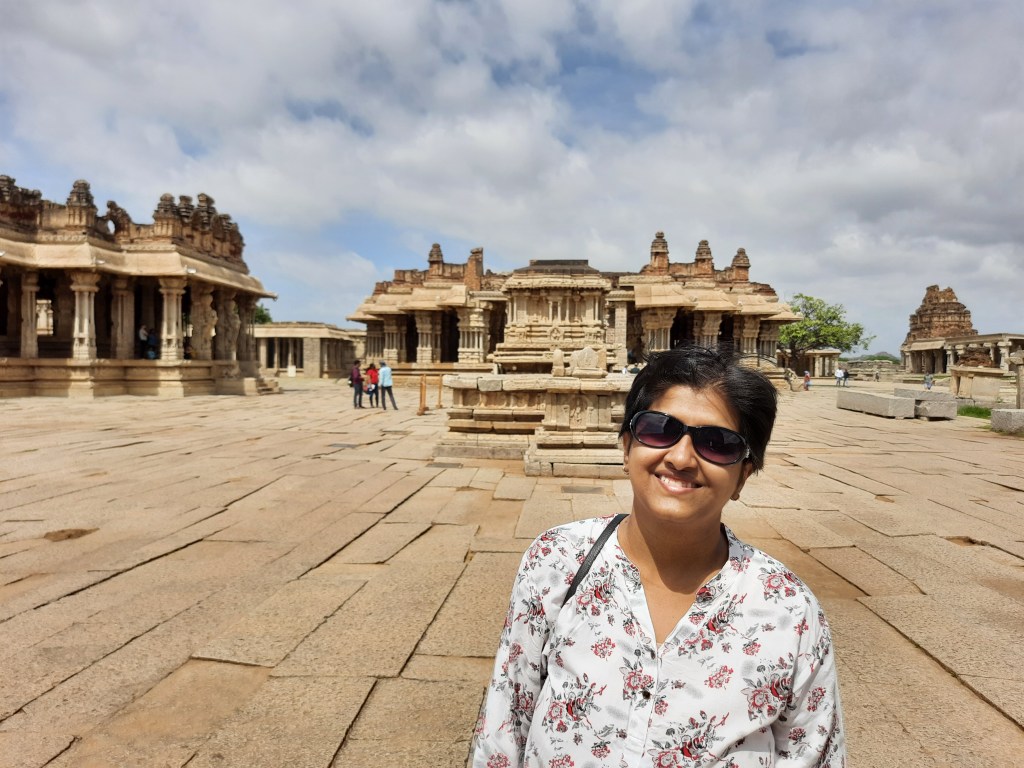
After a walk of about 1 KM from the parking lot, I arrived at the entrance of the Vittala temple. There are battery operated vehicles for ferrying the passengers which are a better option. On entering the temple, I was dazzled with an extravagant architectural showpieces . The sprawling compound of this temple houses pavilions, halls and many other smaller temples.
The highlight of Vittala temple is its impressive pillared halls and the stone chariot.
The stone chariot in fact a shrine built in the form of a temple chariot. An image of Garuda (the eagle god) is enshrined within its sanctum. The image of this chariot now adorns the modern INR 50 currency note.
The other highlight of the Vittala temple is the Maha-Mantapa with its richly carved giant monolithic pillars. The outermost of the pillars are popularly called the musical pillars which emit musical tones when tapped. Though its prohibited from tapping these, one can tap similar ones in the adjacent mantapa . I was impressed with the variety of the sounds that emit from these pillars.
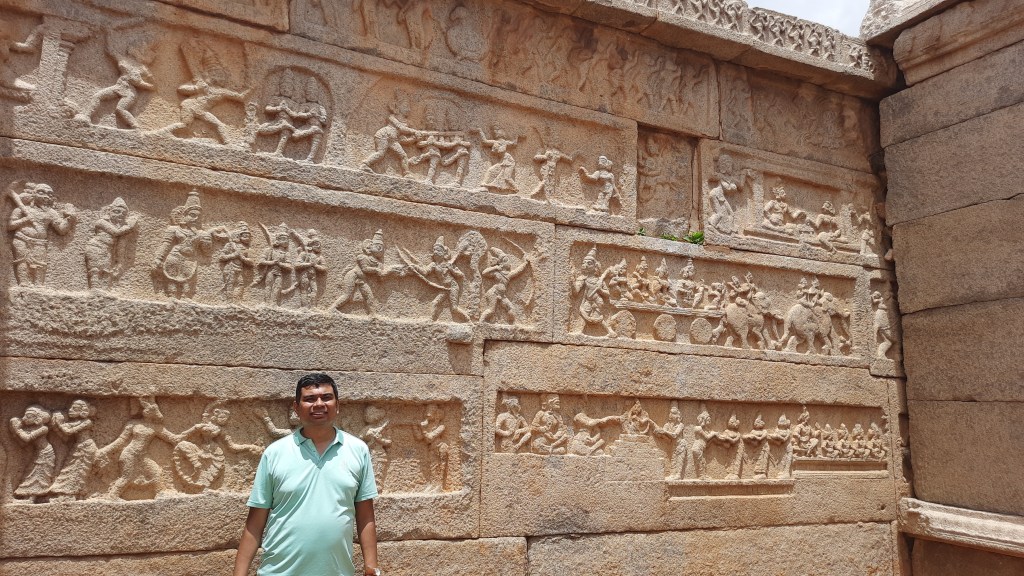
The walls of the mantapas are adorned with the sculptures that depict Krishna Leela, Ramayan and story of Bhakta Prahlad. These sculptures are bigger than those I have seen in other temples.
The video link to the Vijaya Vittala temple is given here : https://youtu.be/N6OAOCONgLw
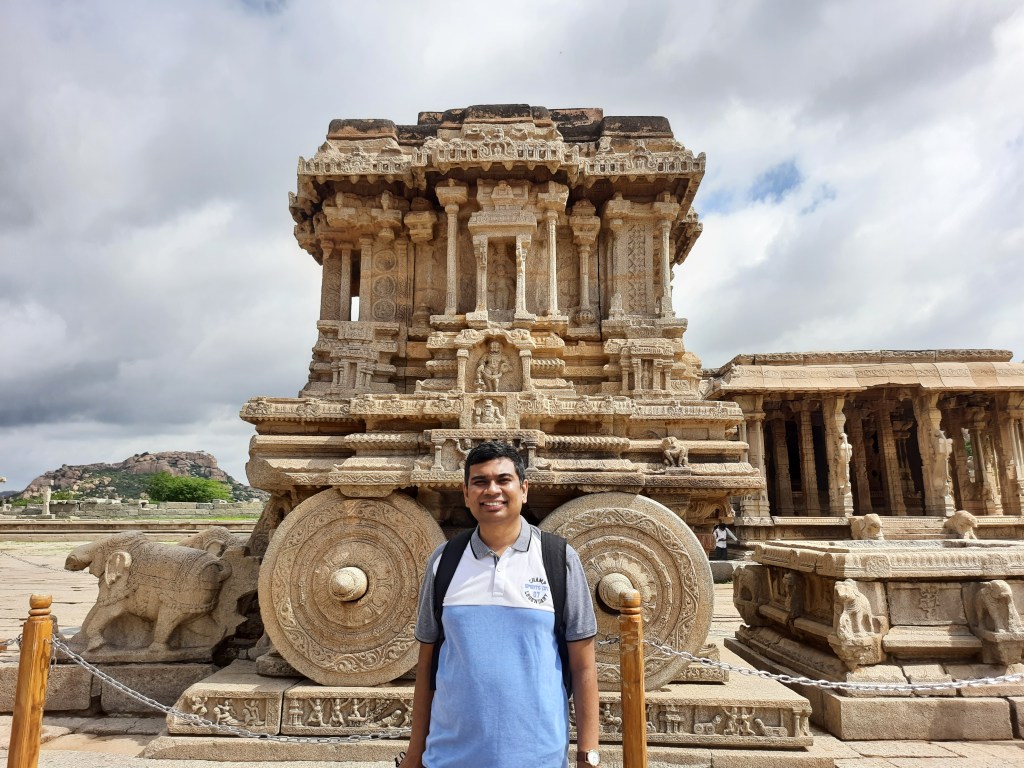
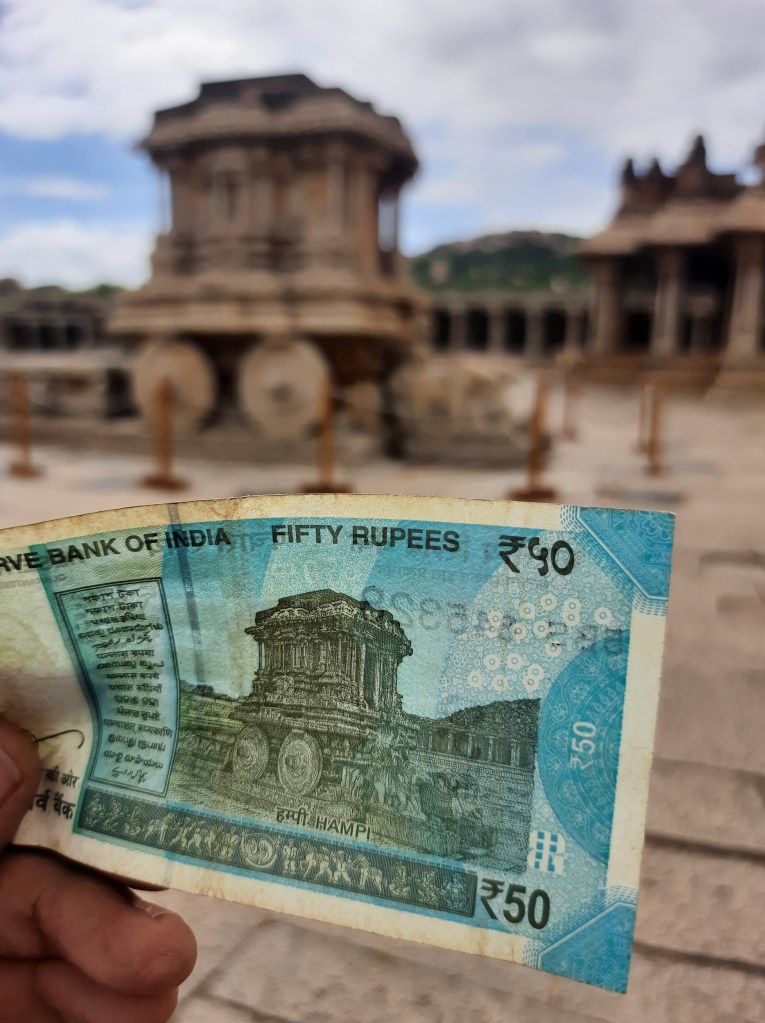
After the Vittala temple visit, I walked down to the river front which is few meters behind the temple. The Tungabhadra river flowed majestically and it was a sight to behold ! On the other side of the river one could see the Anjanadri hill, birth place of Lord Hanuman.
I arrived at the guesthouse and then we had lunch at the popular Mango Tree restaurant, next to our guesthouse. We liked everything about this place from the moment we stepped in. The ambiance, service, taste and variety of the dishes. In fact, we had almost all our meals in the same restaurant over next four days.
Later that evening, we entered the Virupaksha Temple , the temple dedicated to Lord Shiva, known here as Virupaksha/Pampapathi, as the consort of the local goddess Pampadevi. This is a huge complex built during 7th century AD though most of the additions were made during the Vijayanagar period.
The gopura of the temple is an imposing structure, towering 50 meters in height .In addition to the shrine of Lord Shiva, there are ones dedicated to Devi Bhuvaneswari and Vidyaranya Muni, the spiritual founder of Vijayanagar. The striking feature of this temple are paintings on the ceiling. These are very colorful and have remained so for hundreds of years ! These paintings depict the well-known stories epics and puranas. Another extraordinary feature is the wall on which the inverted shadow of the main tower falls upon. Quite an engineering marvel ! There is temple elephant who is popular with the devotees.
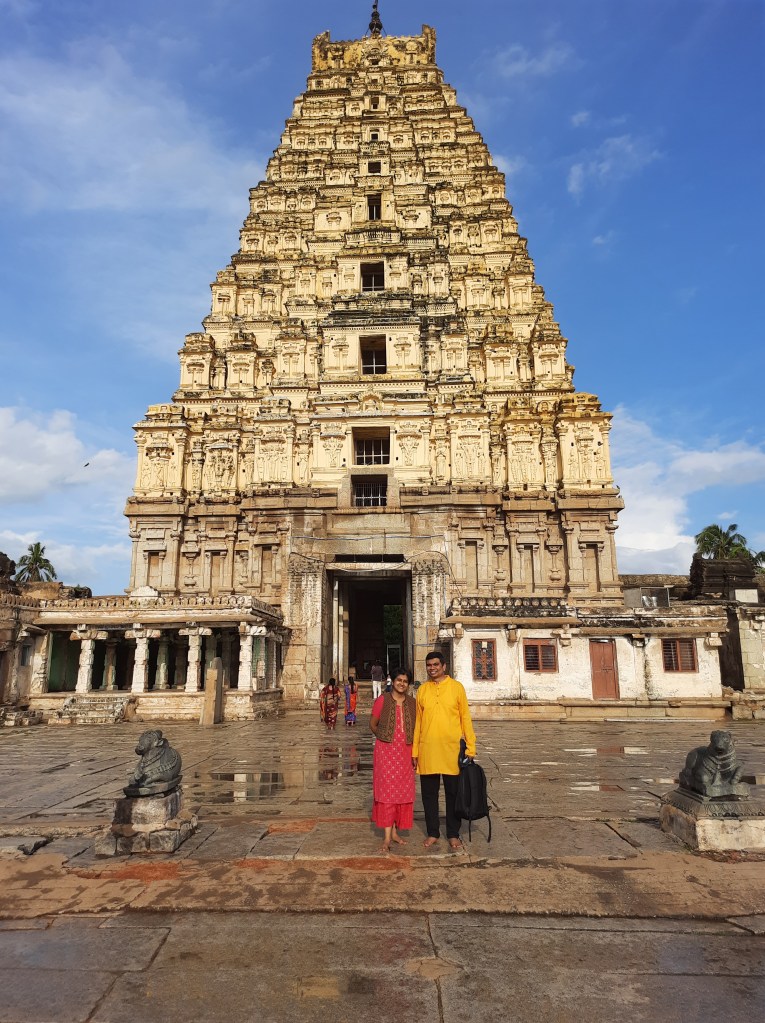
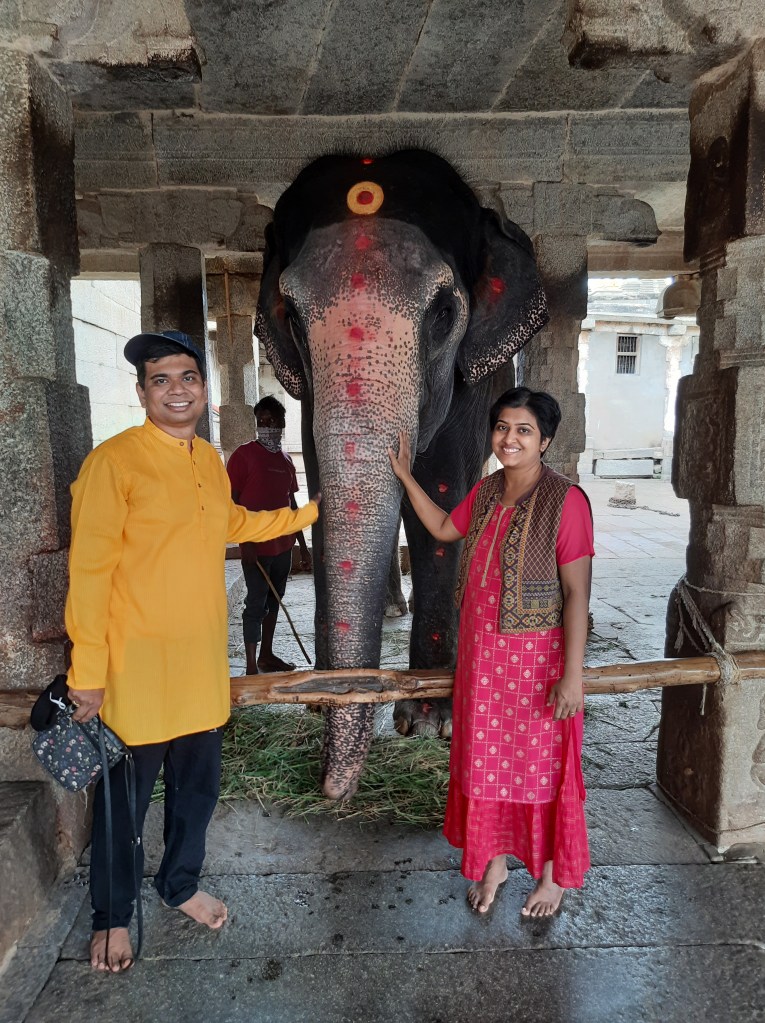
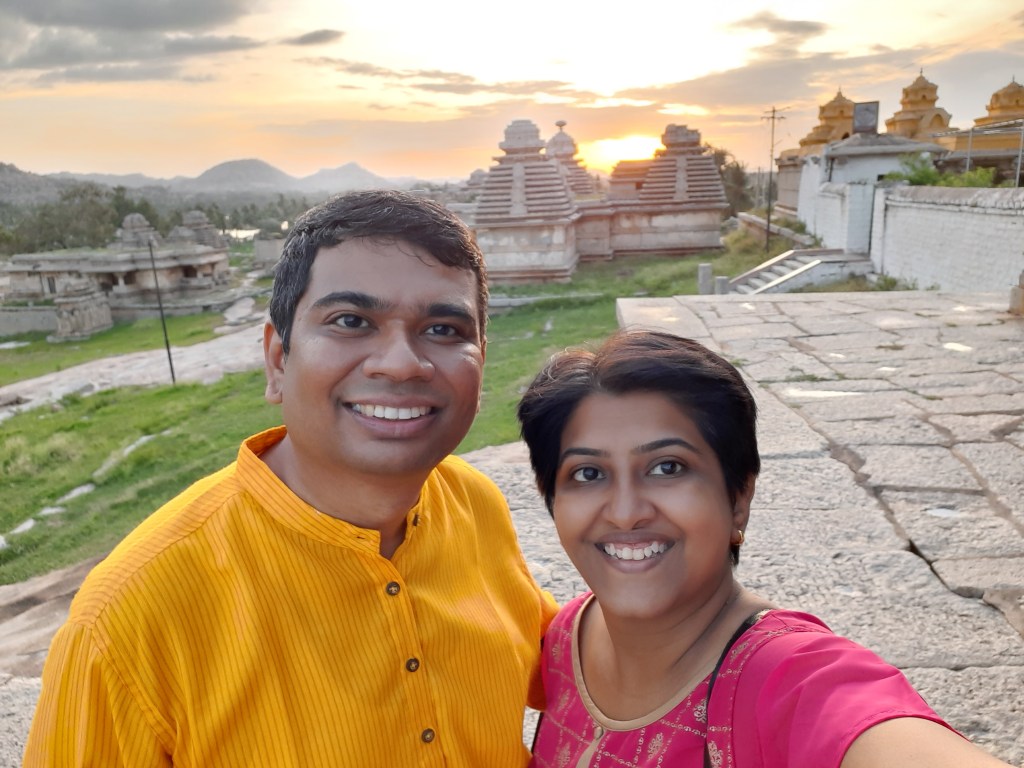
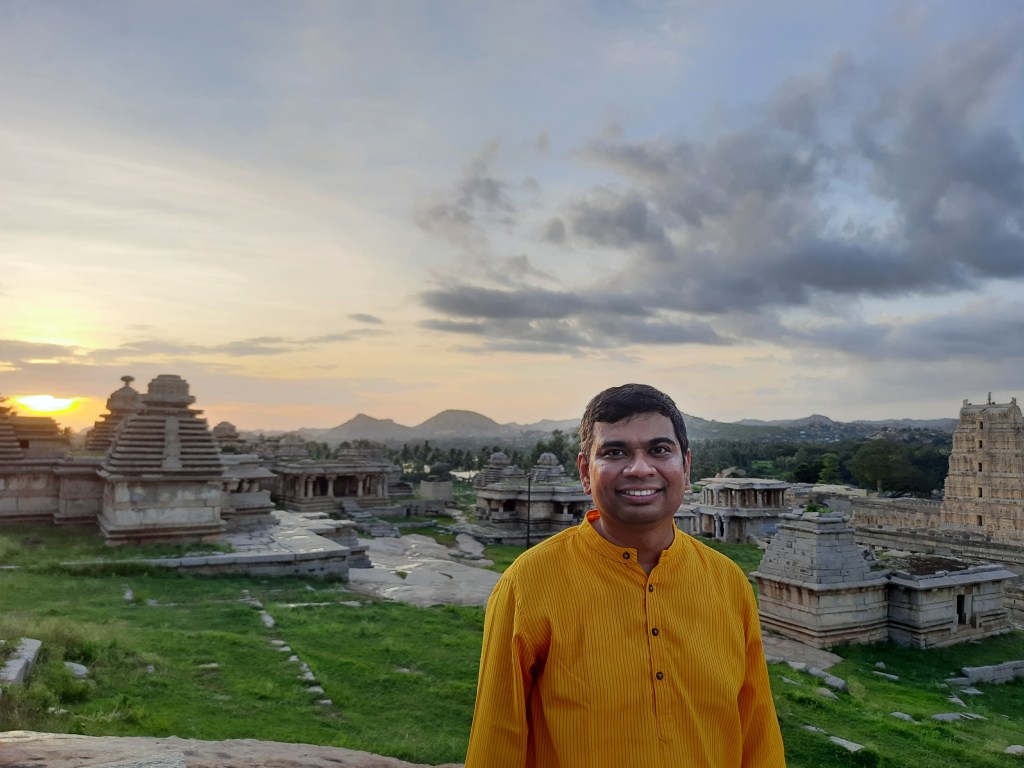
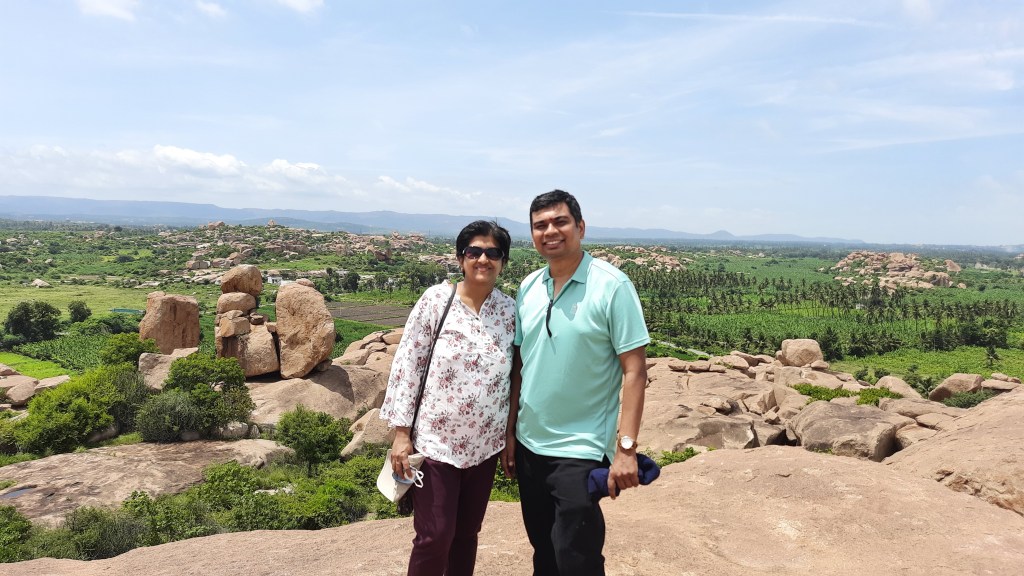
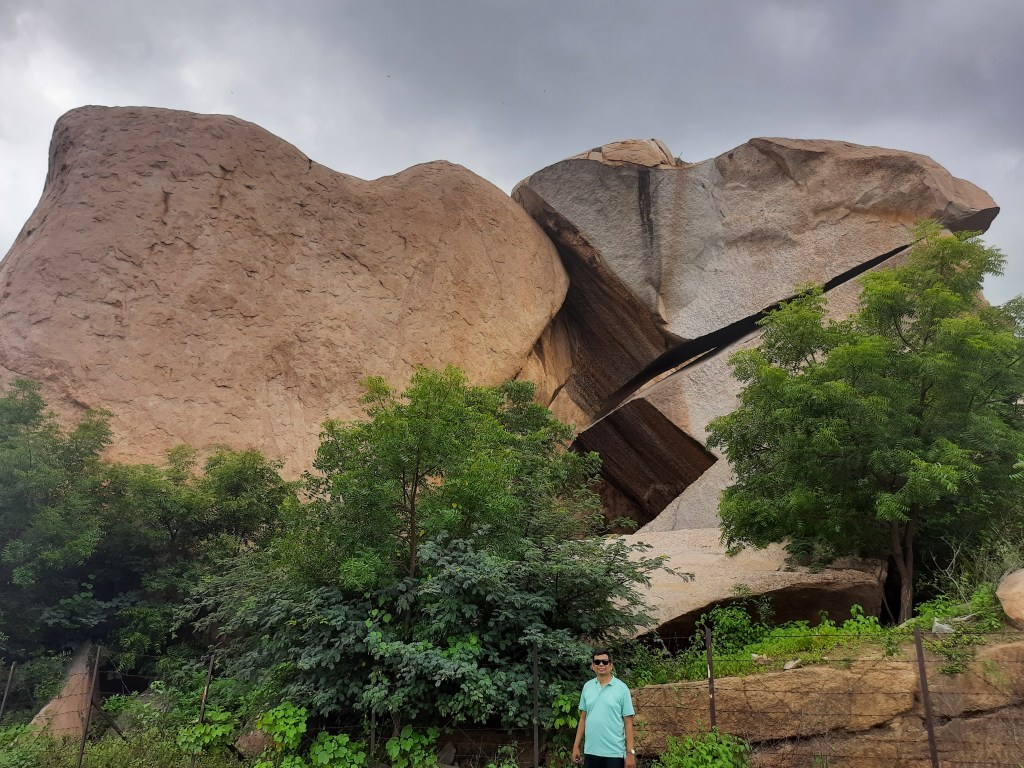
Around 5 PM we started walking up the Hemakuta Hill Complex adjacent to the Virupaksha temple. The Hemakuta group of temples is a cluster of ancient temples situated on the Hemakuta hill in Hampi. There are numerous boulders on this hill at different angles which give the impression that they might roll down any minute ! The sunset point on this hill is quite popular and the vista from here is spectacular.
The video link to the Hemakuta Hill is given here : https://youtu.be/VCBFVVysj9A
10-Sep-2021
This was an important day of our trip in which we had hired an auto-rickshaw for a full day for INR 1000. The plan was to view all the important attractions throughout the day. Auto-rickshaws are the best way to commute in Hampi, since all the attractions are in 10 KMS radius. The hotel /homestay employees will easily procure an auto-rickshaw at any given time.
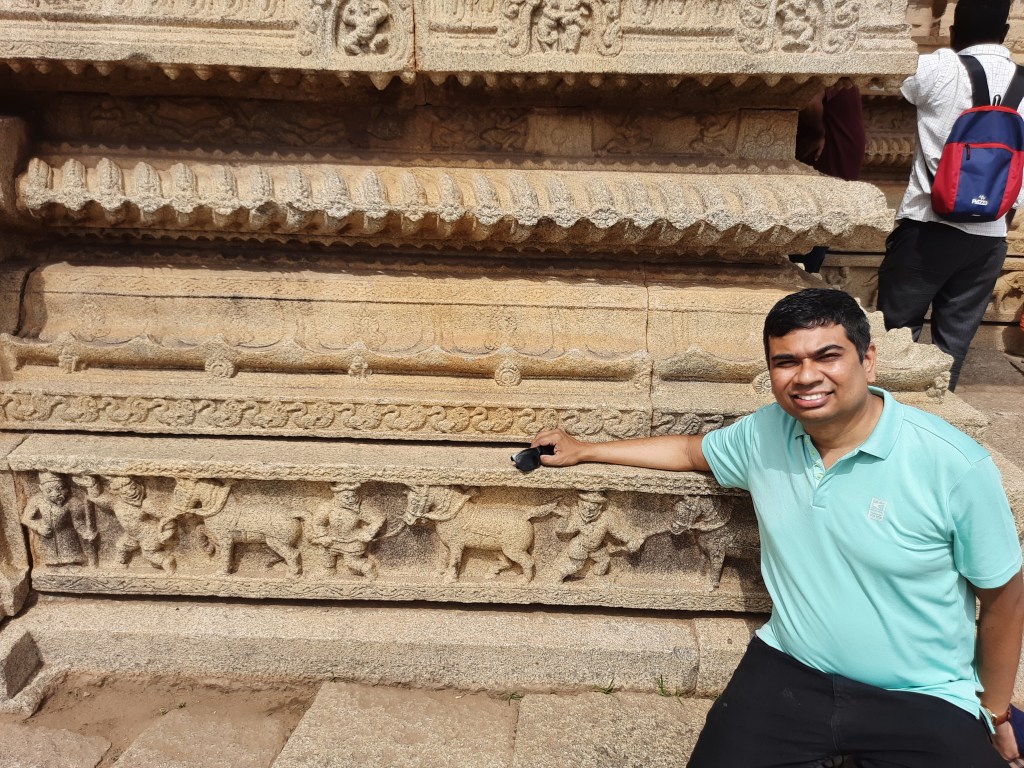
We started with another visit to Vijaya Vittala temple and this time without the guide. The vastness of the complex was re-experienced and we took some photographs at leisure. We checked the engravings which clearly show Arabs, Italians and Mongols visiting in Hampi during 16th century.
The next stop was Malyavanta Raghunatha Swamy temple – according to mythology, it is here that Lord Rama and his brother Laxman waited till the monsoon season got over during their search for Sita. The recitation of Ramayan constantly goes on in this temple and the devotees of Lord Ram will definitely find peace and solace here. This is the only hilltop in Hampi where you can reach by a vehicle. The views needless to say were spectacular from the vantage point.
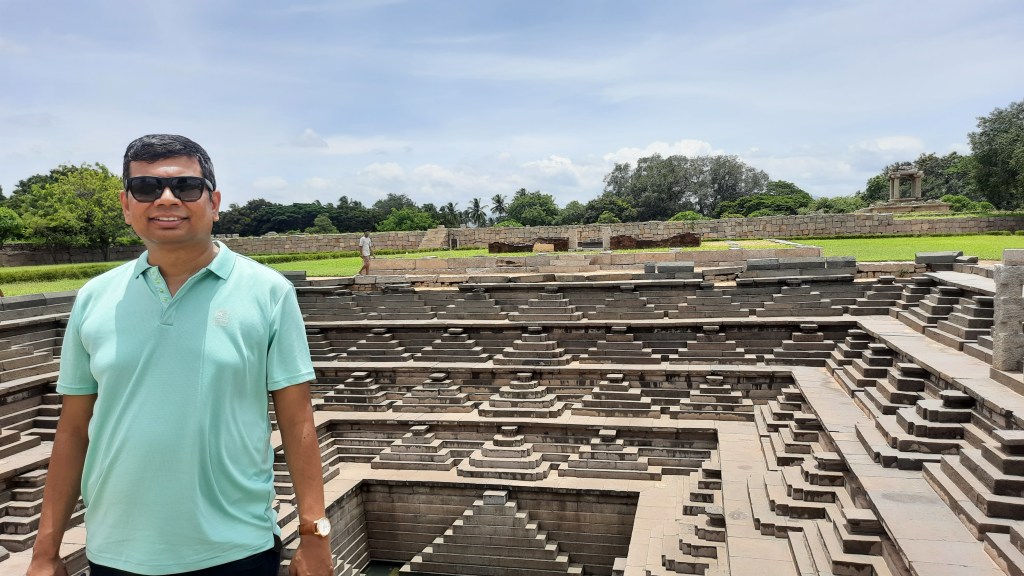
The next few attractions I found to be quite pedestrian – Elephant Stables ,Lotus Mahal, Stepped Tank and Dasara Dibba. These may be of interest to students of medieval architecture, but it is just a photo opportunity for rest of us.
A truly fascinating monument is the Hazara Rama Temple – this has numerous panels depicting the story from the epic Ramayana. The stone engravings are bigger and more prominent than in any other temple I had seen earlier.
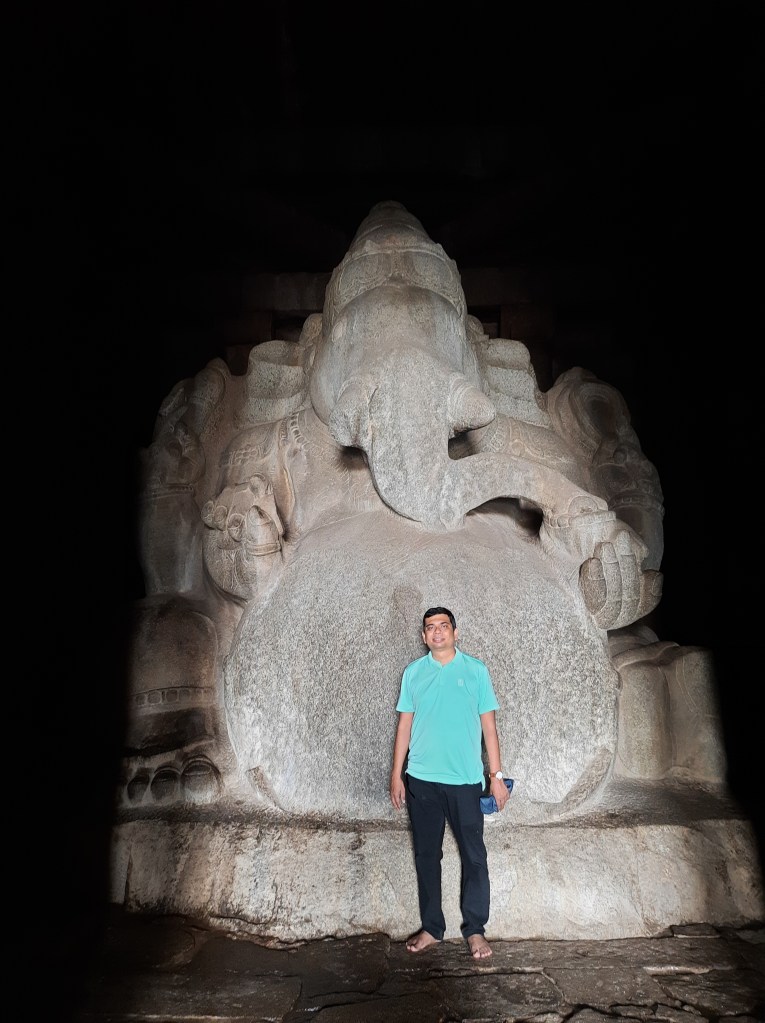
There are huge statues of Lord Ganesh and one of Narasimha quite close to the Virupaksha temple . Kadalekalu Ganesha is so called because the belly of Ganesha resembles a Bengal gram (known as Kadalekalu in Kannada). One can get close to the idol and seek the blessings from the remover of obstacles. Close by is Sasivekalu Ganesha is about 8 feet high and was built by mustard traders from Andhra Pradesh (Sasive means mustard in Kannada)
The biggest statue in Hampi is that of UGRA NARASIMHA, which depicts Lord Narasimha in angry form. Though vandalized by Bahamani sultans (like most monuments in Hampi), it is quite fearsome and awe inspiring.
We ended our second day with another visit to the Hemkuta hill to see the sunset.
11-Sep-21
The day was bright and sunny and we had our breakfast at the nearby Sagar hotel. This restaurant is run my three middle aged ladies and they do a fabulous job of serving idly, dosa, pooris and paddus.
I was determined to explore Hampi on foot and set out towards the Vijaya Vittala temple on a walking trail. This time I wanted to view the ruins of Achutyaraya temple, which are accessible only by foot.
After a walk of about a kilometer, I reached the river front and started walking parallel to it. The views were spectacular and the government has done a good job in maintaining this walking trail. After paying my respects at the Kodhanda Rama temple, I walked towards Achutyaraya temple ruins.
This temple is not named after any deity but after Achutyaraya, younger brother of Krishnadevaraya. It was the last grandiose construction completed in Vijayanagar kingdome before the Bahamani invasion .
This temple complex has multiple mantaps, gopuras and smaller shrines. Many view this as the best attraction of Hampi simply because it is deserted ! It is not on motorable road and one has to trek about two kms to get here, hence there are very few tourists around. There is sense of serenity here which I did not experience in any other place in Hampi.
The video link to the Achutraya temple is given here : https://youtu.be/02IWqic5v-I
That evening, I revisited the Achutyaraya temple and also surrounding areas which are of mythological importance. The area where Devi Sita dropped her jewels which were found by Sugreev, and a cave where Sugreev did tapasya which also has footprints of Rama and Laxmana.
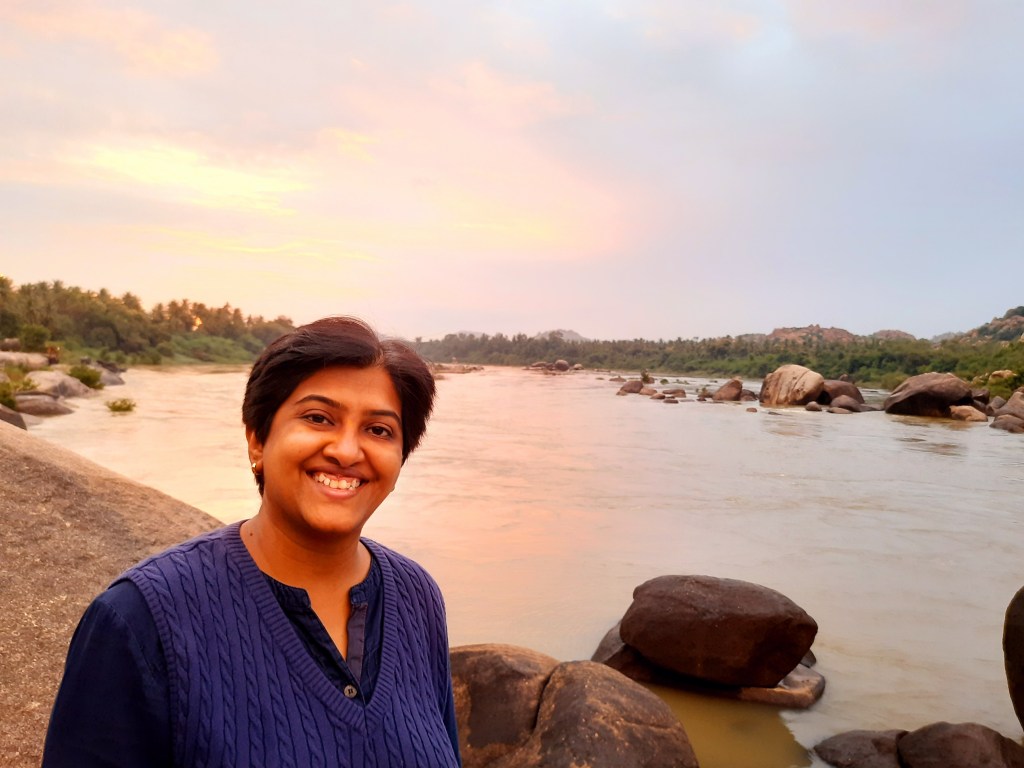
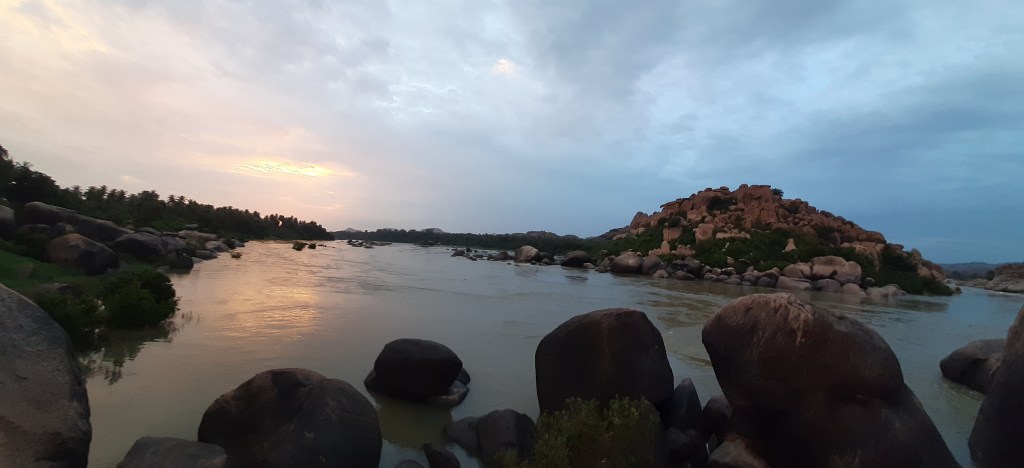
That day ended with beautiful view of the sunset from banks of Tungabhadra. Though sunsets top of hills are famous, the ones from river banks are no less spectacular !
The video link to the sunset from river is given here : https://youtu.be/A3YGjwFDjzw
12-Sep-21
The final day in Hampi would turn out to the most memorable one of our trip. We decided to trek the famous Matanaga hill, where Sugreev took refuge after his fight with his brother Vali. Being the highest point in Hampi; this is the best spot to get an aerial view of Hampi and its surroundings.
There are three routes to reach the top, and we decided to ascent from the track next to the Nandi statue. Though there were good solid steps during initial ascent, it became increasingly difficult as we progressed near the top. There were number of outstanding views throughout the trek. As we approached the summit, the steps were replaced with rocky terrain. It was a thrilling experience to walk on sheer rocks and stones with a deep gorge (without any railings) just adjacent to us. The authorities should install some safety measures here as this is definitely an accident-prone zone.
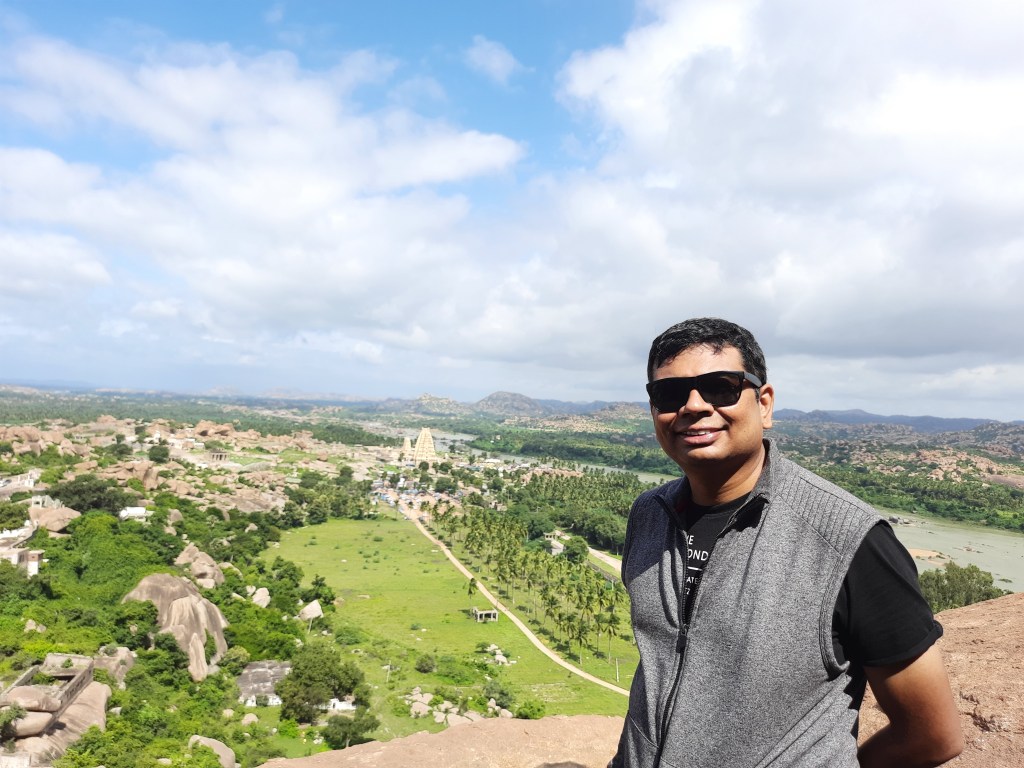
However, the risks were forgotten when we reached the top of the hill. The entire Hampi town and all the landmarks were visible in an incredible 360-degree view. There is a small temple dedicated to Lord Matanga Veerbhadreshwara, and it is from the roof of that temple that we could see the town and the surrounding countryside. The wind was howling with such ferocity that we could hardly hear ourselves speak. These are times I am thankful for not being too slim ; no risk of being blown away by strong winds!
The video link to the Matanga hill given here : https://youtu.be/9BZI5Er0NGA
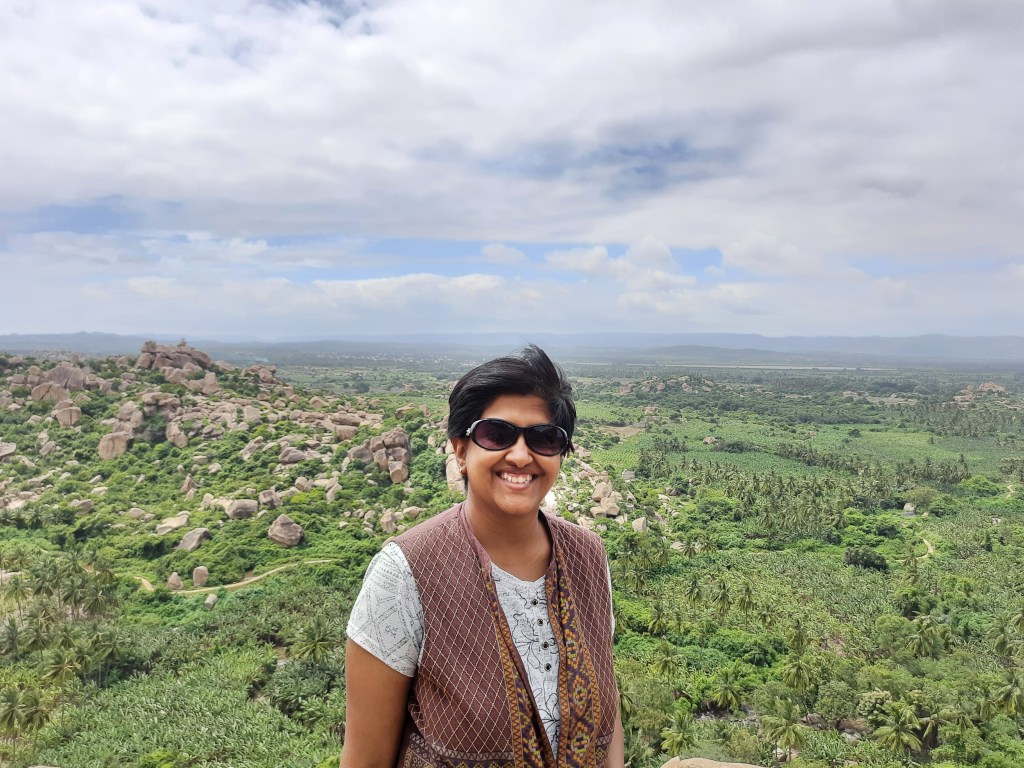
Our homestay owner had advised us to take the route which leads to the base of Achuytaraya temple. However, we noticed excellent staircase with made with solid stone. Correctly summarizing that this would leads to base at Hampi bazar ( near Kadalekalu Ganesha) we started our descent.
When we reached the base , the steps disappeared suddenly in middle of dense vegetation! Not sure about how to proceed, we made our way into a banana planation without any walking track in sight. Realizing that this is not the right path, we went back to the base of the stairs and took a right turn towards the hillock. We walked up the hillock and after tense fifteen minutes or so, we finally found an open gate that led us into a modern Jain temple. The locals there directed us to the Hampi bus stand and we heaved a sigh of relief ! Its recommended that one consults and follows suggestion of the locals during the treks to avoid any misadventures.
After some well-deserved rest, we visited our favorite Mango tree restaurant for the final time. We ordered a pizza and realized we should have stuck to the core expertise of the restaurant i.e Indian food (both south and north Indian dishes were made well)
That evening, I paid another visit to Virupaksha temple to admire the architecture splendor of the place. At leisure I could admire the smaller shrines dedicated to Lord Ganesh, many other Goddess and also to Vidyaranya Muni . I believe this is the only temple with a shrine dedicated to a philosopher and spiritual teacher like Vidyaranya Muni , who has authored Panchadasi and many other texts on Advaita Vedanta.
During this trip, we could not visit the northern bank of Hampi (called Hippie island) as the ferry services were stopped due to river currents in Tungabhadra. That will definitely part of our next itinerary during our next Hampi trip.
Around 8 PM we left for Hospet and boarded train back to Bangalore. I was reflecting on the multitude of sights and sounds I had seen during past four days. The temples, ruins, monuments and the natural beauty of river and sunset- all were magnificent. But there was unmistakable gloom in my heart on seeing the ruins. What did the Bahamani invaders gain by wrecking so much destruction? The loot of gold and silver one can understand, but deliberately setting fire to palaces and temples is sign of depravity. It is lesson for us, that while we make progress in art, culture, engineering etc the military readiness should be our topmost priority . A strong national leadership with focus on national security is need of the hour. Else, the results are for everyone to see…..
 Temples of Karnataka