From Cheeku Rabbit to Bhagwat Geeta – Part 1

“I read a book one day and my whole life was changed.”- Orhan Pamuk (Nobel Prize Recipient for Literature)

Reading has been an integral part of my life since childhood. Books have not only been part of me, they have defined my life, influenced my thoughts, shaped my views and given wings to my travel plans .

In fact, the quality of my life has been shaped by the quality of the books I have read.

One of the questions which people who read books ask each other is “Which book are you reading lately?”. My answer to that question has varied over the years and this blog is an attempt to capture that journey.

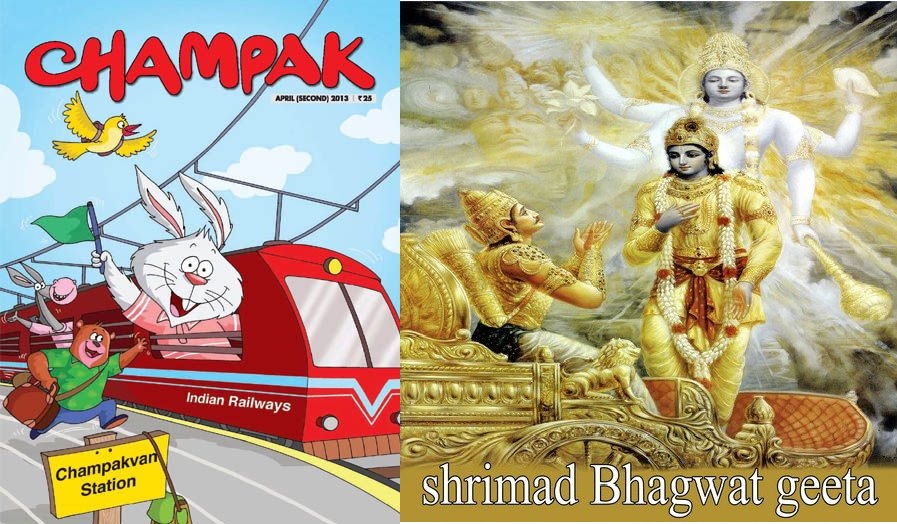
  My earliest memories of reading are associated with Panchavati Book Library in Ganganagar Bangalore . It was owned by my friend’s family and I had easy access to all the books there. At the age of five, I picked my first book – Champak, which had both animated (comic) and text stories. Cheeku rabbit was my favourite character and I loved his long ears, red sweater and his helping nature. After Champak, Tinkle was just a step away. Tinkle was immensely popular with the children in 1980s and 1990s and the characters in that magazine have become immortal. Adventures of Shikari Shambu, Tantri the Mantri, Kaalia the crow, Suppandi are popular to this day !

Later , I came to know the enormous contribution of Anant Pai, the founder editor of Amar Chitra Katha which published Tinkle magazine. Uncle Pai (as Anant Pai was lovingly called ) used comics as his medium to bring mythology,  folktales, literary masterpieces and biographies of visionaries from every region of India to children.

As I grew older, I enthusiastically read “Learning with Uncle Pai” section of Tinkle which explained the scientific concepts in an interesting way.

Till age of 8 years, I read Champak, Tinkle ,Amar Chitra Katha comics and admiringly looked at Hardy Boys series which my older brother used to read, wanting to grow-up quickly to read those books.

Meanwhile, my parents had subscribed to Chandamama magazine in Marathi . In spite of being educated outside Maharashtra, I can read/write and appreciate Marathi literature thanks mainly to Chandoba (as Chandamama is called in Marathi). Chandoba was a fascinating magazine, very true to Indian ethos with stories of Gods and Goddesses, valiant princes, brooding queens, wise ministers and simple villagers with their bullock-carts and thatched roofed houses. The language and the pictures were of very high quality and definitely helped shape my cultural outlook.

Chandoba reached its peak of popularity in 1980s, closed down in next decade but was later revived. It is however now, past its age of glory.

Another interesting addition to my reading was “Classics for Children” series by Jaico Publishing company. Through this, I was introduced to novels like Prisoner of Zenda, Sherlock Holmes, Robin Hood, Invisible Man etc. These books had plenty of pictures, easy-to-understand language and the storylines were modified for young readers. It gave me an early exposure to the classics from bygone era.

Hardy Boys, Nancy Drew and Archie Comics became my regular reading as I stepped into teens. “Anand Circular Library” run by my mother’s friend Geeta aunty had vast collection of these popular books and I cycled everyday to Anandnagar during my summer vacation to exchange books there. Reading these American books however had limited impact on my personality and was not influenced by it in any way.

My knowledge of English vocabulary, idioms and phrases, grammar has been extremely useful to me : be it in clearing competitive exams or in my day-to-day interactions. A primary contributor to my English is undoubtedly the P G Wodehouse books I started reading since my college days.

“Company for Henry” was the first P G Wodehouse book I read and since then am permanently hooked to this author and his style of writing. Usage of Latin phrases, Shakespearean quotes and Biblical references vastly improved my English language skills. And the humorous take on the British upper class, early Hollywood and American millionaires added unique charm to these books.

If Wodehouse regaled me in English,  it was P L Deshpande (Pu La), the doyen of Marathi literature who opened the wonderful vista of Marathi literature. Three of his books : Batatyachi Chaal, Hasavnuk and Asami Asami , made me literally roll in laughter. I have read and re-read his books multiple times till the iconic characters from the books seemed alive and living. Pu La’s other works like travelogue or personality sketches gave me an insight into the prevailing culture during the 1960s and 70s.

In parallel to P G Wodehouse, I started reading Agatha Christie mysteries in my high school days. The gripping plots of Hercule Poirot novels held me spell-bound for hours. It’s a tribute to the “The queen of crime”, that each of her plots was so unique that even after reading many of her books, I would always be surprised at the climax of her novel. Agatha Christie’s short stories were equally fascinating and I would re-read them multiple times to understand the science of deductions.

Any discussion about my reading is incomplete without mention of my childhood hero :Tintin. This Belgian reporter, created by Herge, travels around the world and is involved in one adventure after other. Herge tried to be as realistic as possible in his description of countries Tintin visits . In fact, I have learnt more Geography from Tintin comics than I have from my school books !

As I approached end of my student life ,I increasingly moved away from fiction to non-fiction books. I began to read biographies of business leaders like Jack Welsh and Indian tycoons like Ratan Tata, Rahul Bajaj and Aditya Birla. In the coming years, I would expand my reading greatly on diverse topics like Finance, History, Travel, Spirituality and Politics.

In my next blog, I will continue my reading journey from my college days to present.
Goa – My Second Home

Goa – The mere  mention invokes images of sunny beaches, coconut trees and lush greenery.

For many decades now, it has been India’s most popular tourist destination, both for domestic and international tourists. In fact, Goa hosts 80 lakhs tourist annually, a state which has a total population of 18 lakhs!

I decided to visit Goa again in Oct 2019 for my fifth visit to the state. Given that I was looking for a relaxing vacation, North Goa was a natural choice. With its familiar beaches, hotels ,restaurants and people, North Goa had become a second home to me, as familiar as Pune.

In absence of direct train from Mysore to Vasco, we have to first go to Bangalore and board another train from there. However, there is now direct air connectivity between Goa and Mysore and hence we planned to return directly to Mysore.

On 4-Oct-2019, we boarded Shatabdi to Bangalore and the same evening Chennai-Vasco express from Yesvantpur railway station.  I was pleasantly surprised to see swanky Yesvantpur station, with escalators and high level of cleanliness. Swacha Bharat Abhiyan indeed !

Next morning, by the time I woke up , the train had passed Dharwar and had entered dense forest. It was a pleasant view of the lush greenery after the rains. Few hours later we passed the Dudhsagar railway station and braced ourselves to view the spectacular Dudhsagar falls. Enthusiastic trekkers alight at this railway station and walk on the tracks towards the falls. In our case, the view from the train was majestic and we could see the revelers having a great time at the bottom of the falls.

At 12:30 PM on 5-Oct-2019, we arrived at Madgaon and  I hastily walked towards the Govt Taxi stand outside the station. The entire taxi industry in Goa is highly “unionized” and one can take only the local taxi at the pre-decided rates. There are no app-based taxis in Goa and hence we boarded a local taxi to Candolim, a good 45 KMS away.

After a journey of 1.5 hours through potholed roads, we arrived at Laliguras Villa at Candolim. Its a relatively new hotel on Candolim Beach road, just few meters from the beach. After resting for few hours, we took a refreshing dip in the sea, a welcome activity in hot weather!

After a quiet dinner at our favorite restaurant “Mango Groove” we ended our first day in Goa.

Next day we left to visit Fort Auguda, one of the most popular attractions of North Goa on a rented Activa. But looking the traffic on the Fort Auguda road, we changed our plans and headed towards Reis Margos Fort, a smaller and lesser known fort in North Goa. It is built on the narrowest stretch of the Mandovi river, facing the capital city Panjim. Though originally built as a military outpost in 1400s, it was subsequently used as jail, hospital and now a tourist destination. There are few halls in the fort which depict the history of Goa which I found interesting .

Reis Margos Fort

Next stop was Sinquerim beach where we admired the view from the ramparts of Fort Auguda. These overlook Sinquerim Beach and the Arabian Sea providing a spectacular vista.

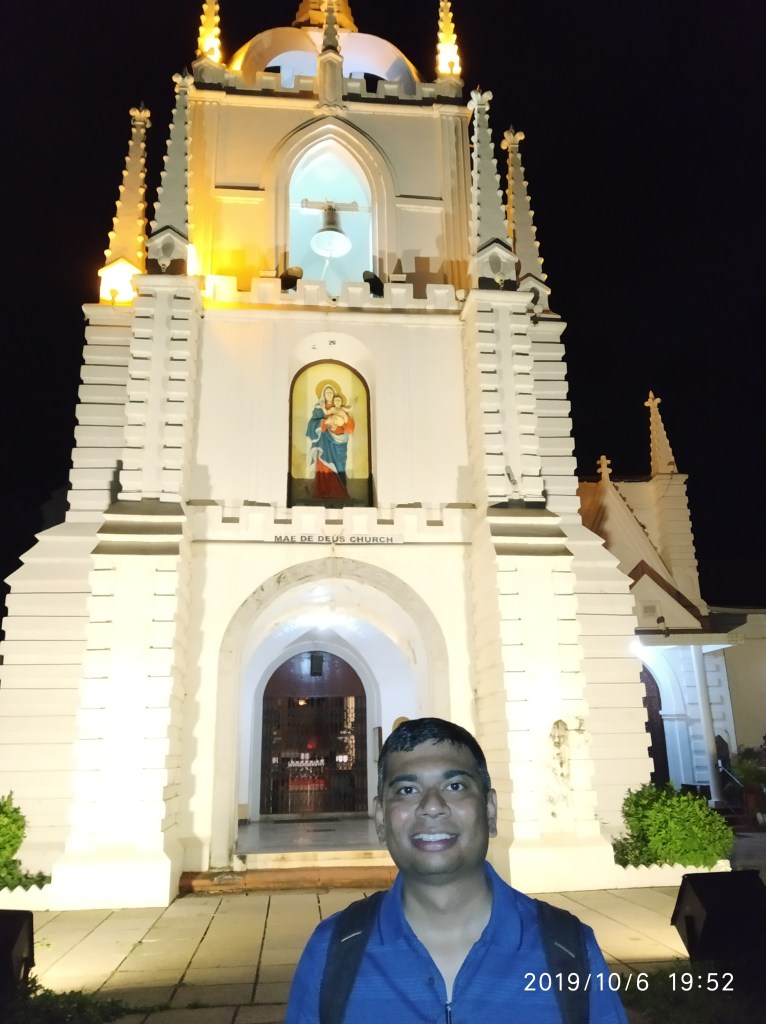
We had a healthy and interesting lunch at Himalaya Tibetan restaurant , with lots of fresh veggies cooked with little oil and unique flavours. After rest for few hours, we headed to Saligao to view the famous church Mae De Deus (Mother of God) which is lit up in the evenings. In this visit, we had decided to visit off-beat attractions of Goa and this church was one such destination. With its Gothic spires and pristine white walls, it reminds one of a fairytale castle I used to read about. We saw quite a few devotees from local villages here.

Church Mae De Deus

Later we visited the Shanta Durga temple at Calangute where the Navaratri Sangeet Mahotsav was in progress, similar to the ones in Pune. I know little about classical music, but Meenal was impressed with the rendition and overall quality of the program, which was on par with those in Pune. Most people will be surprised to know that Maharashtra and Marathi language are an integral part of Goan culture. In fact, in 1963, there was a referendum to decide whether Goa would integrate with the state of Maharashtra or would be an independent Union Territory. The decision was in favour of UT, but with a slender margin. In 1987,Marathi (with Konkani) was accorded an official language status in Goa and most of government communication happens in Marathi.  Marathi language, festivals, culture are visible in the interior Goan villages while the coastal area( which most tourists visit) is more cosmopolitan. However, in last few years, there has been tremendous migration into Goa from other parts of the country and slowly the local culture is being replaced with pan-Indian one.

Next day on 07-Oct-2019, we left for Fort Auguda early in the day to beat the crowd. Since the time of our visit had coincided with Dassehra vacation, there were hordes of tourists from all part of India .Indian domestic travelers have vastly outnumbered the foreign tourist in Goa in last few years, and hence Indian holidays result in significant rush.

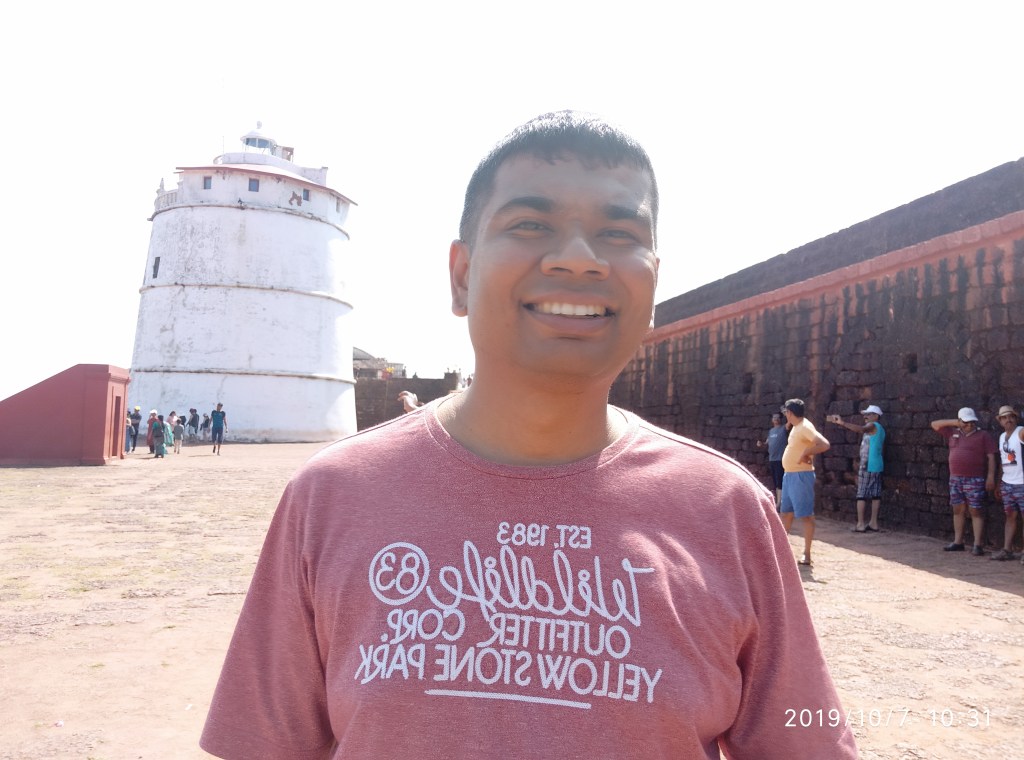
Aguada, means “Water” and that is how this fort has got its name. A freshwater spring within the fort provided water supply to the ships that used to stop by and the water tanks here can store thousands of gallons of water. There is also a lighthouse and jail within in the fort premises ,which were in use just till a few decades ago.

The views of the Mandovi river from the fort provide an excellent background for some pictures.

Fort Auguda

On the way back, we saw boat tours which seemed interesting. These are one hour cruise costing INR 300 per person. However, giving the crowd and waiting time, we decided to skip this activity.

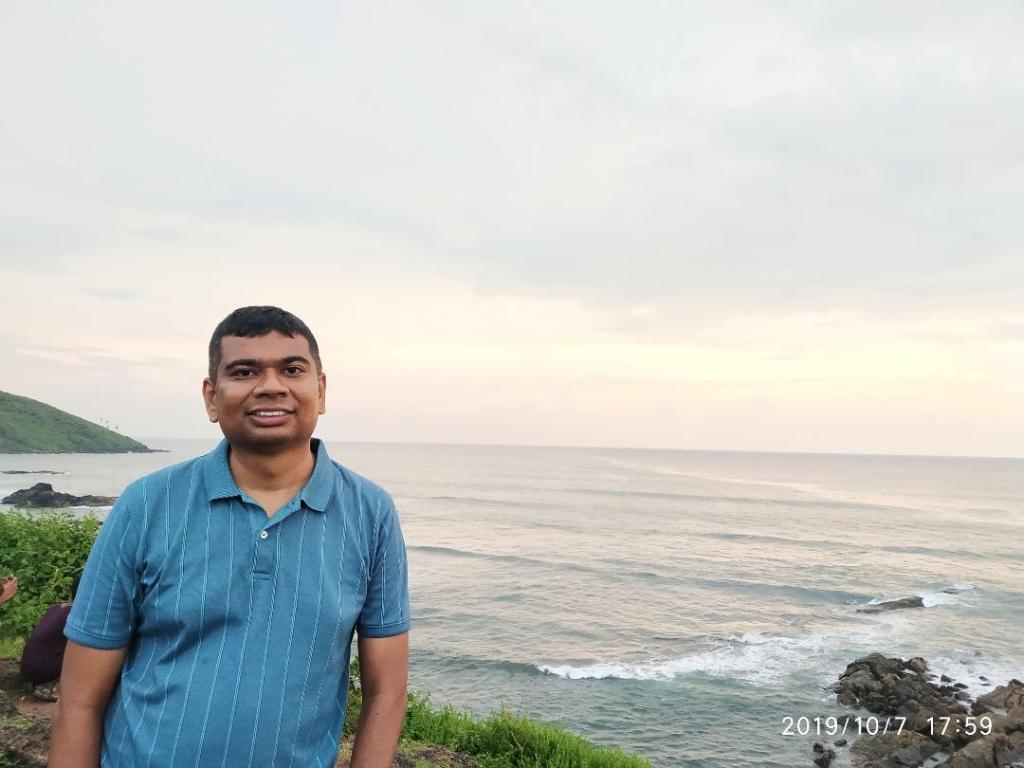
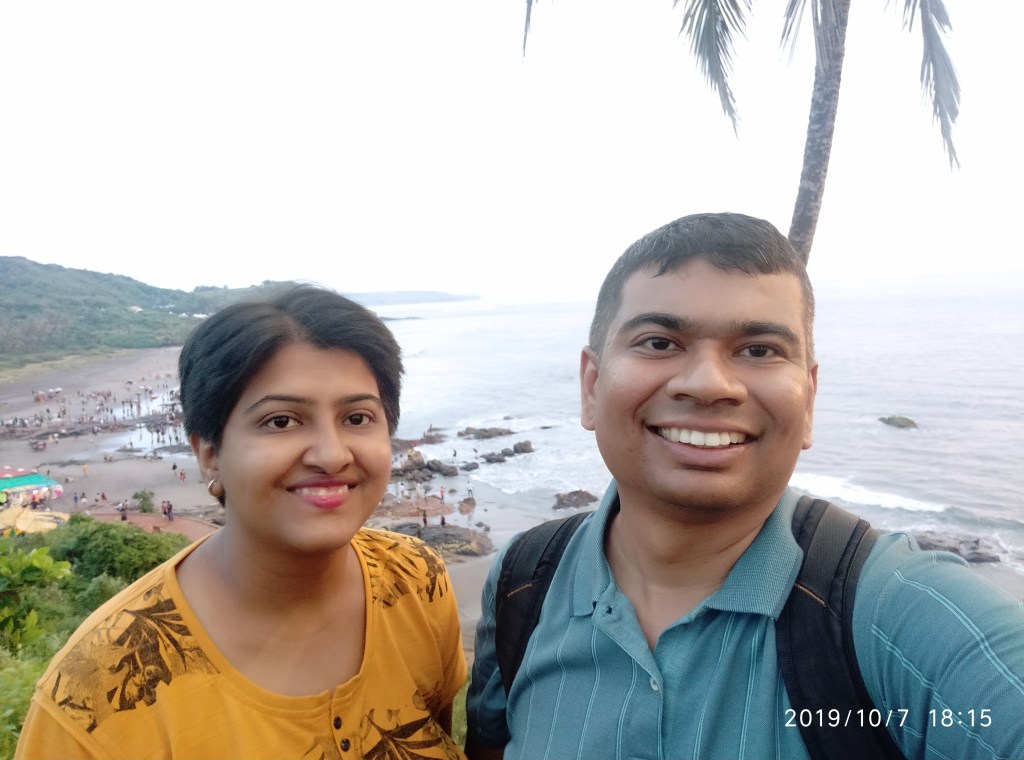
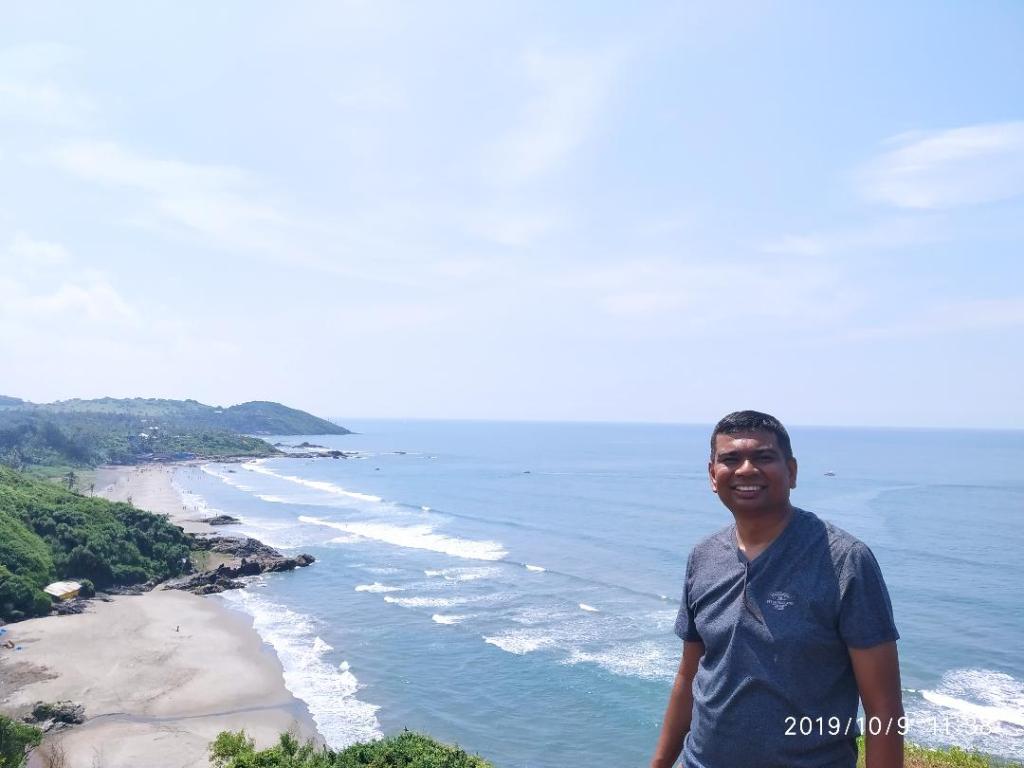
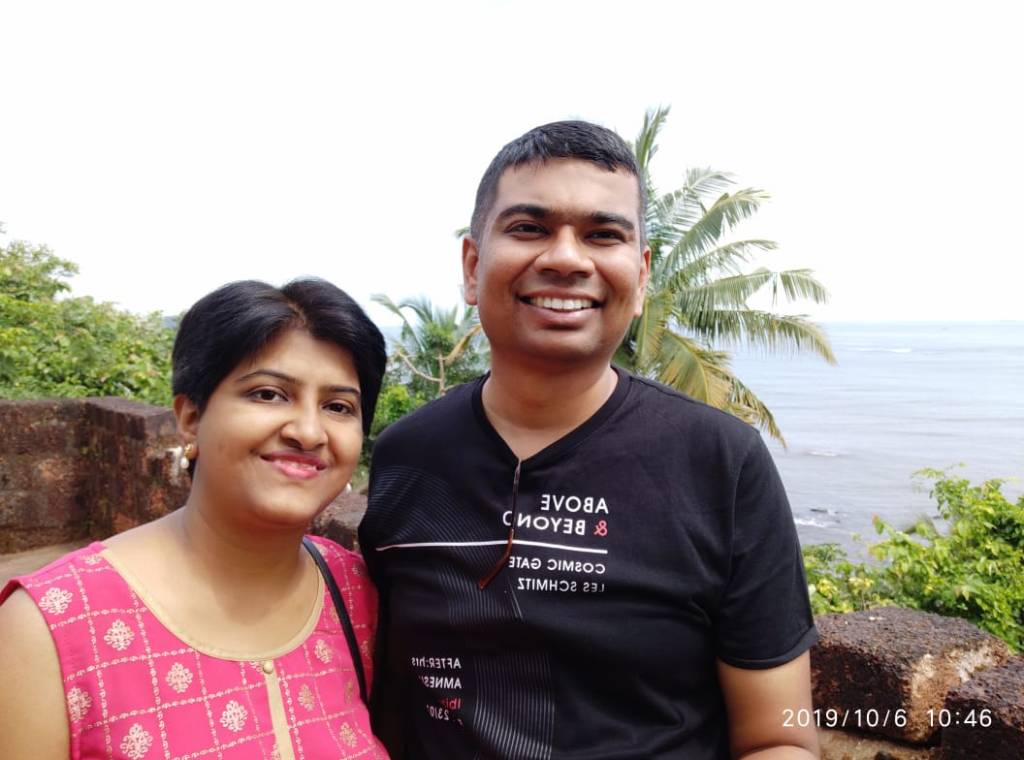
 That evening, we embarked on what would be the most memorable evening of our trip, a visit to Vagator beach in the northern part of Goa. It is around 12 KMS from Candolim and it took us around 40 mins to reach there on our hired Activa. The road quite scenic as one leaves the urbanized chaos of Calangute behind and heads towards the countryside. Once at Vagator Beach View point, we looked with awe at the dramatic red cliffs sloping towards the shore. There are two beaches to either side of the view point and coconut trees which form a perfect backdrop. The pictures speak for themselves.

Vagator Beach
Vagator Beach

The ride back was quite an exciting experience as the it was dark by the time we left Vagator. Trusting the GPS system on my mobile phone, we navigated through narrow and dark village roads and finally made it to familiar areas after couple of detours.

The roads in Goa are uniformly bad and were ridden with potholes everywhere we went. This is quite a sad state of affairs in the state that plays host to lakhs of domestic and international tourists. We saw couple of road accidents during our visit, which are inevitable consequences of pathetic roads.

That night I confirmed my local taxi for next day through Bharat Taxi Service before calling it day.

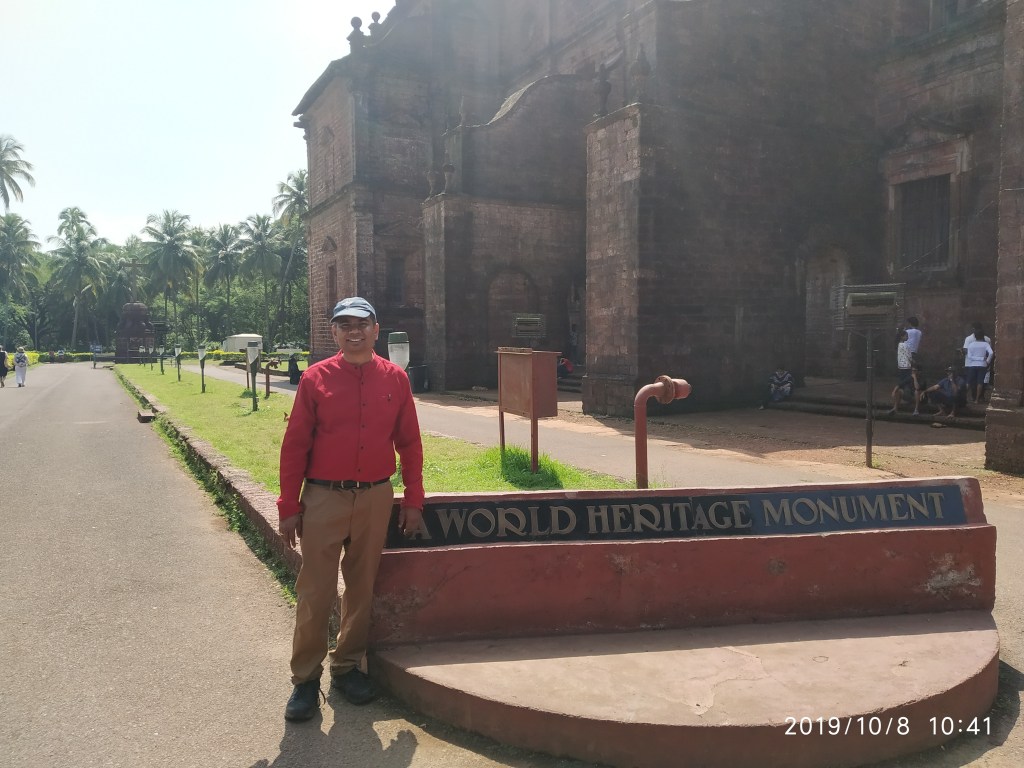
Next day on 08-Oct-2019, we left early at 09:00 AM in local taxi to visit “Old Goa” area , famous for its churches and Portuguese influences. We stopped at breakfast at Café Bhosle at Panjim for a delicious snacks of Bhaji -Pav (different from Pav-Bhaji of Mumbai/Pune) ,Chilli bhajji and sweet bun. We then moved on Old Goa area, about 8 Kms from Panjim through a very scenic roads. River Mandovi gave us company almost throughout the drive and we were tempted to stop to admire the view.

We arrived at Basilica of Bom Jesus which is also known as St Xavier Church. This is one of the oldest churches in India and contains the body of St. Francis Xavier, one of the earliest saints in Portuguese India. The interiors of this church are very baroque with numerous paintings and engravings .As this church continues to be a place of worship , we paid our respects and moved on.

Basilica of Bom Jesus

There are two other churches in vicinity, Se Cathedral and Church of St. Francis of Assisi. Both of these are large churches and of architectural and historical significance. I was more interested in the Archeological Survey of India (ASI) museum in the same complex which has numerous exhibits on the Portuguese conquest of Goa. Even after reading so much, I still cannot fathom how a handful of sea farers could travel all the way from Europe and conqueror this land. And rule it for 500 years uninterrupted !

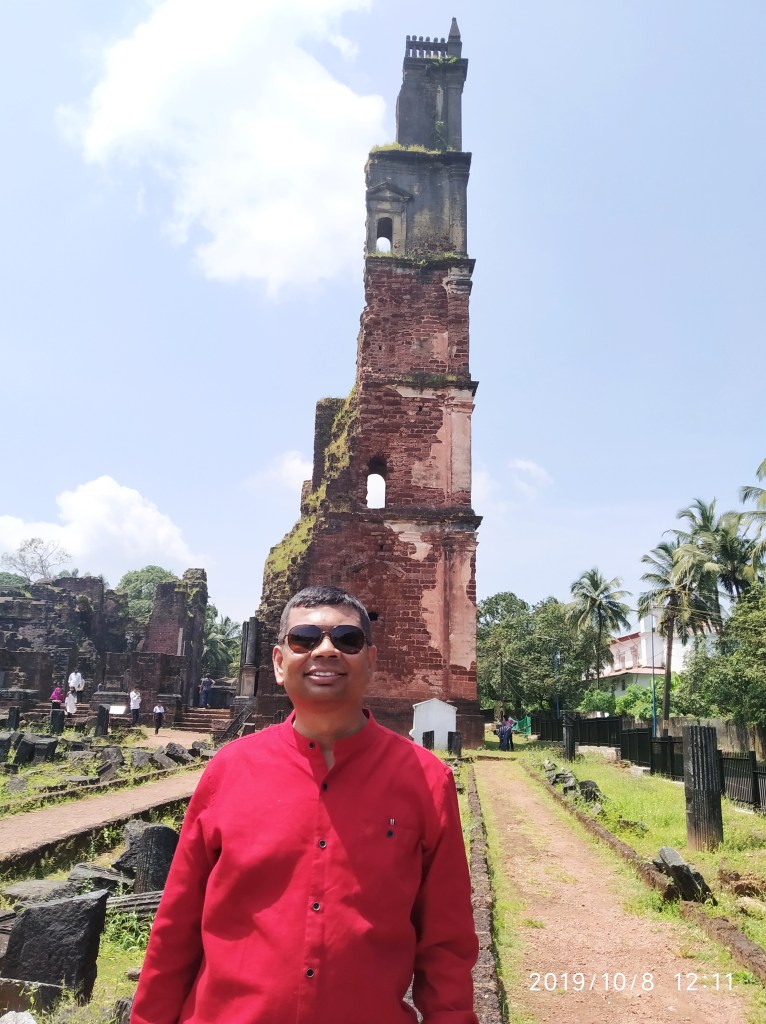
Our next stop was the ruins of St Augustine church which was once a gigantic structure. The ruins too have its own charm and reflect the bygone era

St Augustine Church

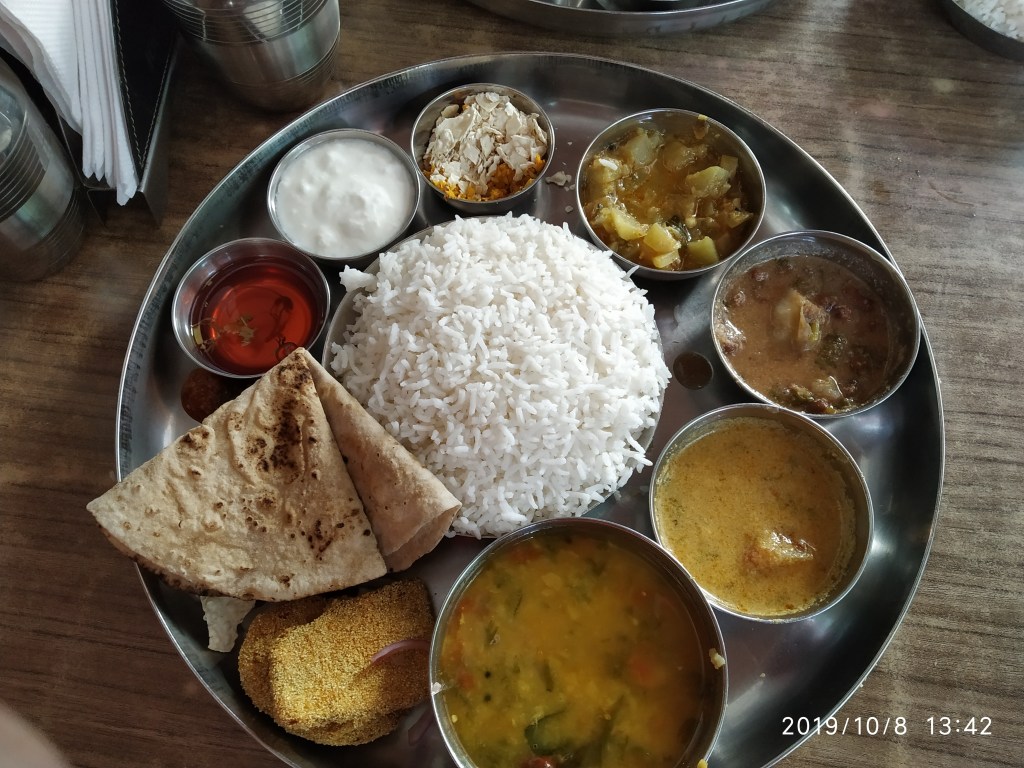
Post that we headed for lunch at  a Panjim restaurant “Konkani Kanteen” , famous for its Konkani cuisine which has been around since 1972 . The vegetarian thali we ordered was delicious, with less spice and taste of coconut in almost all dishes. This restaurant is famous for its sea-food, but its vegetarian food is also quite commendable.

Thali at Konkani Kanteen

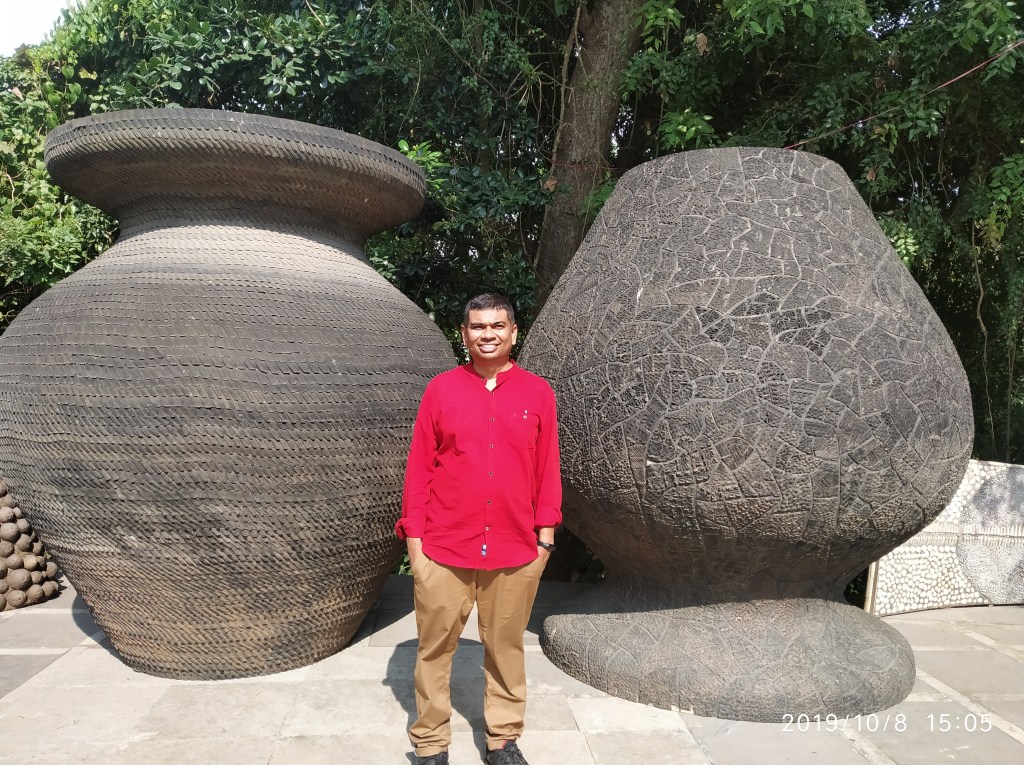
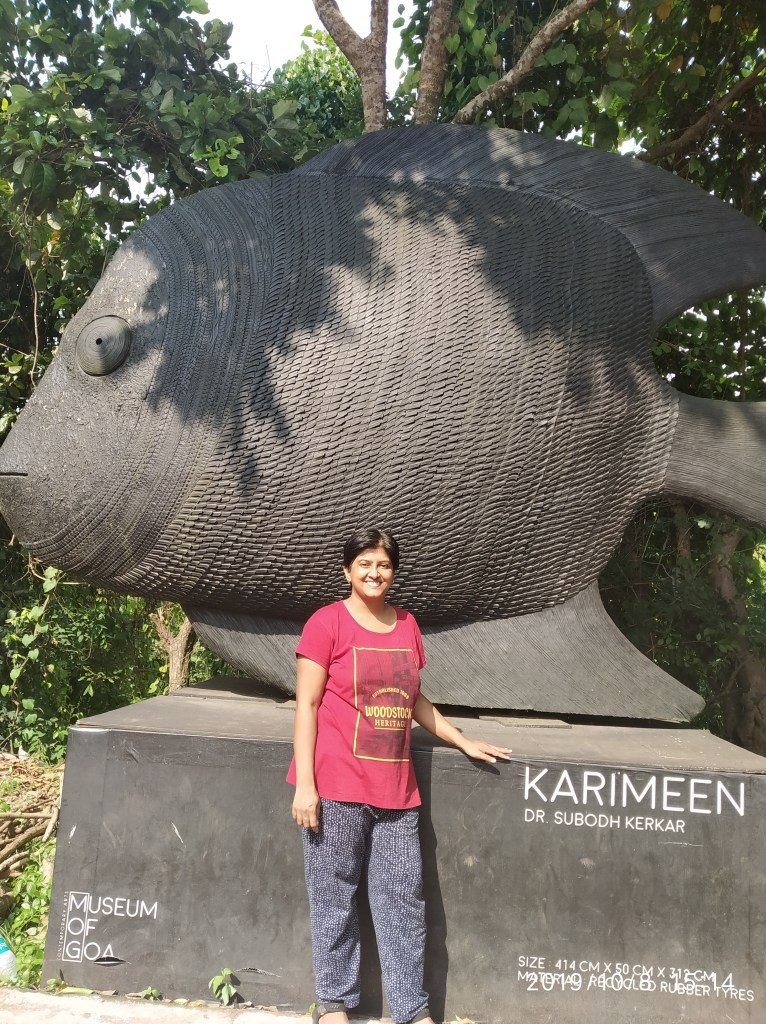
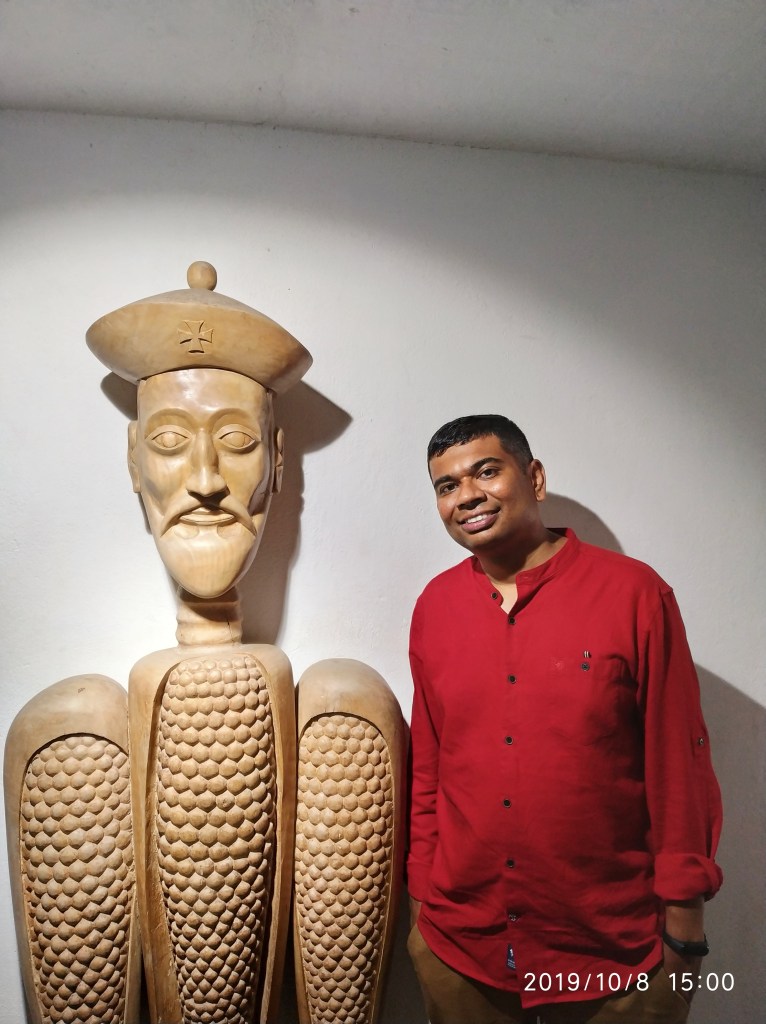
After lunch, we headed towards what would be our most interesting destination of our Goa trip – the Museum of Goa. This is a unique museum that depicts Goa’s history and people through contemporary art. The entire museum is inspiration of Dr Subodh Kerkar, who has created every artefact with a specific story to narrate. The initial 15 minute introduction documentary by Dr Kerkar sets the tone for the visit. I found the outdoor exhibits especially fascinating and many of them are made entirely from waste material and discarded items.

That evening we spent quietly visiting the sunset from Sinquerim beach

On 09-Oct-2019, we headed towards Chapora fort made famous by Dil Chahata Hai film. On the way we stopped for Idly-Dosa at a Vegetarian restaurant in Calangute. The proliferation of  ‘Pure Veg” restaurants in entire North Goa was a pleasant surprise for me. With Indian families with kids forming bulk of tourists in Goa ,there are veg restaurants every few meters now. Surprisingly, many are run by local Goan families and not by migrants from coastal Karnataka.

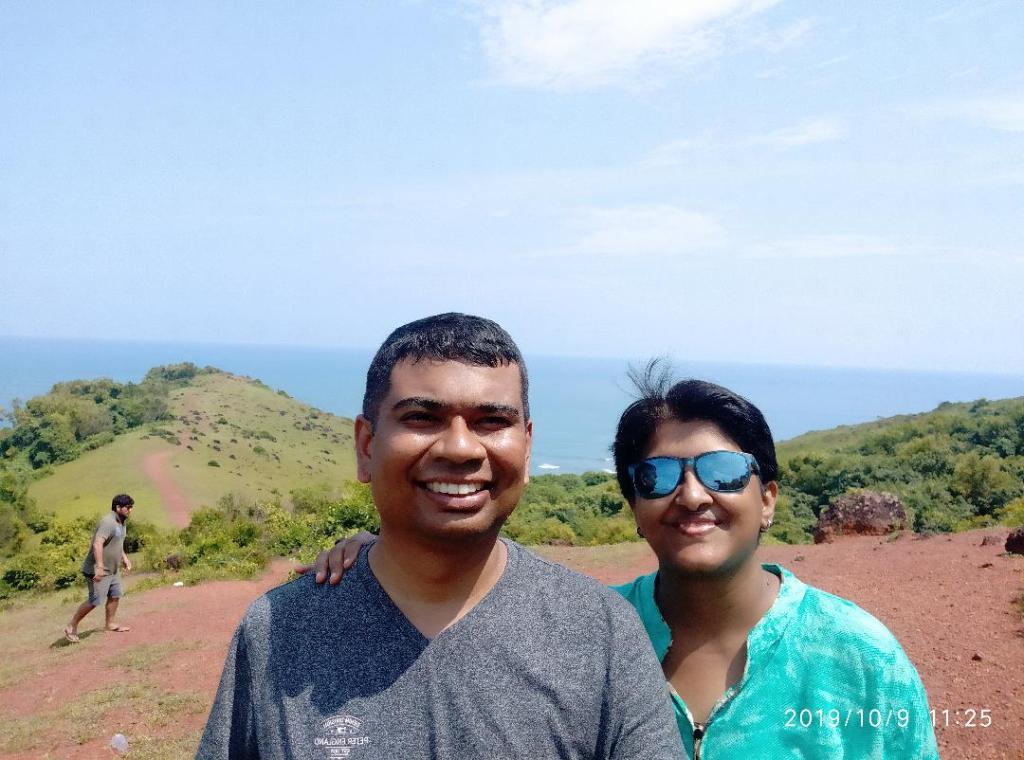
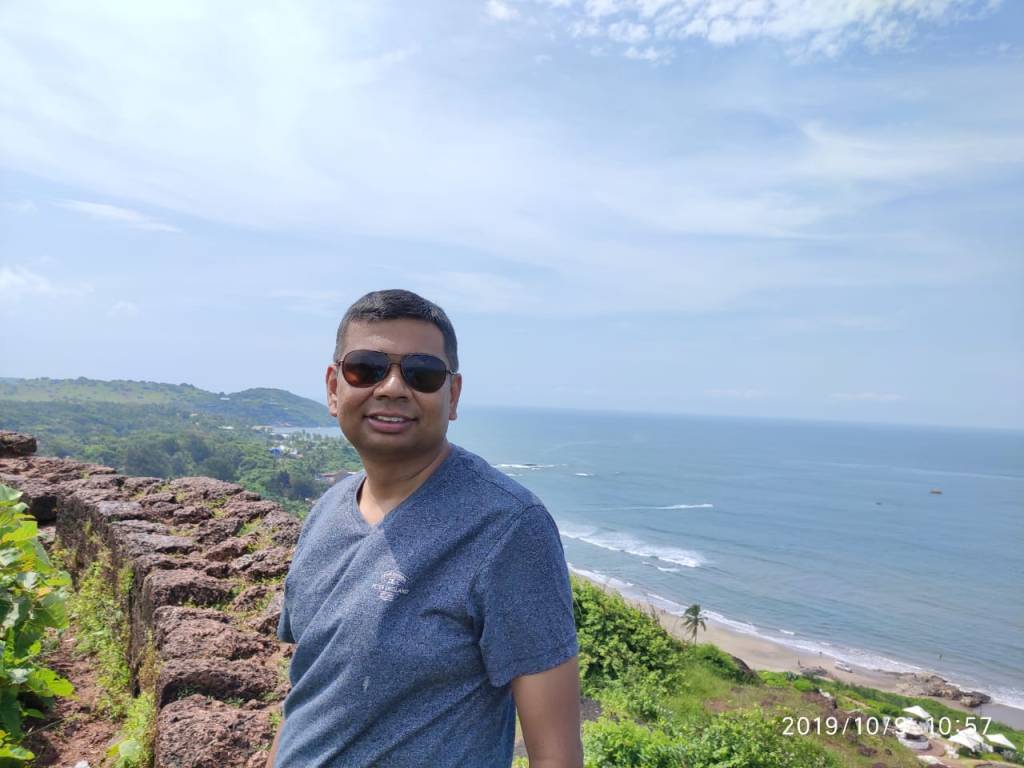
To reach Chapora fort, we had to walk uphill for about 15 minutes. There are newly build stairs which make it quite an easy ascent. Once we reached the top, we can view the Chapora river, Chapora beach and the Vagator beach. The views are spectacular and one can easily spend couple of hours admiring the scenic beauty from the vantage points.

Chapora Fort

After a memorable time atop Chapora fort, we headed back to Candolim, stopping at Anjuna Flea market on the way. I found it uninteresting with rows of shops selling trinkets and casual clothes. Same wares which one sees all over Goa

The final evening in Goa was spent taking dip in the sea at Candolim beach. The sea was fairly rough which made playing in water very enjoyable.

10-Oct-2019 was our final day in Goa and we spent the morning just walking on the beach. On way to airport we visited the Panjim Church and lunched at Kamat Hotel. This place has been around forever and during all my visits, I have lunched at this restaurant.

As my plane took-off from Dabolim airport I had final look at the Arabian sea below me. In this world of uncertainties, I knew one thing for certain – “ I will be visiting Goa again !”

Temples of Karnataka

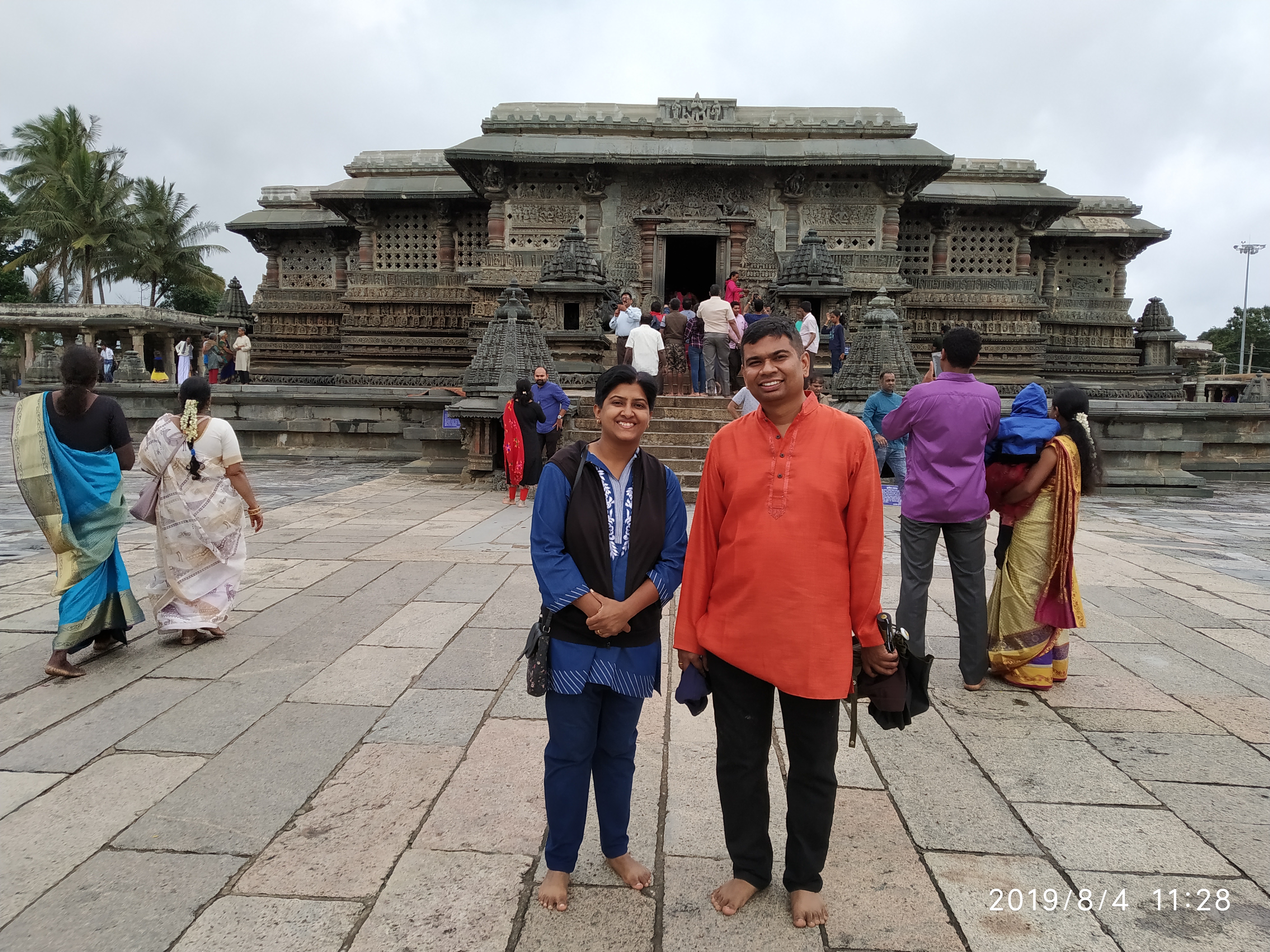
“Haleebedu , Belur and Sharavanbelogola “ are the must see on the Toursit itinerary of those visiting Karnataka. Karnataka is land of ancient temples with mesmerizing architecture and the above-mentioned temples are a good example of that.

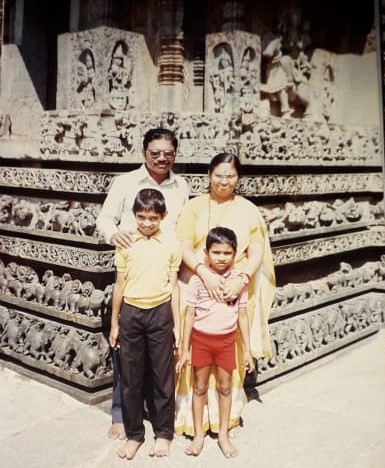
I had been to Haleebedu  and Belur as a child many years ago (1989 to be precise), but remember very little of those places.

Myself in 1989 wearing red shorts.

Hence after almost five years in Mysore we decided to plan an overnight trip on my own temple-run. The fact that neither Halebeedu nor Belur are “Jagrit “ temples encouraged me for a weekend trip. Because it is only the “Mannat fulfilling” temples which are overrun by devotees, not the ones known for their architectural beauty.

Typically, I avoid driving my car on highway and hence hired a taxi for two days. Plan was to visit Sharavanbelogola on Saturday and move to Halebeedu for an overnight stay. Visit Belur on Sunday and back to Mysore

On 3-Aug-2019, we set out at 8:00 AM to Sharavanbelogola in a hired Tata Indica. The roads in this part of Karnataka are pretty good and we made swift progress till KR Pete where stopped for a quick snacks. Even small towns in Karnataka have a hygienic vegetarian restaurant , which is quite commendable.  

Around 10:30 am, we arrived at the base of  Vindhyagiri Hill in Sharavanbelogola, at the summit of which is the famous statue of Bahubali Gommateshwara .We deposited our shoes at relevant stand and readied ourselves for a climb of 650 steps to reach the peak.

The weather was clement with gentle breeze and overcast conditions, perfect for our ascent. Last time I was in Sharavanbelogola was in 1998 and I could then easily climb the steps without any breaks in between. With confidence that I could do so again, we began our ascent. We were joined by Jawans of Madras Sappers in our climb and could keep pace with them for few minutes. Soon, I started losing steam and was forced to catch my breath. Finally reached the summit, huffing and puffing, taking a total of thirty minutes for the entire climb.

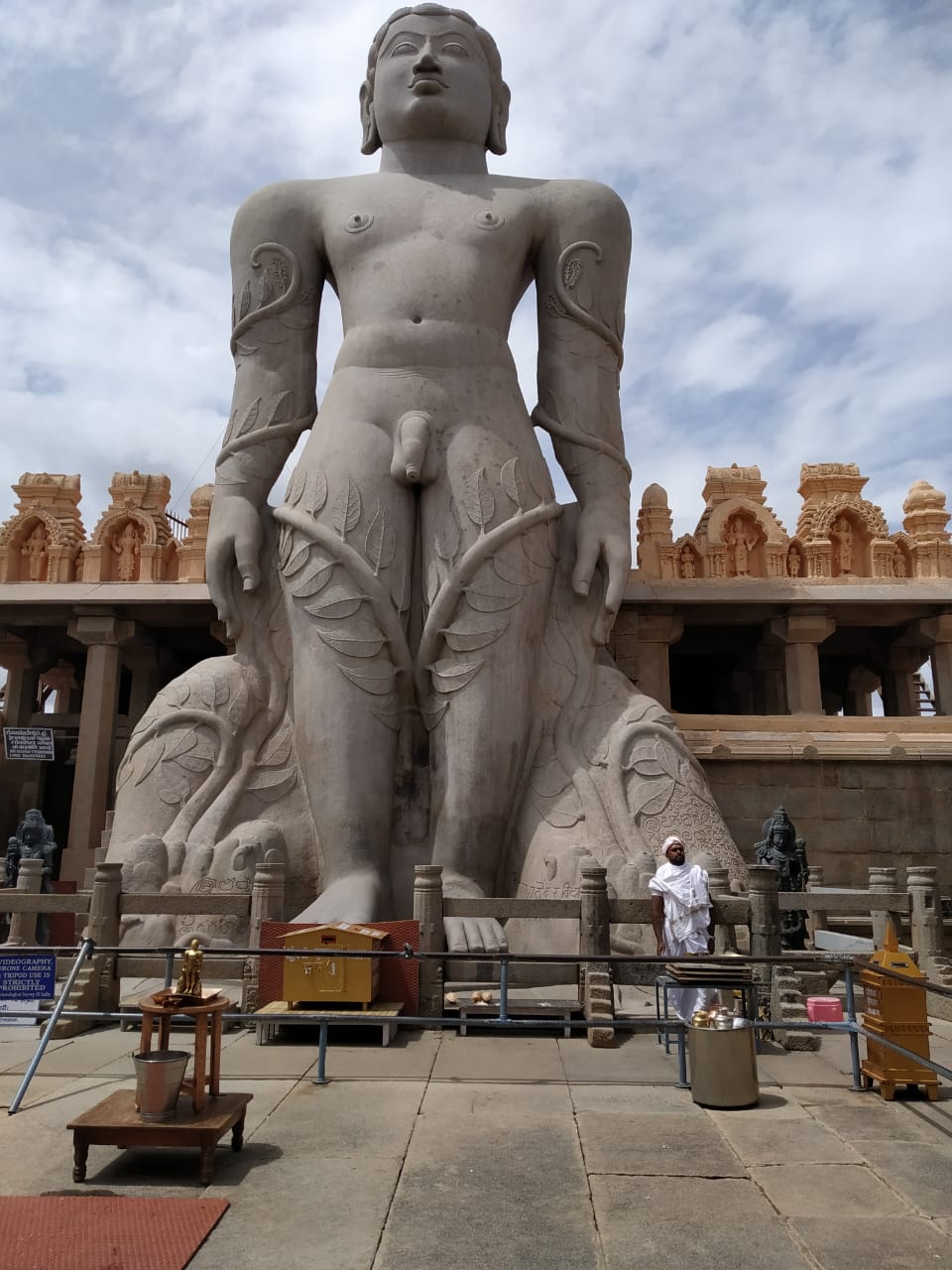
The Darshan of the 58 feet statue of Bahubali, made from single block of granite , was awe inspiring. Built in 981 A.D, it is one of the largest free-standing statues in the world. The proportions of the statue are perfect in every way, and what mesmerized me the most was its face . It reflects the calmness ,serenity and the Kaivalya (Supreme Knowledge) attained by Bahubali. The statue also has linguistic significance with carved inscriptions in Kannada and Tamil, as well as the oldest evidence of written Marathi.

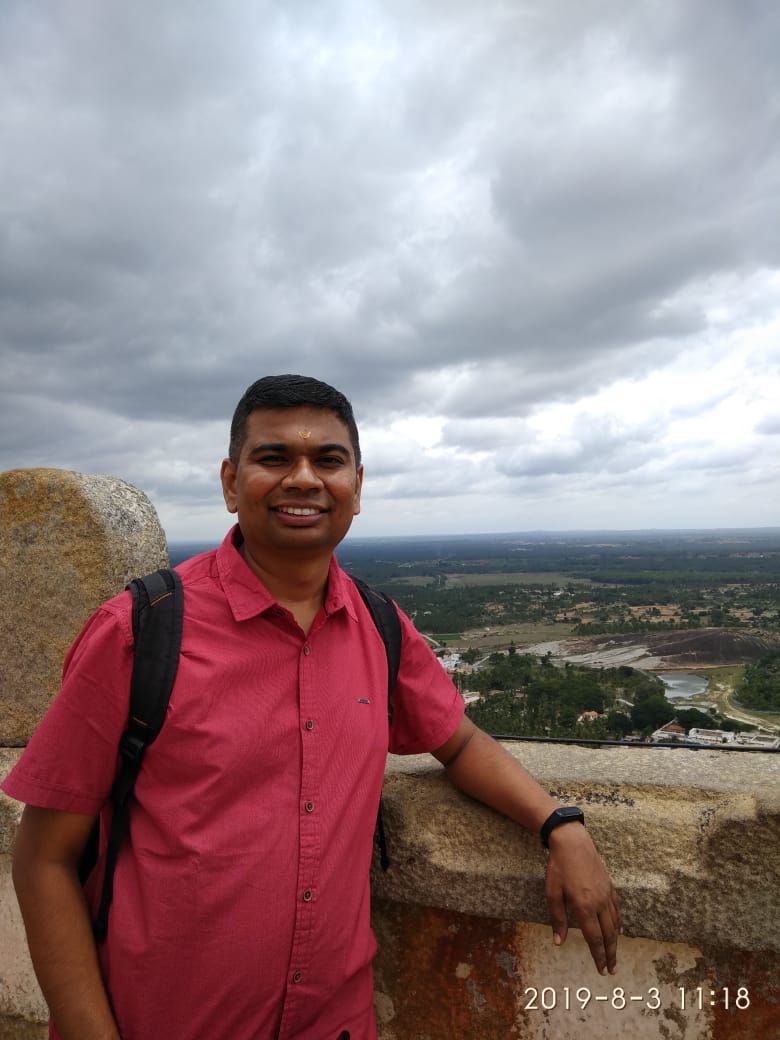
 The views from the summit are soothing to the eyes and ideal place for some good photography.

We left Sharavanbelogola to towards Hassan and arrived at Suvarna Regency restaurant around 1:30 PM. The food is excellent almost everywhere in Southern Karnataka and Hassan is no exception. Our overnight stay was booked at KSTDC Mayura Shantala in Haleebedu and arrived there at 3:00 PM amidst overcast conditions and light rain.

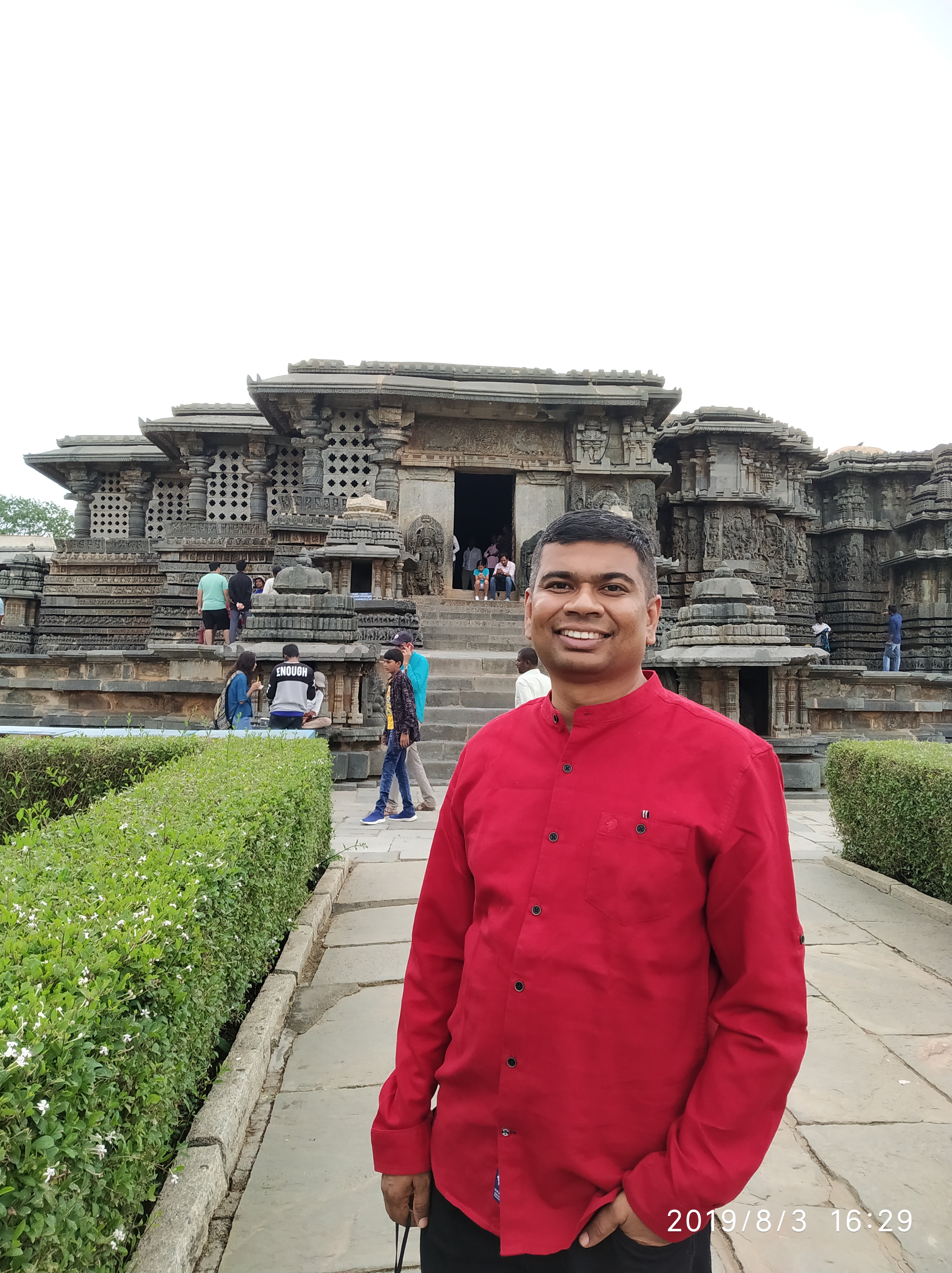
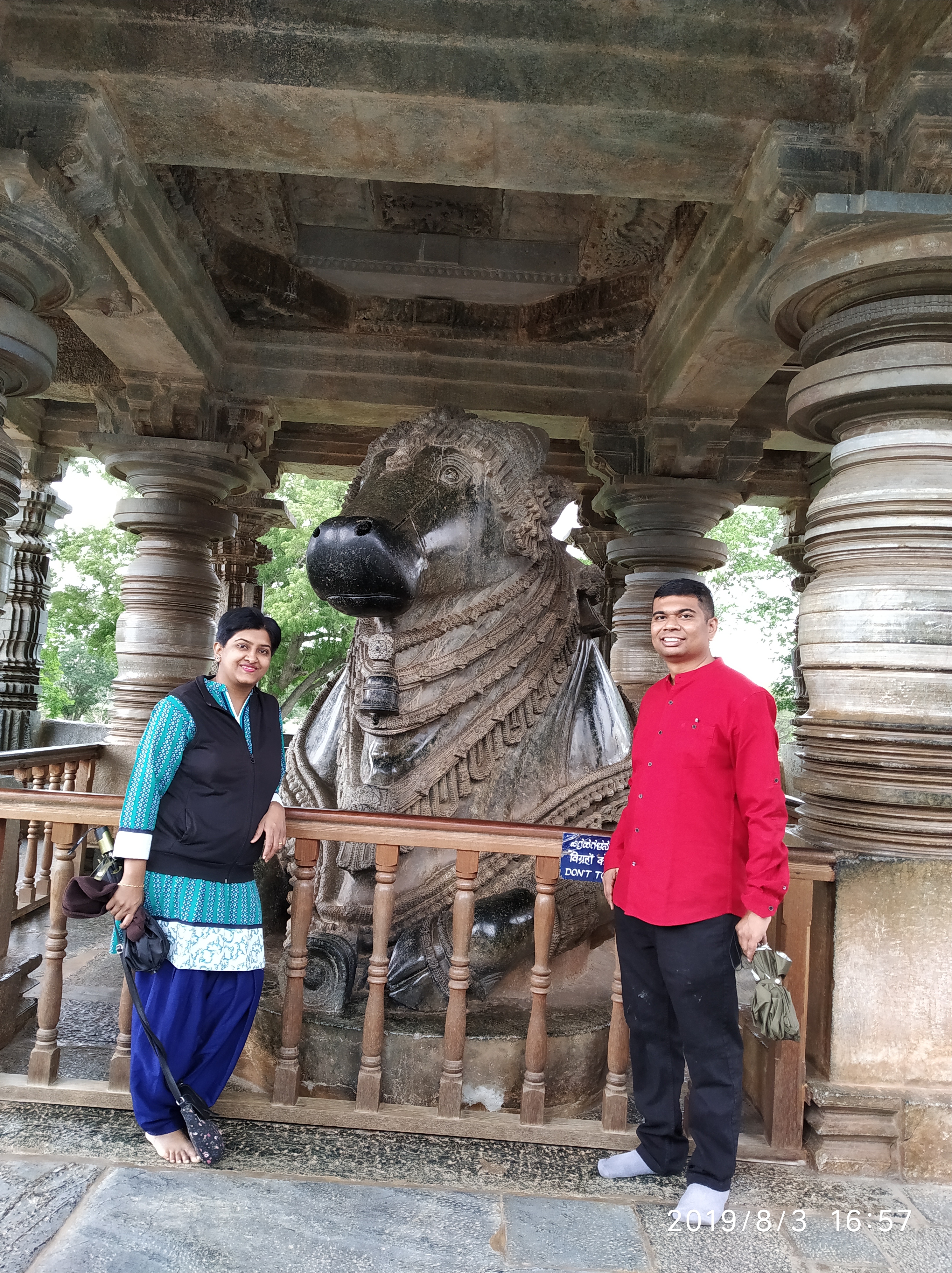
After few mins of rest, we stepped into the ancient 12th-century temple dedicated to Lord Shiva. It was built by King Vishnuvardhana of the Hoysala dynasty and is in fairly good shape, though Halebeedu was twice sacked and plundered by the Muslim armies of the Delhi Sultanate. The inner sanctum has two Shivalingas and just outside the sanctum are two enormous Nandhis, around 9 feet high. The outer walls are most fascinating ,which are intricately carved with horizontal band of sculpted decoration. The sculptures  narrate events from scriptures like the Ramayana, the Mahabharata and the Bhagavata Purana. All around the outer walls are the rows of elephants, lions, miniature dancers and horses.

We had hired an authorized guide for INR 300, who in about half an hour showed us the interesting sculptures and gave some background. I recommend, that all those visiting Halebeedu and Belur hire these guides.

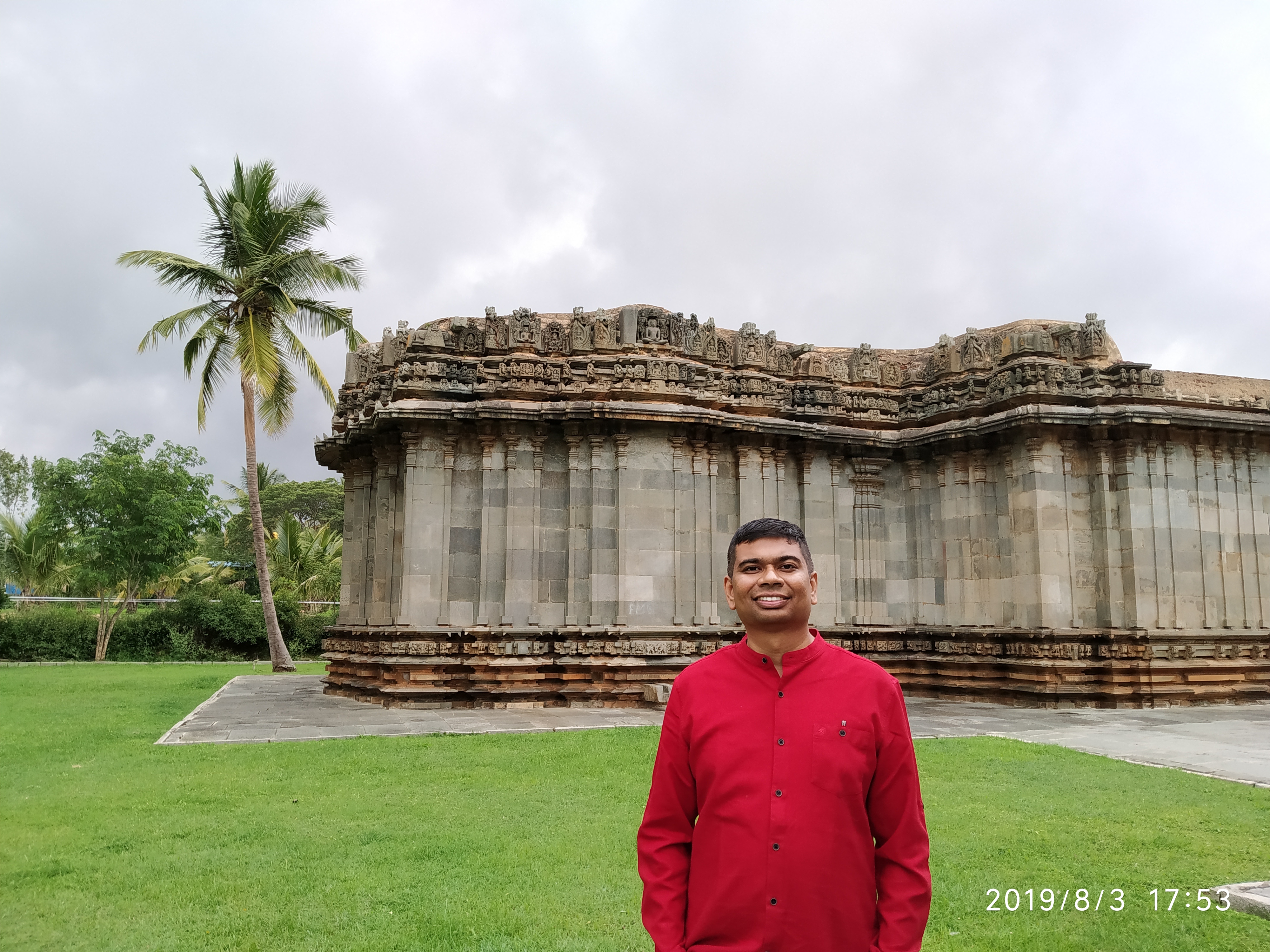
On recommendation of our guide, we visited the Jain Basadi complex about one KM from the main temple. There are three temples here dedicated to three Jain Tirthankars; Parshvanatha, Shantinatha and Adinatha. There are hardly any visitors to these Jain temples and one can experience serenity and calmness in its premises.

That night we stayed at KSTDC Mayura Shantala Hotel right opposite to the main Halebeedu temple. The service ,infrastructure and the food are pretty good, and one can consider this for one night stay.

Early next morning, I paid another visit to the main temple. Advantage of early morning visits is that the complex was deserted and the I could walk around admiring the sculptures at my own pace. In the temple complex, is an ASI museum which has artefacts from the main temple. The museum is worth a visit to view and understand more about the temple sculptures.

Around 10:30 AM, we checked out of the hotel and headed towards Belur, about 20 KMS away. The journey was through lush green fields and quite soothing to the eyes. Belur town looked bigger and more prosperous than Halebeedu and we could see numerous shops and restaurants there. There is also a KSTDC hotel here, few meters from the main temple.

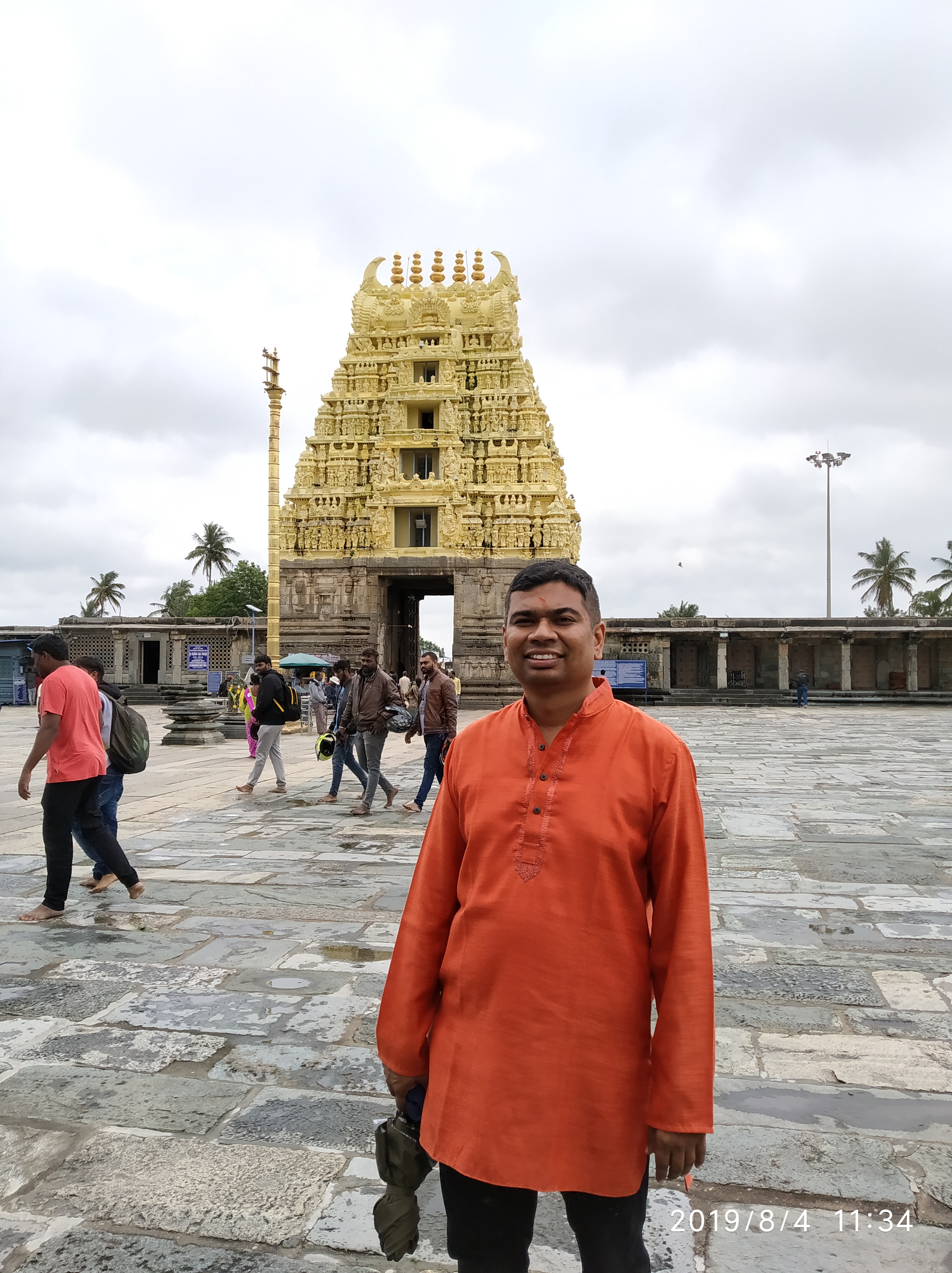
The weather had changed slightly and it was drizzling by the time we entered the complex. The walled compound covers huge area and has numerous small and large temples. In addition to Hoysala dynasty, the kings of Vijaynagar empire constructed temples inside the temple complex. The most spectacular addition was the huge Gopuram which is at the entrance and coloured in golden hue.

The main deity of this temple is Chennakesava (“handsome Kesava”) is a form of the Hindu God Vishnu. But the striking features of this temple are the exterior walls, which depict the social themes of the times. There are numerous female figures ,engaged in activities like viewing a mirror, dancing, playing musical instrument etc. The main difference between the temples of Halebeedu and Belur are the motifs of the sculptures. While Heldeedu depicts scenes from religious epics; the economic and festive activities dominate the Belur temple. After viewing other temples in the complex, we bid adieu to Belur. Here too, we had engaged a guide for INR 300, who narrated us the history of the temple and showed us few interesting sculptures.

Around 1:00 PM, we left towards Hassan and after lunch at Hotel Raama ,started on our way back to Mysore. For those who are interested in Hoysalan architecture , there is the famous Panchalingeshwara temple at Govindanahalli. This is just off the  Hassan-Mysore highway near the town of Kikkeri. We however , decided to drive on towards Mysore

Around 5:00 PM, we arrived home after an interesting and educational weekend trip. The temples Haleebedu , Belur and Sharavanbelogola of are a must-visit for those interested in Indian history and architecture.

Introduce Yourself (Example Post)

This is an example post, originally published as part of Blogging University. Enroll in one of our ten programs, and start your blog right.

You’re going to publish a post today. Don’t worry about how your blog looks. Don’t worry if you haven’t given it a name yet, or you’re feeling overwhelmed. Just click the “New Post” button, and tell us why you’re here.

Why do this?

  • Because it gives new readers context. What are you about? Why should they read your blog?
  • Because it will help you focus you own ideas about your blog and what you’d like to do with it.

The post can be short or long, a personal intro to your life or a bloggy mission statement, a manifesto for the future or a simple outline of your the types of things you hope to publish.

To help you get started, here are a few questions:

  • Why are you blogging publicly, rather than keeping a personal journal?
  • What topics do you think you’ll write about?
  • Who would you love to connect with via your blog?
  • If you blog successfully throughout the next year, what would you hope to have accomplished?

You’re not locked into any of this; one of the wonderful things about blogs is how they constantly evolve as we learn, grow, and interact with one another — but it’s good to know where and why you started, and articulating your goals may just give you a few other post ideas.

Can’t think how to get started? Just write the first thing that pops into your head. Anne Lamott, author of a book on writing we love, says that you need to give yourself permission to write a “crappy first draft”. Anne makes a great point — just start writing, and worry about editing it later.

When you’re ready to publish, give your post three to five tags that describe your blog’s focus — writing, photography, fiction, parenting, food, cars, movies, sports, whatever. These tags will help others who care about your topics find you in the Reader. Make sure one of the tags is “zerotohero,” so other new bloggers can find you, too.

Design a site like this with WordPress.com
Get started